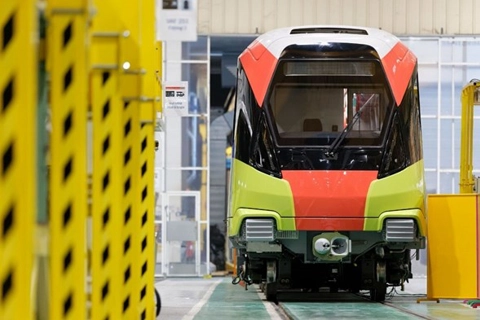
Contractor says strictly controls dust and noise at construction site of Hanoi’s metro line 3
Controlling dust and noise pollution is one of the most concerned issues in urban railway projects in Hanoi because their construction takes place in residential areas and at night.
The construction site of the Nhon - Hanoi Railway Station sky train, also known as metro line 3, does not contribute to excessive dust and noise for surrounding areas as they are strictly controlled, said Paul Evans, health safety & environment (HSE) manager of Hyundai E&C - Ghella Joint Venture, Hanoi Pilot Light Metro Line 3 in an interview granted to Hanoitimes.
The Nhon-Hanoi Railway Station line extends 12.5 kilometers from Nhon in Tay Tuu ward, Hanoi's western district of Nam Tu Liem, runs along Kim Ma street to Hanoi Railway Station in the downtown area. It runs 8.5 kilometers on elevated tracks through eight stations and four kilometers underground through four stations.
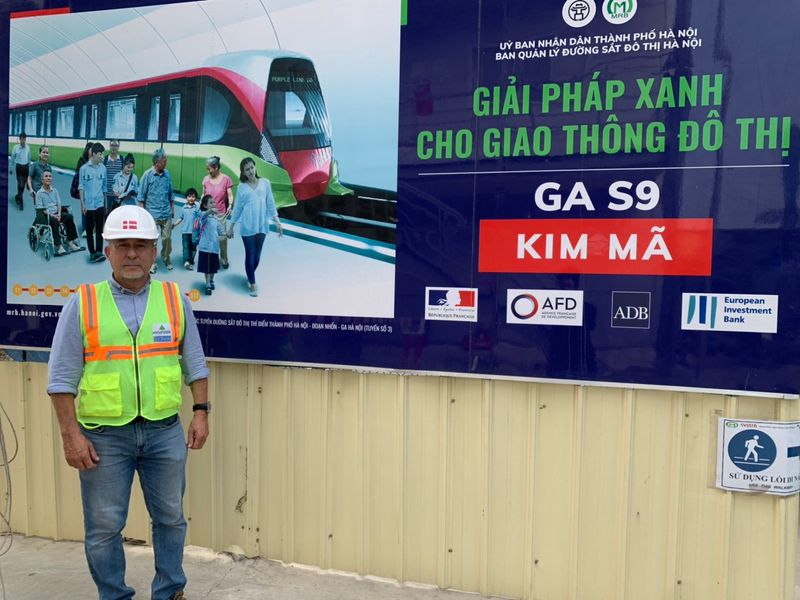
| HSE Manager of Hyundai E&C - Ghella Joint Venture Paul Evans at the construction site |
It is one of several metro lines planned for the capital city to ease traffic congestion and reduce emissions.
Controlling dust and noise pollution is one of the most concerned issues in urban railway projects because their construction takes place in residential areas and at night.
Some people say that the construction of underground stations under the Nhon-Hanoi Railway Station sky train contributes to dust and noise pollution. What is your comment?
I have a lot of experience as a HSE Manager on large international infrastructure projects, specifically metro projects and underground/tunnel works. I am now bringing my experience and high standard from those projects to the Hanoi metro construction.
There have been some concerns regarding our project and some reports suggesting that we are producing noise and dust. However, I can assure you that dust and noise levels are strictly controlled, thus, I do not believe that our project contributes to excessive dust and noise and we are doing everything to protect the workers and local residents.
| The HSE manager and a number of engineers regularly check safety and environmental hygiene throughout the work shift |

I suspect that during the time when some reports suggested that our site was producing lots of dust, this was also the time when Hanoi was experiencing the worst air quality index, in many cases above 300. I myself live in Tay Ho area and on these days I could not see the other side of the lake due to the high pollution levels around the city, and this can also look a lot like dust.
How do you control dust and noise when carry out the construction of underground stations under the Nhon-Hanoi Railway Station metro line?
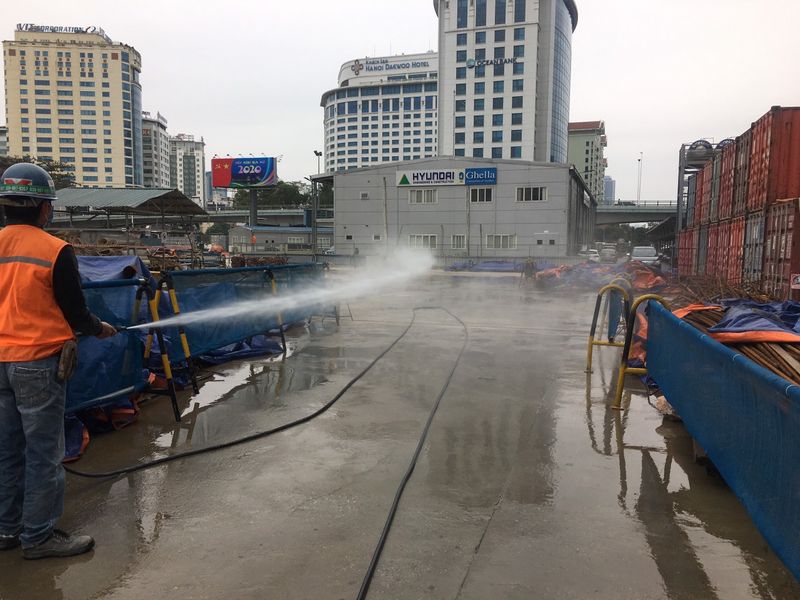
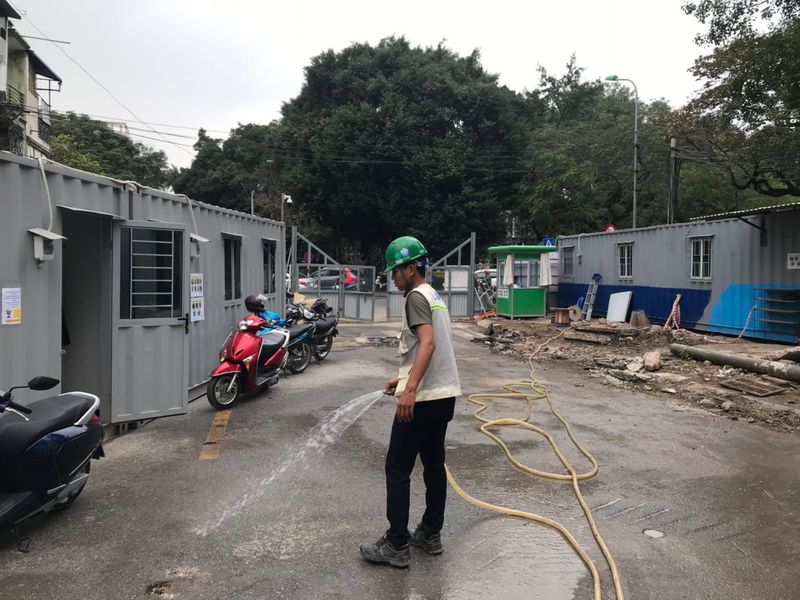
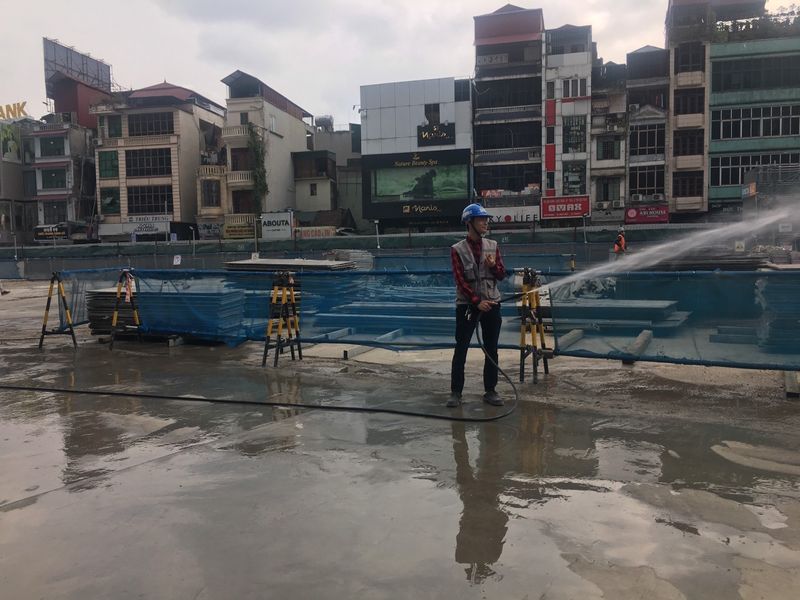
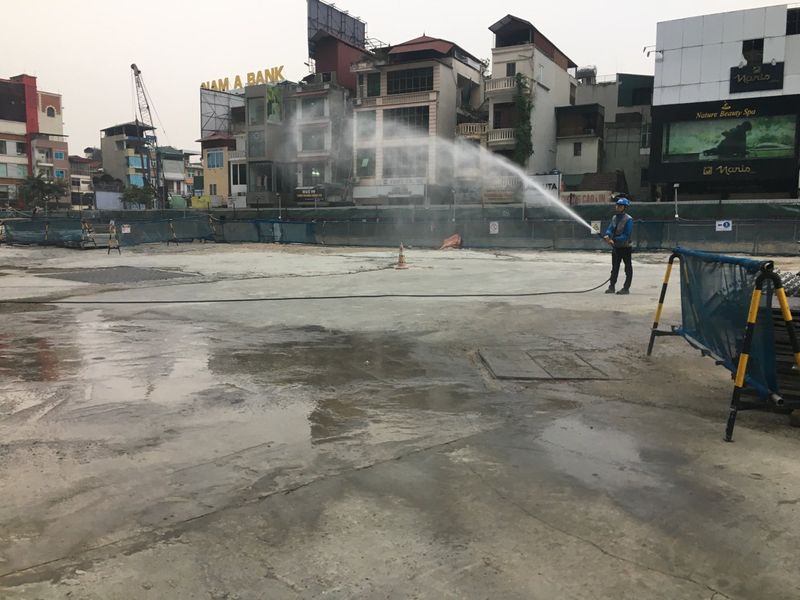
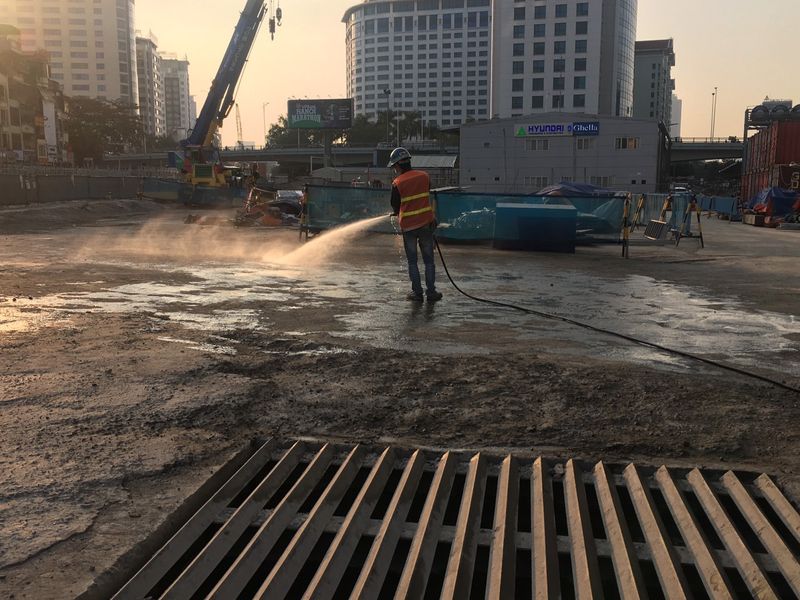
On our project, we are very strict about environmental controls and protecting the health of our workers and the local residents, therefore we carry out daily dust control activities and we do this by spraying water around all our sites to keep the dust down, this activity is also documented and signed by the persons responsible.
For noise controls, if we know that we will carry out a construction activity that might produce some excessive noise levels, daily noise monitoring will be carried out by using a noise measuring device. For your information, the normal international standard for maximum noise levels for construction sites is 85 decibels (DB).
However, to ensure the best protection for local residents, we have set our project noise standard to a maximum of 70DB, so we are very conservative. During the night time if we have activity that will produce noise, we reduce the maximum level to 55DB.
| The metal grill is where all trucks must stop and have their wheels washed before leaving the construction site |
We will carry out measurement readings several times a day and during the night to ensure that we are not producing excessive noise, if at any time noise levels reach our maximum allowable levels we will immediately stop the activity.
After many adjustments in both capital and time, the project execution has been accelerated. Currently, how much of the project has been completed? Are there any difficulties the contractors need the Hanoi government to help remove?
Line 3 is currently progressing well and despite some initial delays we are now increasing machinery and manpower to all our sites to help increase the construction programs to deliver the completion of the project on time.
We do not have any difficulties apart from the normal challenges of building a metro in the heart of a busy city and we have the full support and cooperation from Hanoi Metropolitan Railway Board which helps our progress.
We have also implemented financial penalty procedures so if any of our sub-contractors do not comply or mitigate environmental controls to our standards they will receive a high financial penalty.
Thank you very much!
The following are images of workers spraying water to keep the construction's surface moist and reduce dust: