E-government key to improve Hanoi public satisfaction on governance: Expert
Every teacher, public servant, or healthcare staff has to adapt to high quality administrative services.
Dr. Dang Hoang Giang, a research team member of the 2020 Provincial Governance and Public Administration Index (PAPI) report, which measures provincial performance in governance and public administration, told Hanoitimes reporter Ngoc Thuy of what should be done to improve Hanoi’s performance in this regard.
| Dr. Dang Hoang Giang at the launch of PAPI 2020 Report. Photo: Ngoc Thuy |

Despite the city authorities’ strong efforts in gaining public satisfaction on the provincial governance, the result has not lived up to expectation as reflected in the 2020 PAPI report. What is your view on this regard?
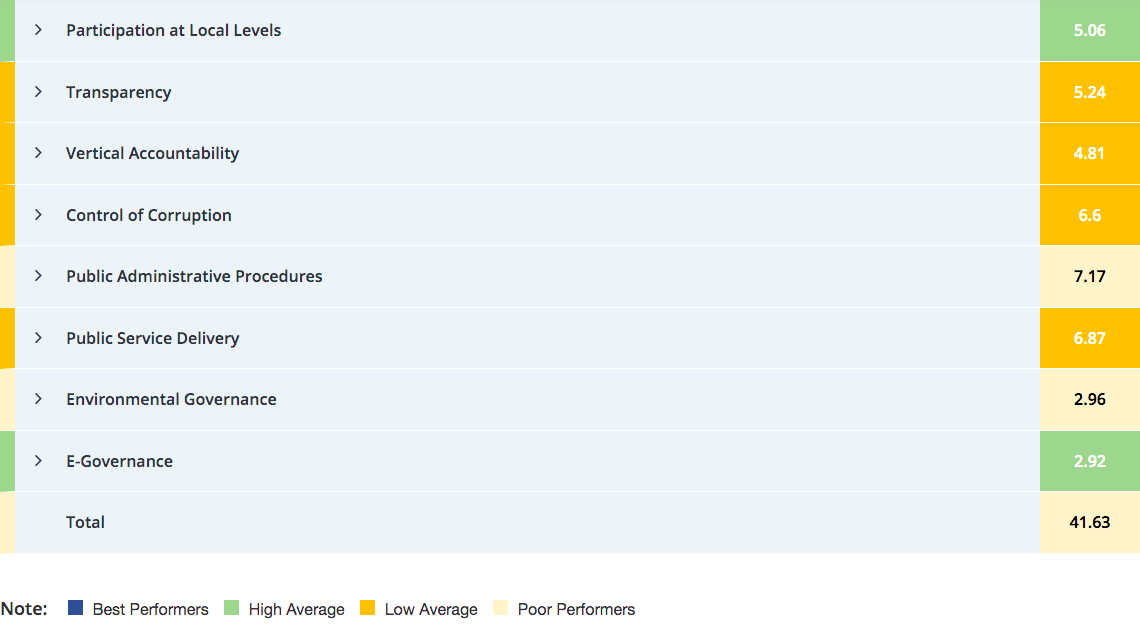
Hanoi’s score in the 2020 PAPI index was 41.63 out of the maximum 80, a slight improvement from 41.54 score obtained last year. The result, however, remained unsatisfactory.
For many years, Hanoi’s leaders have expressed strong commitment to improving the PAPI score, but such desire has not been fully translated in current practices of grassroot agencies.
Lack of specific action to improve transparency and create greater convenience for citizens in fields of healthcare, education, land plans, or fighting off petty corruption, I think it would be a difficult task for Hanoi to make breakthrough in PAPI scores.
Every teacher, public servant, or healthcare staff has to change. Unless there are substantial improvements in each component in Hanoi’s administrative apparatus providing higher quality public services to the people, all policies and decisions of the leaders would not be effective, as the most important criteria for evaluation is citizens’ experience.
| Detailed scores of Hanoi in PAPI 2020. Source: PAPI 2020 Report |
In the past two years, Hanoi has climbed exponentially in the ranking and stayed firm in top 10 business-friendly localities under the Provincial Competitiveness Index (PCI) report. Why is there a stark contrast in the experience of businesses and citizens in realizing administrative procedures?
It may indicate that the citizens have not received sufficient support from the local authorities, leading to different experiences of the two groups.
But this is not an uncommon in many cities of Vietnam. I think the result would send a message to the authorities that the concern of people and business community are of equal significance. Addressing their needs evenly would be important to ensure the city’s sustainable development.
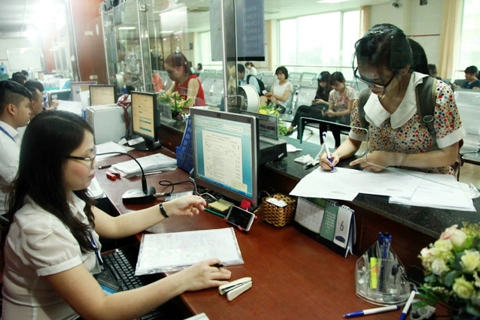
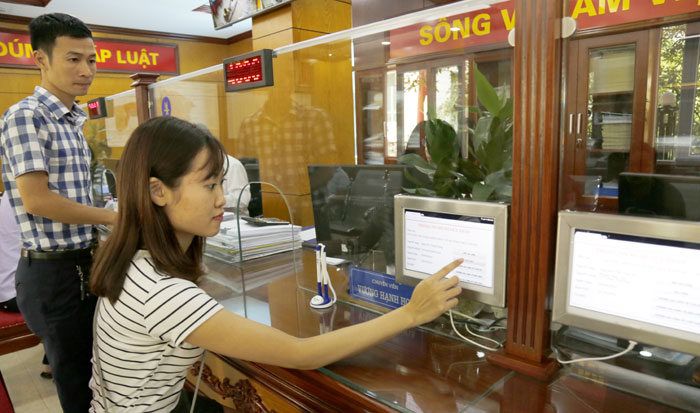
| People realizing administrative procedures at Thanh Xuan district one-stop shop. Photo: Thanh Hai |
What steps should Hanoi takes to improve public satisfaction in the future?
Hanoi in particular, and major Vietnamese cities in general, have strong potential to boost the development of e-government, given the high internet penetration rate. This would be the right direction for Hanoi to gain higher score in PAPI if the city has the determination to pursue this goal.
However, I would say it is not an easy task, as it is not about just simply setting up an online public services portal and expecting people to do it themselves.
At present, a majority of provinces/cities embarking on e-government development but the work is still formal with vague information and poor utilities on their respective online public services portals.
As such, many people are unsatisfied with online services and then turning to face-to-face services.
The authorities should highlight the benefits of online services in comparison to traditional methods. For example, local people should be provided with sufficient information to understand applying for a birth certificate or driver’s license online are much more convenient and easier, especially when all requirements and costs are clearly demonstrated.
This is a key task to encourage people turning to public online services, otherwise I guess it would not work.
Thank you for your time!
Similar to previous years, the 2020 PAPI Report presents detailed findings on how provinces performed across the eight PAPI dimensions (Participation at Local Levels, Transparency in Local Decision-making, Vertical Accountability, Control of Corruption in the Public Sector, Public Administrative Procedures, Public Service Delivery, Environmental Governance, and E-Government), as well as in the aggregate PAPI scores. In 2020, none of the 63 provinces were in the top performing group across all eight dimensions. Over 14,700 citizens were interviewed for the 2020 PAPI Report, which is the largest number of samples since the survey was first conducted nationwide in 2011. |