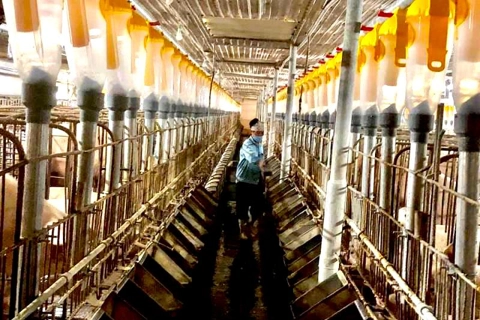
Farmers' skills matter to Hanoi's hi-tech agriculture
Skilled farmers would enable Hanoi to achieve its goal of having 70% of agricultural products produced hi-tech by 2030.
Hanoi is making efforts to improve the skills of farmers for developing its hi-tech agriculture in rural districts.
| Thanh Binh melon farm in Hoa Binh Commune, Thuong Tin District. Photo: Thanh Binh farm |
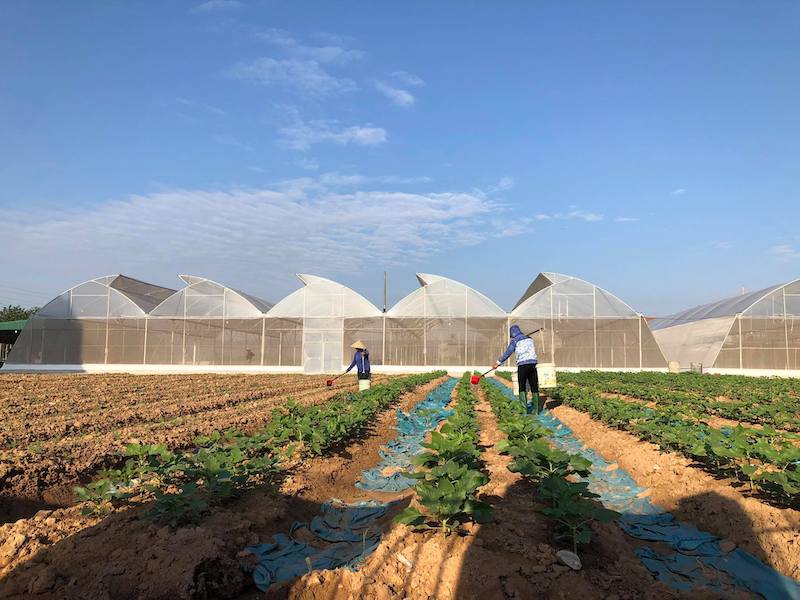
Thanh Binh melon farm in Hoa Binh Commune is one of the first hi-tech agricultural models in Thuong Tin District as the grower Nguyen Van Huy has pioneered the trial of the smart farm solution for some years now.
By applying smart control devices, his farm produced tasty and fast-growing melons that have more sugar (up to 10-15%) than before. Using a smartphone with mobile data connectivity, he can monitor and control the amount of water and temperature of the farming system anywhere.
In addition to the application of information technology in production, Huy also joined e-commerce platforms and social networks to promote sales for more convenient payment.
However, not many farmers, cooperatives, and companies have found successful models like Huy's. Many of them have wasted money and time in building high-tech farms due to a lack of skills.
Nguyen Van Thanh, Director of Hoa My Livestock Cooperative in Van Thai Commune, Ung Hoa District, admitted that most people working in the agriculture sector are in their 50s. "It's hard for old people to find information on the internet, apply new technologies, and promote brands through online channels," he stated.
Besides high-tech farming, agriculture associated with services and tourism also faces the same situation.
Ngo Kieu Oanh, owner of Ba Vi Homestead Farm in Ba Vi District, pointed out the biggest problem for tourism is the shortage of specialized human resources, who are able to expand the combined agriculture and tourism models.
“It requires lots of multiskills for a traditional farmer to become a high-tech one,” she explained. “It also needs long-term training associated with specific practical activities.”
Addressing manpower shortage
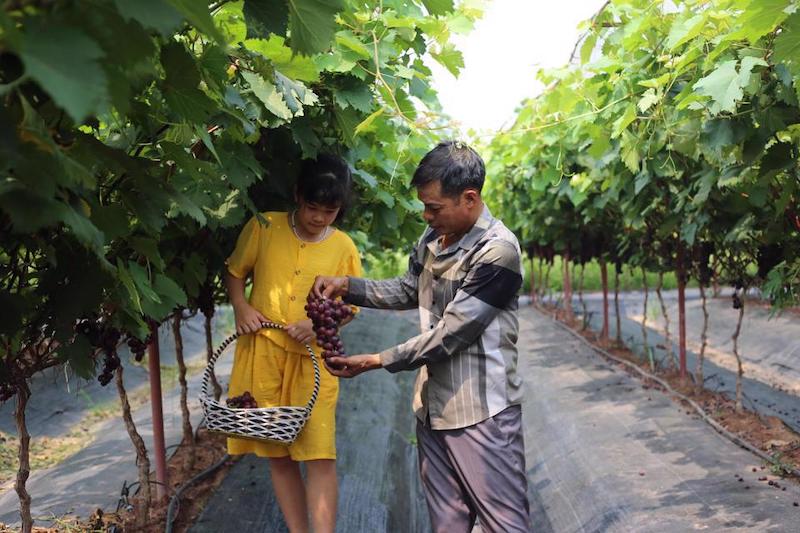
| Tourist at a farm in Dan Phuong District. Photos: Ngoc Anh/ The Hanoi Times |
According to the Hanoi Sub-Department of Rural Development, the majority of the workforce in agriculture is the elderly whose skills are based on experience and limited to technologies.
Statistics showed the average age of people working in farming in the suburbs of Hanoi is over 45. For the cooperatives, more than 53% are untrained workers, and most of them work seasonally. Meanwhile, the number of people, who have completed tertiary education, accounts for about 14%. Less than 20% of managers are under 30 years of age.
In a recent meeting with Hanoi leaders, Vietnam National University of Agriculture Deputy Director Pham Van Cuong said that there is a lack of high-quality human resources in Hanoi's agriculture.
To improve the quality of human resources in this sector, Hanoi is expected to make policies supporting tertiary training and encourage rural youth to participate in the sector.
“With such high-quality human resources, Hanoi's agriculture will surely form typical agricultural models,” he added.
Sharing the same idea, Deputy Director of Hanoi's Department of Agriculture and Rural Development Ta Van Tuong said the city is addressing current difficulties in agricultural development, including a shortage of low-skilled labor.
The capital's agricultural sector has taken advantage of the city's support mechanisms and agricultural restructuring policies and has offered specific policies to encourage companies to invest in agriculture and rural areas.
The sector’s authorities have also strengthened specific training programs in order to train local human resources and attract high-quality labor to the sector.
By 2030, Hanoi aims to make 70% of all agricultural products hi-tech across the city. The average per capita income in rural areas is expected to reach more than VND80 million ($3,226) per year. The ratio of trained workers will increase to over 80% and the rate of rural workers with regular jobs to 95% by 2030.
In addition, the city will develop green and environmentally friendly agriculture based on climate adaptation and strive to tackle environmental pollution in rural areas.
![[Infographic] Hanoi promotes hi-tech agriculture](https://cdn-media.hanoitimes.vn/2022/10/18/thumb_info.jpg?w=480&h=320&q=100)