FDI into greenfield projects in Vietnam rises over 16% in 8-month period
The FDI inflows to Vietnam have been stable compared to other countries in the region, which shows the continued trust and confidence of foreign investors.
The Vietnamese authorities have approved 1,135 fresh projects in the first eight months of this year with a combined FDI commitment of nearly US$11.33 billion, down 36.8% in number but a surge of 16.3% year-on-year, according to the Foreign Investment Agency (FIA).
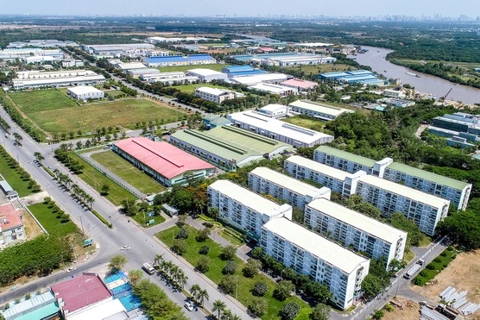
The FIA noted the majority of FDI projects are concentrated in major cities with adequate infrastructure systems, including Ho Chi Minh City (HCMC), Hanoi, and Bac Ninh, with the capital city currently standing second nationwide in terms of new projects, or 21.5% of the total, only behind the HCMC at 34%.
Among 58 cities and provinces having received FDI in the January-August period, the southern province Long An has attracted the largest portion of capital commitments with US$3.6 billion, or 18.9% of the total. Ho Chi Minh City (HCMC) came second with nearly US$2.2 billion (11.4%), followed by the southern city of Binh Duong with US$1.7 billion (8.7%).
The report also revealed 460 existing projects have been injected an additional US$5 billion, down 11% in number but up 2.3% in the capital.
During this period, 2,720 projects had nearly $2.81 billion in capital contributed by foreign investors, down 43.4% in the number of projects and 43.4% in value year-on-year.
Foreign investors’ continued confidence in the economic rebound
Overall, total FDI commitments to Vietnam in January-August slightly declined by 2.1% year-on-year to $19.12 billion, while the disbursed amount rose by 2% to $11.58 billion.
“The amount remains positive amid severe Covid-19 impacts that are forcing many factories and plants to close or scale down operation,” added the FIA.
World Bank’s Senior Economist Dorsati Madani told The Hanoi Times the FDI inflows to Vietnam have been stable compared to other countries in the region, which shows the continued trust and confidence of foreign investors in the economic outlook and resilience.
“This year, the FDI figure may be lower against last year because of the Covid-19 shock, but the most important point is the investment trend and businesses’ trust that the economy would rebound once the pandemic is contained,” Madani added.
Sharing Madani’s view, Former FIA Director Phan Huu Thang suggested a declining FDI amount at the moment is normal given the current Covid-19 situation across the world.
“Vietnam continues to be an attractive investment destination for foreign investors,” Thang said, expecting the total FDI commitments to Vietnam in 2021 to be around the amount of last year at over $28 billion.
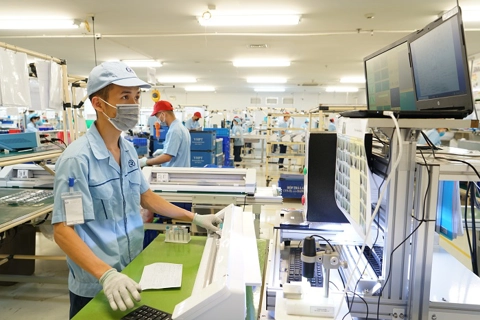
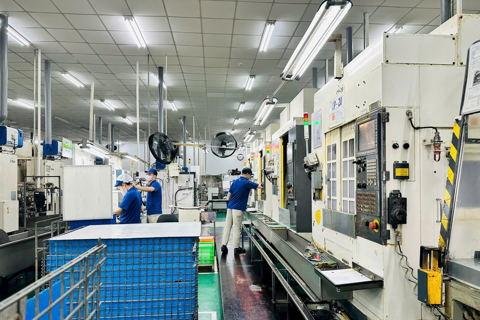
Investors have poured money into 18 fields and sectors, in which manufacturing and processing led the pack with investment capital of nearly $9.3 billion, accounting for 48.4% of total registered capital.
Electricity production and distribution came second with $5.5 billion, or 28.7%, followed by real estate with $1.6 billion.
FIA’s report added that out of 92 countries and territories having projects in Vietnam in the first eight months of the year, Singapore took the lead with US$6.2 billion, or 32.5% of the total registered FDI, followed by Japan with US$3.2 billion, or 16.8% and South Korea with US$2.4 billion or 12.7%.