Flexible adaptation - Vietnam's right track in Covid-19 pandemic
The new strategy will enable Vietnam to pursue vaccination-based recovery plans.
Bringing the country to the new normal as soon as possible in 2021 is the mission that the Government of Vietnam has tasked itself with after Covid-19 paralyzed its economy for the past several months.
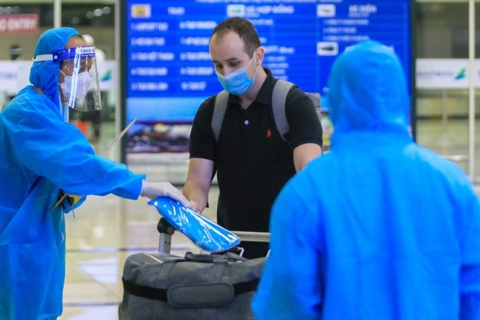
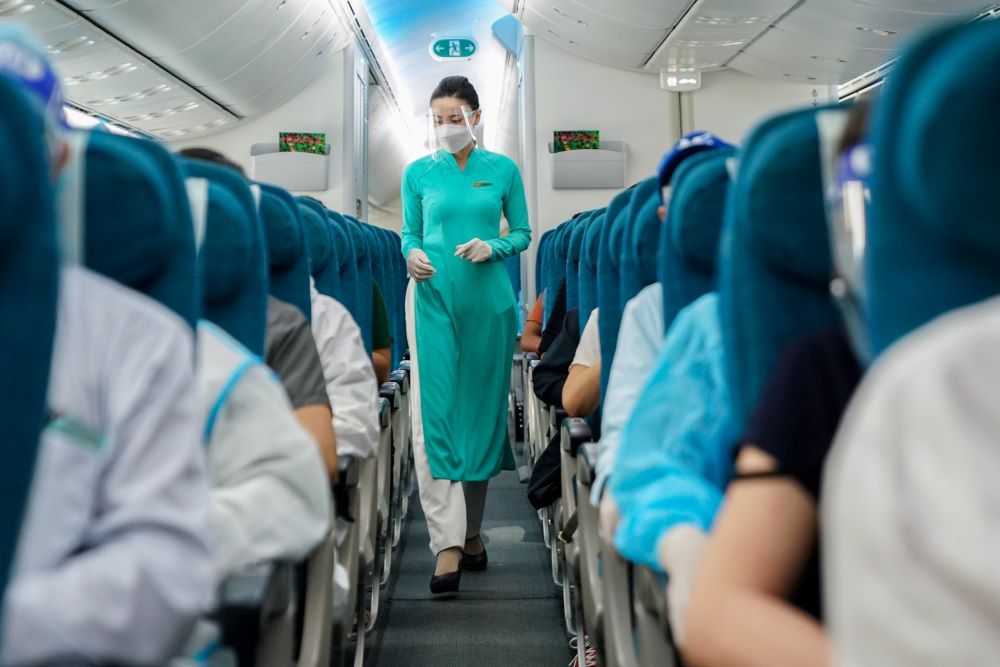
| First visitors come to Hanoi after months. Photo taken on Oct 11 at Noi Bai International Airport by Khanh Huy/ The Hanoi Times |
To make the goal possible, the government has officially switched from a zero-Covid approach to flexible adaptation to the pandemic and effectively control it in the time to come.
Under Resolution No.128 dated Oct 12, Vietnam targets to protect people’s lives, mitigate fatalities, and take up recovery plans in pursuit of the dual goal (containing the virus and developing economy).
To realize the mission, localities will lift the Directives 15, 16, 19 (on restrictions) and follow the new guidelines on controlling the pandemic and reopening the economy.
Accordingly, there are criteria to rate the pandemic situation including the number of infections, vaccine coverage, and treatment capacity of all levels from the grassroots. Each level would be labeled “green”, “yellow”, “orange”, and “red” to denote the areas as safe/Covid-free, low risk, high risk, and very high risk, respectively.
In the new strategy, the level of reopening depends on the pandemic classification and the vaccination rate.
Meanwhile, individuals still need to practice the 5K message (masking – disinfection – distance – no gathering – medical declaration) plus vaccination and using QR Code.
Commenting on the move, Carl Thayer, emeritus professor at the University of New South Wales (UNSW), Canberra, said “This decision was made as the latest data showed a decline in new infections and deaths nationwide.”
The major change with public health implications for Vietnam has been the decision to drastically step up the acquisition of Covid vaccines and to inoculate as many persons as possible as well as administer a booster shot, Prof. Thayer told The Hanoi Times.
Under the new approach, Vietnam will step up efforts to test for the virus in high-risk areas. There will also be a progressive lifting of restrictions imposed during lockdowns to resume normal life and to kick-start economic activity. There will still be regulations in place concerning wearing masks, social distancing, and the resumption of schools and activities involving large numbers of people, according to the professor.
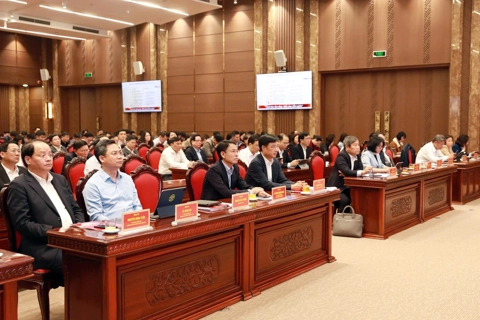
It should be noted in this respect that the news Prime Minister Pham Minh Chinh reportedly linked local officials from 10,400 communes/wards/townships, 705 districts, and 63 provinces and municipalities via a videoconference of the National Steering Committee for Covid-19 Prevention and Control on September 25.
Prime Minister Chinh not only instructed these officials on their duties to combat the coronavirus pandemic but also requested that all local governments set up a working group to facilitate the resumption of economic activities, Prof. Thayer added.
Explaining the change in the pandemic response policy, he said Vietnam abandoned its Zero Covid-19 policy as a result of a recommendation from the National Steering Committee for Covid-19 Prevention and Control that this goal was unrealistic if not impossible to achieve while the Delta variant was active. Another factor weighing on this decision was the financial impact of a prolonged lockdown on the economy and associated mental health issues.
The professor said public health authorities in a variety of countries report that persons who have not received a Covid vaccination are not only more likely to catch the Delta virus but become seriously ill as well. Unvaccinated persons who contract Covid-19 have higher morbidity rates than those who have been vaccinated. Those who have been vaccinated are less likely to suffer a serious illness. Nonetheless, persons who have been vaccinated can catch the Covid-19 virus and pass it on to unvaccinated persons or persons at high risk.
Directive 15 mandates suspension of social events; bans gatherings of 10 people or more outside workplaces, schools, and hospitals; requires a minimum distance of two meters between people in public places.
Directive 16 requires closures of non-essential businesses, restaurants; bans public gatherings; severely limits transportation services; and requires people to stay at home except for emergencies and necessities like buying food and drug.
Directive 19 requires no gatherings of 20 people in public places and a distance of at least one meter among people when contacted, at in-person dining, and in business facilities.
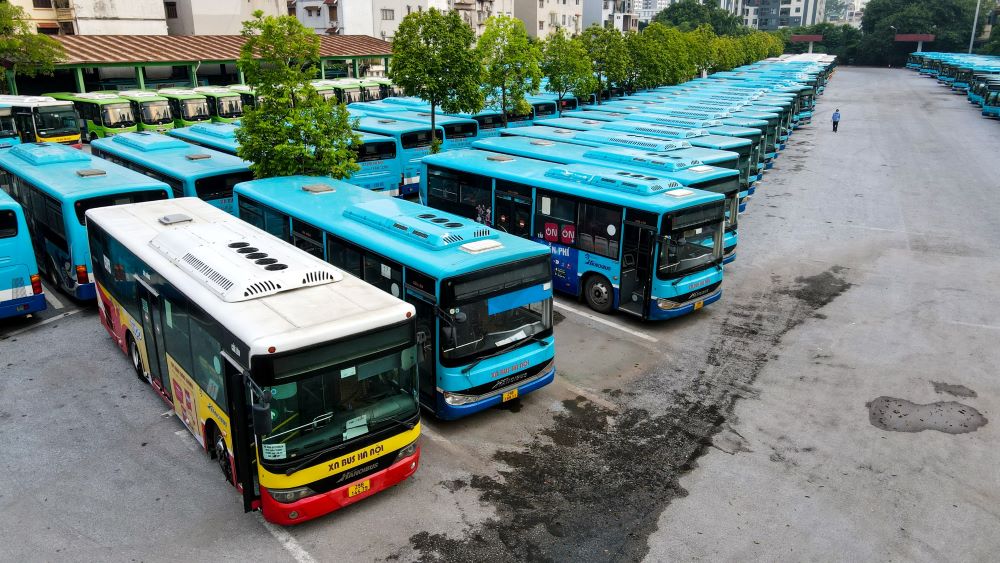
| Buses in Hanoi get ready to resume operations. Photo: Khanh Huy/ The Hanoi Times |
The ongoing outbreak that flared up in Vietnam in late April has left serious impacts on the southern region which covers the largest metropolis of Ho Chi Minh City (HCMC), the manufacturing hub of Binh Duong, and several industrial park hubs like Dong Nai and Long An.
The widespread transmission has forced all 19 southern cities and provinces to impose restrictions stipulated in Directive 16 that set up a stay-at-home ruling.
Rising infections have forced the health sector to put its focus on treating critical cases and improving treatment capacity instead of tracing infections.
The five-month outbreak has claimed more than 846,000 cases and over 20,000 deaths, mostly in HCMC.
Thanks to combined efforts, including dozens of thousands of health workers and armed forces, including military medics from Hanoi and localities nationwide, HCMC and the south are reopening the economy with renewed vitality.
In response to the new move, Hanoi said once accepting to living with Covid-19, the entire health monitoring system, including schools and health establishments, must raise their pandemic alert to a higher level compared to the past. Director of the municipal Health Department Tran Thi Nhi Ha said the pandemic in Hanoi is currently under control, but the virus transmission from localities with complex pandemic developments remains a risk. Meanwhile, Deputy Secretary of the municipal Party Committee Nguyen Van Phong said Hanoi will build a Covid-19 response plan at a higher level than the current one and devise appropriate measures to manage infection cases and those having close contact with them in accordance with the city’s situation. Tran Dac Phu, former head of the General Department of Preventive Medicine, senior expert of the Vietnam Public Health Emergency Operation, said the city will face more risks when it removed checkpoints. Therefore, Hanoi must strengthen control and adapt to Covid-19 safely, flexibly and effectively. |