Foreign investors remain confident in Vietnam: WB
Higher FDI commitments have been driven by increasing capital flow into manufacturing.
FDI commitment increased by 26.1% month-on-month in September, a strong recovery amid the crisis, indicating foreign investors’ continued confidence in Vietnam’s economy in the longer term, according to the World Bank’s latest report.
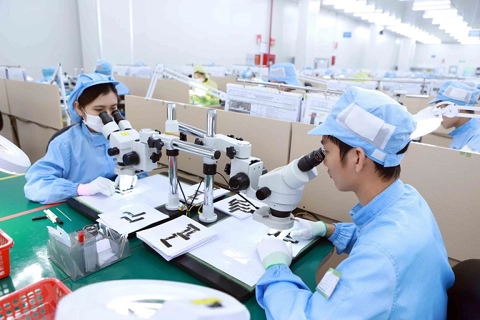
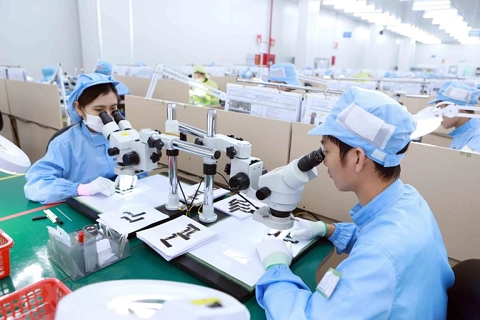
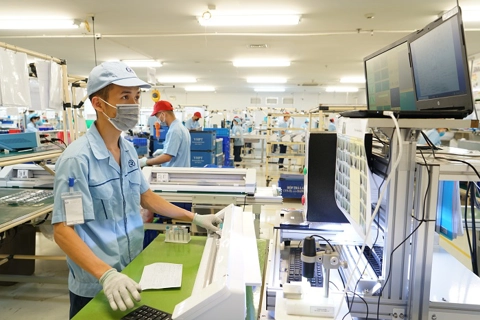
| Production at Katolec Vietnam in Quang Minh Industrial Park, Hanoi. Photo: Pham Hung |
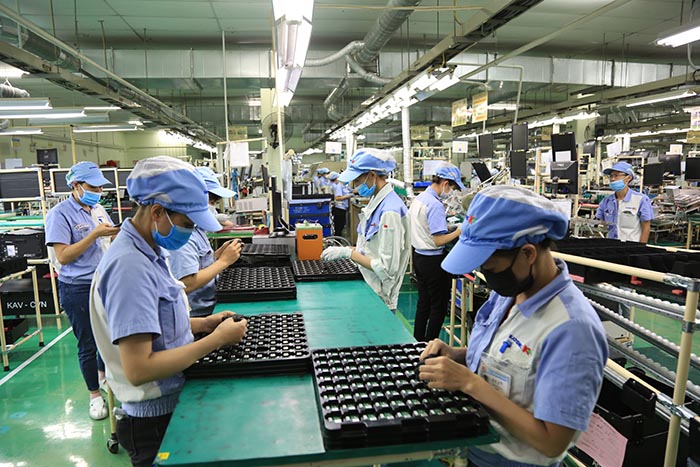
Higher FDI commitments were driven by increasing capital flow into manufacturing (up 90.7% against last month), including a US$1.4 billion investment in electronics by a Korea-based company.
Overall, committed FDI inflow reached $22.1 billion in the first nine months of 2021, a 4.4% year-on-year increase.
As mobility restrictions were eased, FDI disbursement also rebounded, growing by 57.4% although it remained 29.5% lower than a year ago. Over the first nine months of 2021, FDI disbursement decreased by 3.5% year-on-year.
Meanwhile, the number of new confirmed Covid-19 cases and deaths have been trending down since early September, suggesting progress in controlling the disease, noted the World Bank.
However, prolonged lockdown of major economic centers took its toll on the GDP in Q3-2021 as the growth rate contracted by 6.2% during the period, the sharpest drop since the quarterly data were compiled in 2000.
Due to high sensitivity to social distancing measures, services were hit hardest, falling by 9.3% year-on-year, and contributing 60% to the GDP contraction. The industry was also affected severely, down 5.0% as factories in the southern manufacturing hubs were shuttered to contain the outbreak.
By contrast, agriculture remained relatively resilient, growing by 1.0%.
Given the sharp contraction of the GDP in Q3-2021 and depending on the strength of the economic rebound in the last quarter of the year as both Hanoi and HCMC are lifting sanctions, GDP growth for 2021 is now estimated to be in the 2-2.5% range, stated the report, which is below the World Bank’s forecast of 4.8% in August.
Ease logistics constraints a priority
According to the World Bank, the resumption of economic activities after a lengthy lockdown can face market friction.
“The reprise of production in the industrial sector and sales in the services sector will face potential supply chain and labor shortages,” it said, noting helping ease logistics constraints, continued testing and vaccination, and encouraging labor mobility should be priorities.
The World Bank said Vietnam should adopt an expansionary fiscal policy and use the various fiscal tools available to support the economic rebound.
First, easing procedural rigidities in the budget to spend the planned current and investment budgets would support aggregate demand.
Second, extending further support to workers in the formal and informal sectors and households would help fend off possible hardship as people return to employment. Further financial support for firms to re-activate their businesses after a long period of closures should also be warranted, particularly those in hospitality.