Giong Festival: Sacred offerings revealed
Centuries of legend, history and cultural pride come alive at the Giong Festival, an annual celebration in the picturesque outskirts of Hanoi.
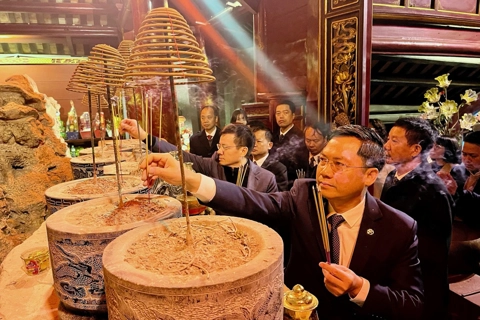
Held from the 6th to the 8th of the first lunar month, this thousand-year-old vibrant festival draws visitors from near and far to Soc Temple, a Special National Monument, in Soc Son District. One of Hanoi's most enchanting festivals, it is an invitation to step into the heart of Vietnam's ancient traditions.
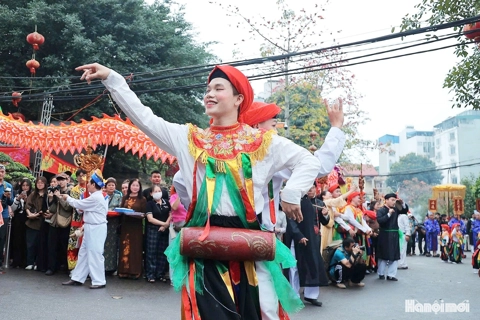
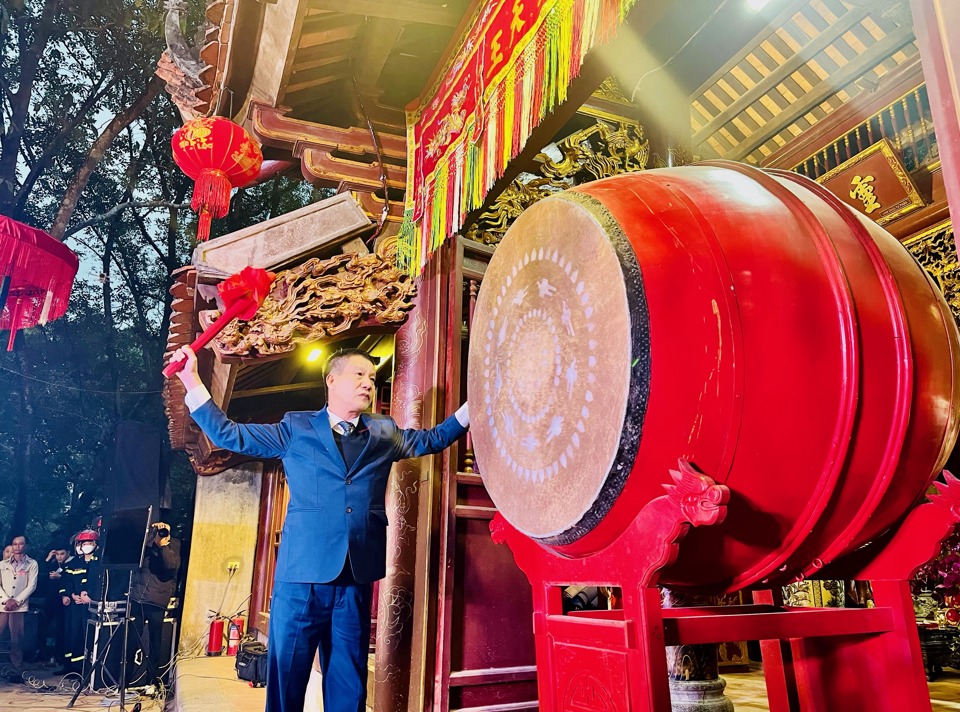
| The drumming ritual to kick off the 2925 Giong Festival. Photo: Trong Tung |
The legend of Thanh Giong tells the story of a miraculous infant from Phu Dong Village, Soc Son District, who in the span of a few months grew up to defeat the Chinese invader An and help bring peace to the country. To honor the legendary hero, the people have deified him as Genie Giong and hold an annual festival to celebrate his heroic deeds. Visitors come to experience this great tradition where the community gathers to pay tribute to Thanh Giong's bravery.
The Giong Festival is held at several locations in Hanoi, with Soc Temple, where the hero ascended to heaven, and Phu Dong Temple, his birthplace, being among the largest and most significant. In recognition of its cultural significance, the festival was inscribed on the UNESCO World Heritage List in November 2010.
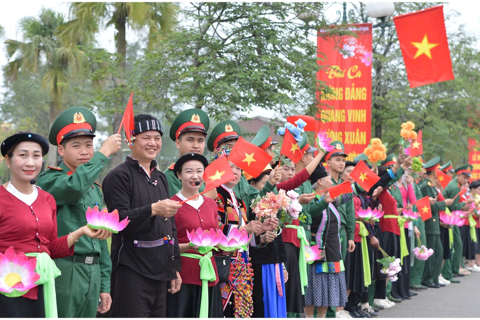
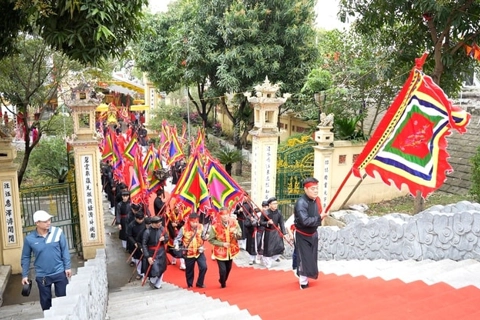
| People flock to the Giong Festival at Soc Temple, Soc Son District, Hanoi. Photo courtesy of the People's Committee of Tien Duoc Commune, Soc Son District. |
.jpg)
As one of Vietnam's 7,000 traditional folk festivals, the Giong Festival stands out for its unique cultural and spiritual values. Its colorful offerings, processions and rituals leave a lasting impression on visitors, making it a must-see event for anyone who wants to experience the true essence of Vietnam's heritage.
Join Tung Nguyen of The Hanoi Times as we explore the fascinating and symbolic offerings made to Saint Giong during this remarkable festival, which officially opened on February 3 at Soc Temple in Soc Son District, Hanoi.
The Bamboo flower tree - A symbol of unity
| The Bamboo Flower Tree procession. |
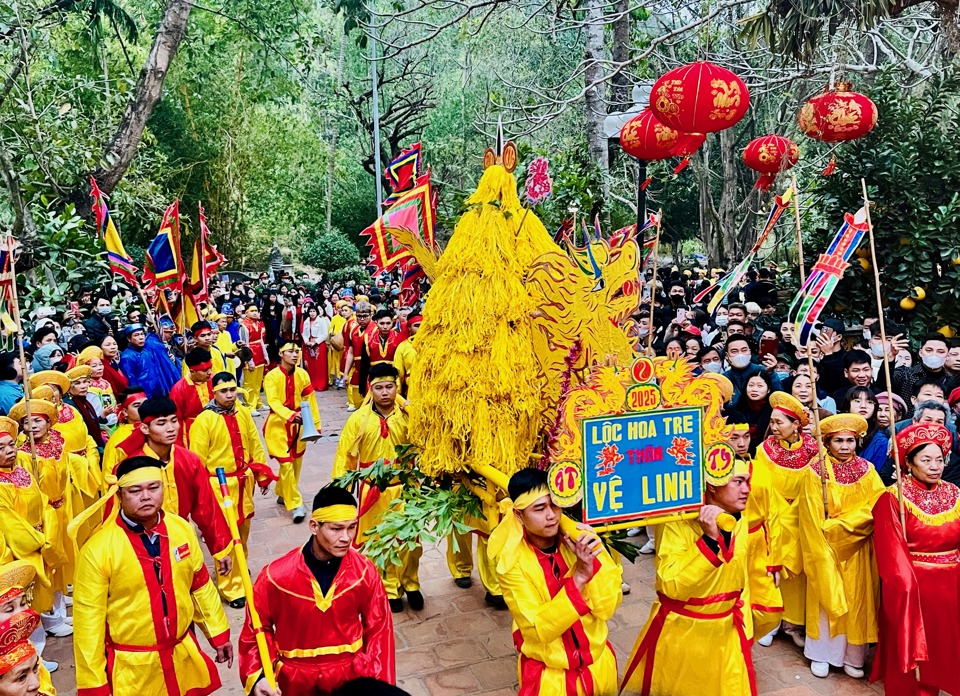
One of the most striking offerings is the bamboo flower tree made by the people of Ve Linh Village in Phu Dong Commune, Soc Son District. The bamboo tree was one of Giong's weapons to fight invaders. The bamboo flowers symbolize the spirit of unity and resilience in the face of challenges. They represent the national solidarity that helped the Vietnamese people triumph over natural disasters and foreign invaders.
The Horse Goddess
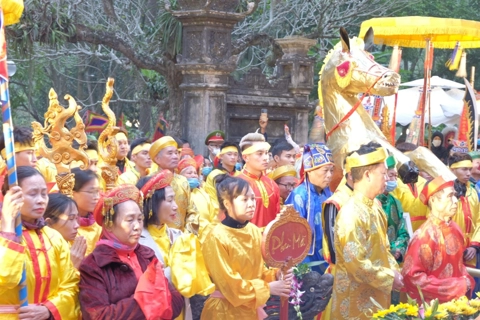
| Horse Goddess Procession ritual. |
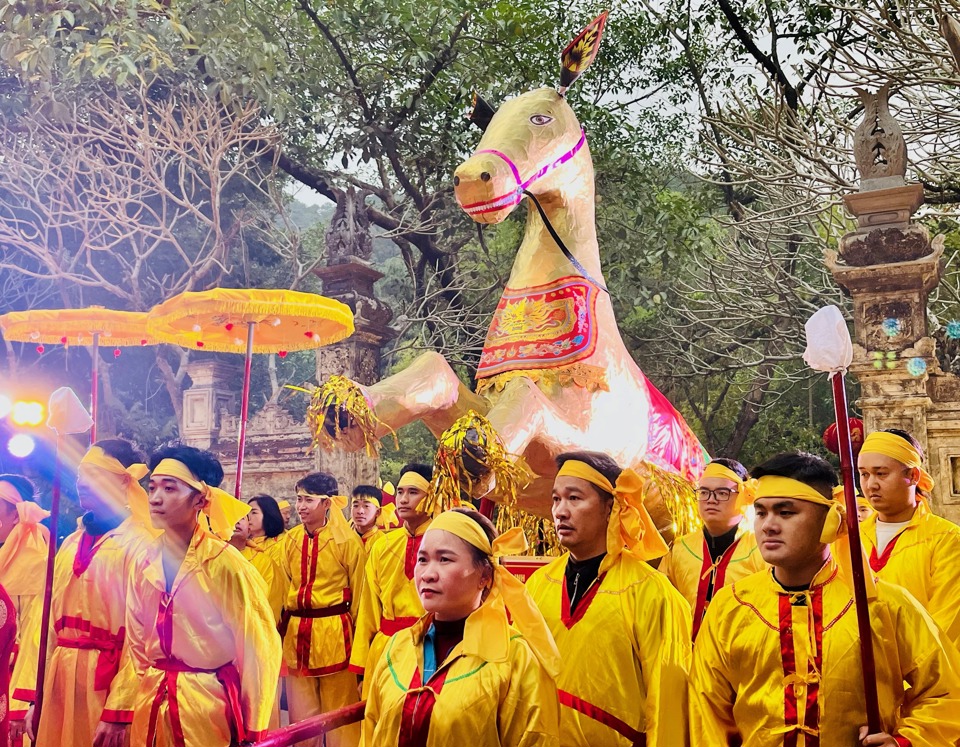
Another offering is the Horse Goddess, a magnificent papier-mâché creation by the villagers of Phu Ma Village, Phu Linh Commune. War horses played a pivotal role in the battle, and after defeating the invaders, the villagers began to worship these animals as "gods," hoping they would bring protection and peace to their homeland. The Horse Goddess honors these noble creatures who were instrumental in securing Vietnam's freedom.
| The War Elephant procession. |
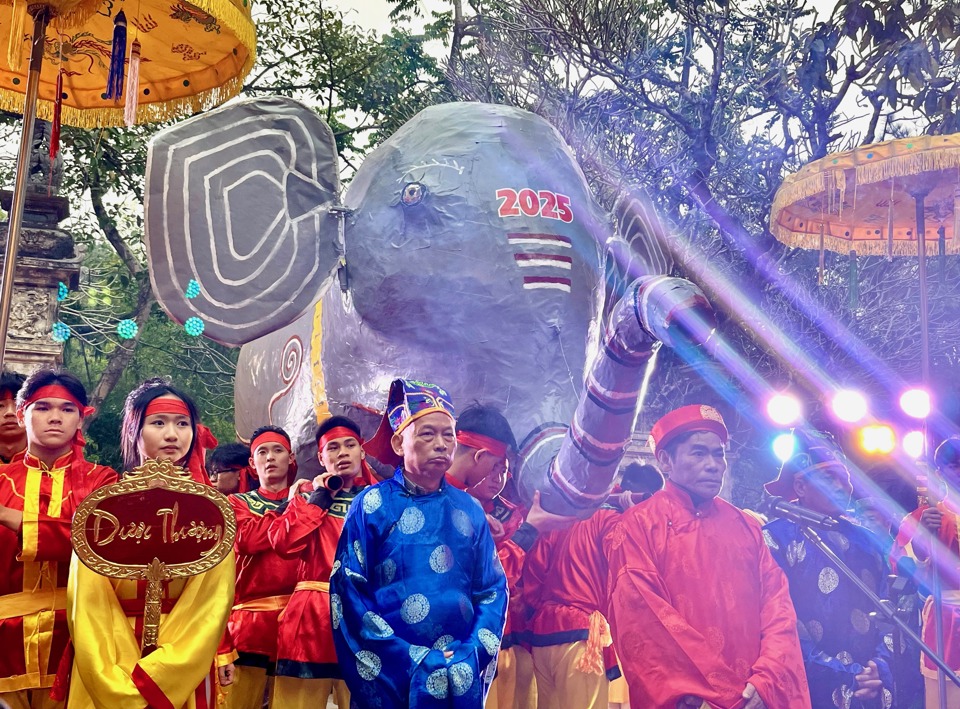
Made of papier-mâché and bamboo by the skilled hands of the villagers of Duoc Thuong, Tien Duoc Commune, the War Elephant statue represents the powerful role of elephants in warfare. These majestic creatures were revered as protectors, and their tusks, carefully preserved by the villagers of Duc Hoa, are reverently paraded during the festival.
Betel and Areca
| Betel and areca are prepared by villagers of Dan Tao, Tan Minh Commune. |
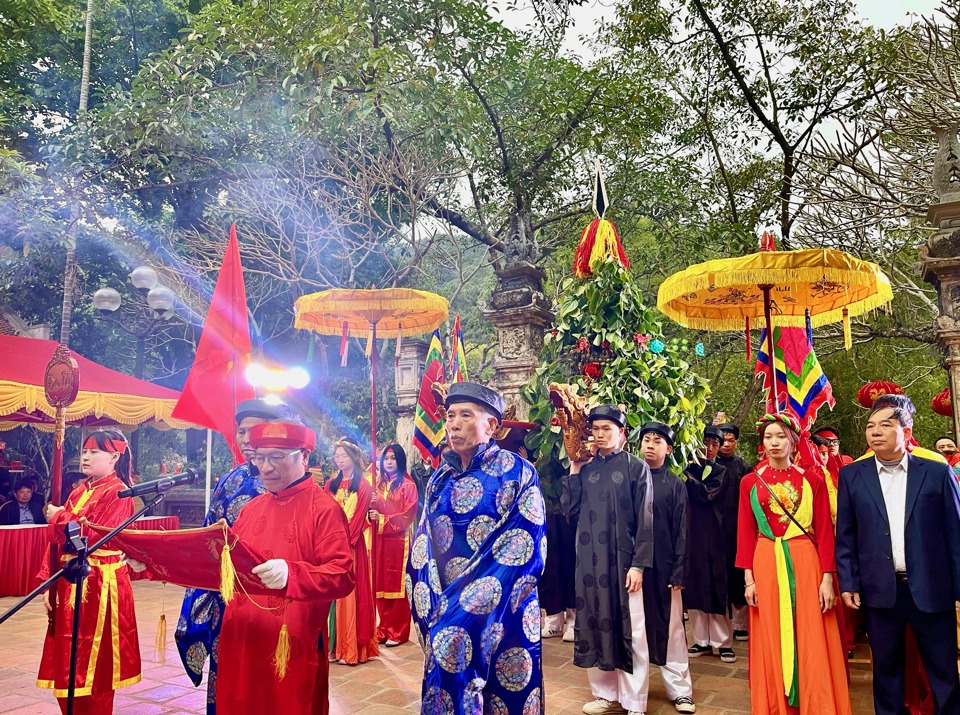
In a spirit of hospitality and respect, the villagers of Dan Tao, Tan Minh Commune, prepare offerings of betel and fresh areca fruit. According to legend, after defeating the enemy, Thanh Giong stopped here to rest, enjoy a simple meal, and pass on wisdom to those who came after him. These offerings symbolize peace, knowledge, and the harmonious relationship between man and nature.
Elephant Tusk
| An ivory was carefully preserved by people from Duc Hoa Village. |
.jpeg)
The tusks of fallen war elephants were revered as treasures and carried to every Giong festival. In Duc Hoa Village in Duc Hoa Commune, tusks were carefully preserved and treated with great respect.
Elephant grass - food for Thanh Giong's sacred war horse
| The procession of Co Voi by villagers from Yen Sao. |
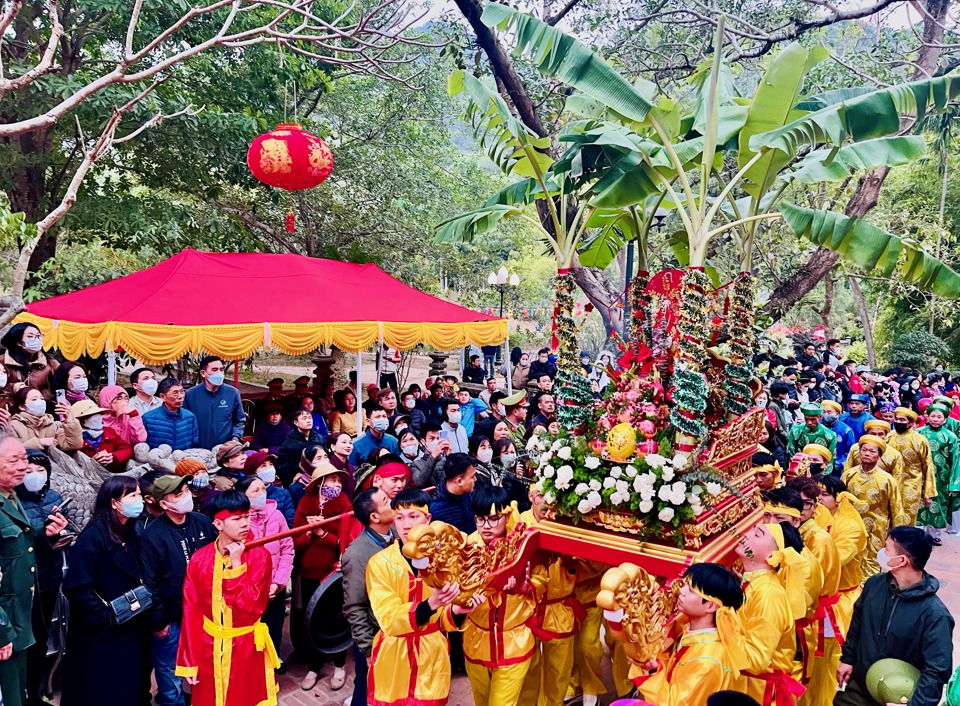
Co Voi or elephant grass, traditionally used to feed the war horse, is another important offering during the festival. The people of Yen Sao Village in Xuan Giang Commune build beautiful palanquins decorated with elephant grass. The lush green foliage represents the respect and care given to the animals that helped lead the fight for peace.
The female general's palanquin - honoring Vietnamese heroes
| This year, the "female general" selected by Yen Tang Village (Bac Phu Commune) to lead the procession at the opening ceremony is Nguyen Phuong Thao, an 11-year-old student. |
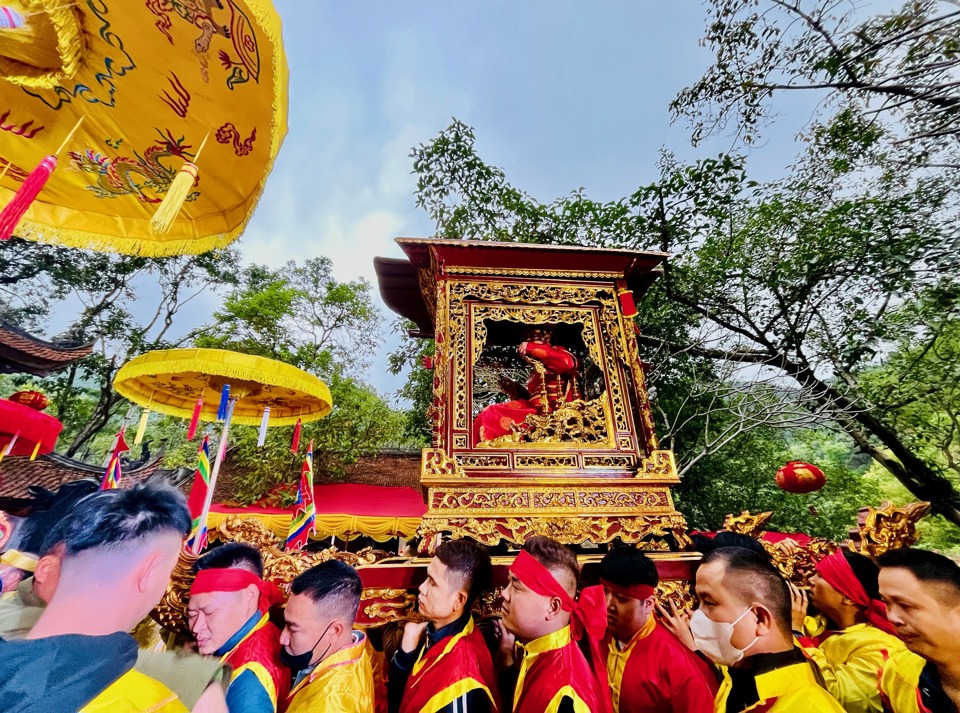
Honored by the people of Yen Tang Village, Bac Phu Commune, the Female General's Palanquin commemorates one of the female generals who played a crucial role in the victory of Thanh Giong. This powerful symbol of strength and leadership highlights the important contributions of women in the nation's history.
The Cau Huc- a celebration of martial spirit
| The Cau Huc processing ritual. |
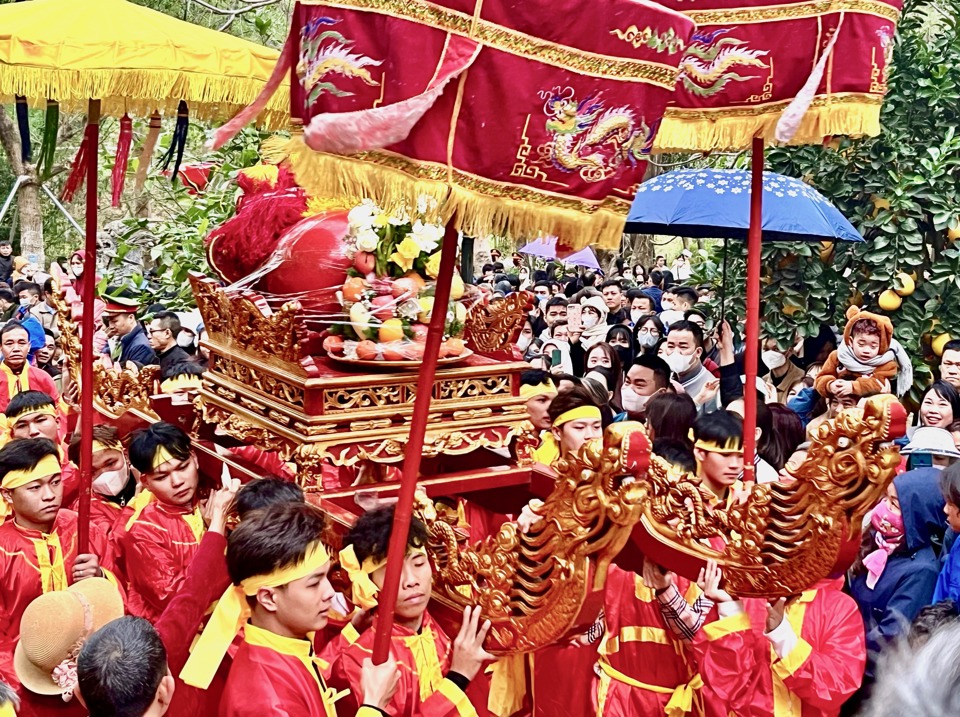
The ball, made of bamboo and papier-mâché and intricately decorated by the people of Tan Minh Commune, is used in the Cau huc ceremony of the Giong Festival. This ancient folk game of hitting a large ball with one's head is a vivid display of Vietnam's intelligence, resilience, and martial spirit.