Government ensures transparency in real estate market
Vietnam will not sacrifice social advancement and equality in the pursuit of mere economic growth.
The Vietnamese Government would not tighten credit into the real estate market unreasonably, criminalize civil and economic offenses, but enhance state supervision in this regard.
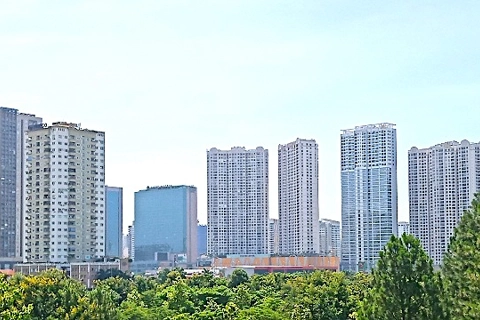
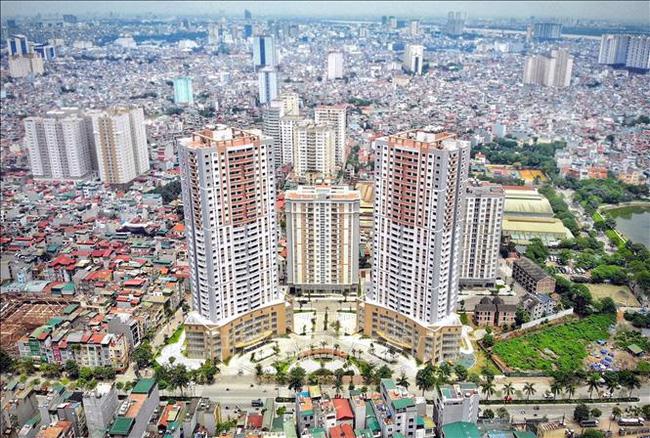
| A corner of Hanoi. File photo |
“It is essential to timely identify and strictly deal with irregularities on the market, including tax evasion in real estate transaction, to ensure benefits are shared among the State, people and enterprises.”
This was among measures mentioned by the Government’s directive No.13 to promote the sustainable and healthy development of Vietnam’s real estate market.
According to the directive, the real estate market holds a significant role in stabilizing the macro-economy, containing inflation, and promoting growth.
While the market has seen positive growth over the years, the Government acknowledged existing shortcomings and risks for its sustainability in long term, including an imbalance in product structure, high housing prices compared to the people’s income level, lack of transparency, and credible market information.
In this context, the Government stressed the necessity to improve the legal framework for the real estate market and simplify investment procedures that are currently covered by multiple laws and regulations.
“The main solution is to develop effective, transparent, and healthy policy instruments to ensure the compatibility between capital and property markets, as well as the diversification of financial sources for the market,” noted the directive.
In addition, the directive expected flexible maneuver of fiscal and monetary policies for effective management of prices in the market, avoiding sudden changes in policies that could cause negative impacts for market stakeholders.
The directive noted a focus on creating an opportunity for people of low income to purchase houses, and protecting social welfare. “Vietnam would not sacrifice social advancement and equality to pursue purely economic growth,” it added.
Meanwhile, the Government would focus on developing strategic infrastructure to create new space for growth via the formation of new industries, services, and urban areas.
The directive noted the Ministry of Construction (MoC) is responsible for finalizing regulations related to the real estate market and addressing current obstacles to its stable development.
“A system of market information is required, along with greater use of non-cash payment in real estate transactions,” stated the directive.
The Prime Minister assigned the Ministry of Finance (MoF) to revise the Government’s decree No.153 on the issuance and transaction of corporate bonds in the domestic market, and international bond issues.
“The authorities would tighten supervision on activities of real estate companies in the stock market to prevent cases of manipulation or speculative investment.”
The MoF and the State Bank of Vietnam (SBV) would supervise the transaction of corporate bond issuance, especially private placement from property developers, credit institutions related to real estate firms, or those without collateral assets.
Prices of housing segments in Hanoi continue upward trends so far this year, as shown by statistics from trading platforms and foreign real estate agencies. The prices of apartments in the first half of 2022 rose 13% on a year though demand fell by 32%. Meanwhile, the prices of villas between January and June rose 37% from the same period last year despite a fall in transactions of up to 72%. According to a report on Hanoi’s real estate market released in July 2022 by www.batdongsan.com.vn – the prestigious real estate transaction platform, apartments remained attractive to homebuyers. The prices of apartments of all segments (affordable, mid-end, and high-end) rose 6-13% per year, compared to 4-8% in Ho Chi Minh City. Surging prices are attributed to Hanoi’s well-planned infrastructure and transport. In addition, demand for apartments in the city increased by 7% in the year and the sentiment has continued rising over the past four years. |