Hanoi boosts development of craft villages
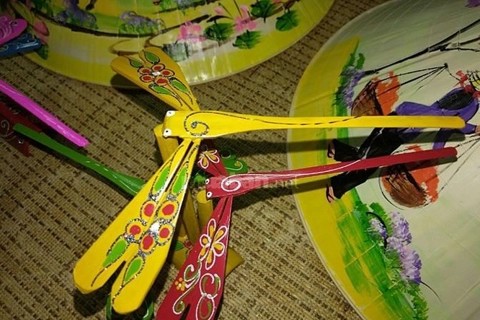
The capital city continues to support rural enterprises and industrial facilities for the development of craft villages.
Hanoi is taking action to support craft villages in renovating technology and expanding production scale, according to the Center for Industrial Extension and Industrial Development Counseling under Hanoi's Department of Industry and Trade.
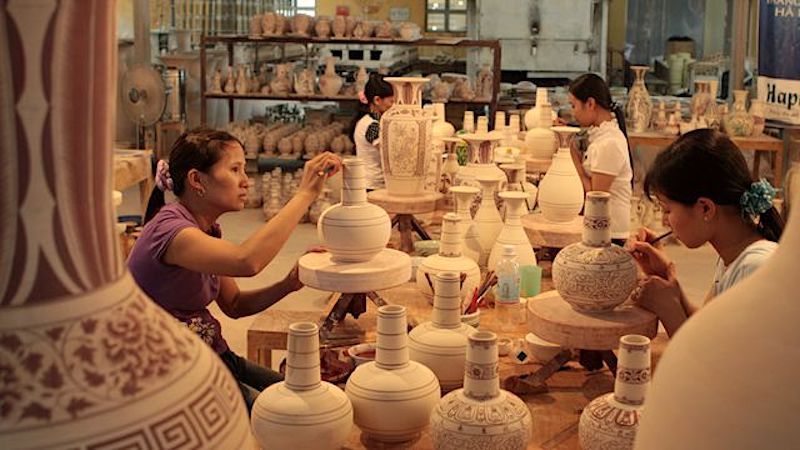
Bat Trang ceramics village is one of the most well-known traditional craft ones in Hanoi. Photo: thuongtruong.com.vn |
Under Hanoi’s industrial extension program for the 2016-2020 period, the city has assisted 64 rural industrial facilities to renovate equipment, apply scientific and technological advances in production, raise productivity and reduce environmental pollution.
In addition, the program has organized 274 handicraft training courses for 9,590 rural workers, more than 80% of them were able to find jobs. Also, other 72 courses have been held to improve management skills, corporate governance, sample design, import and export, sales management, and financial management for 7,200 trainees who are leaders and managers of enterprises and rural industrial facilities.
Within the framework of the program, five export fairs specialized in handicrafts with a transaction value of nearly US$30 million have been held.
The city’s industrial development plan has been disseminated among rural enterprises and industrial facilities so as for them to set their production development orientation. Under the program, they have been funded for buying new equipment and promoting their products.
Goals for a new phase
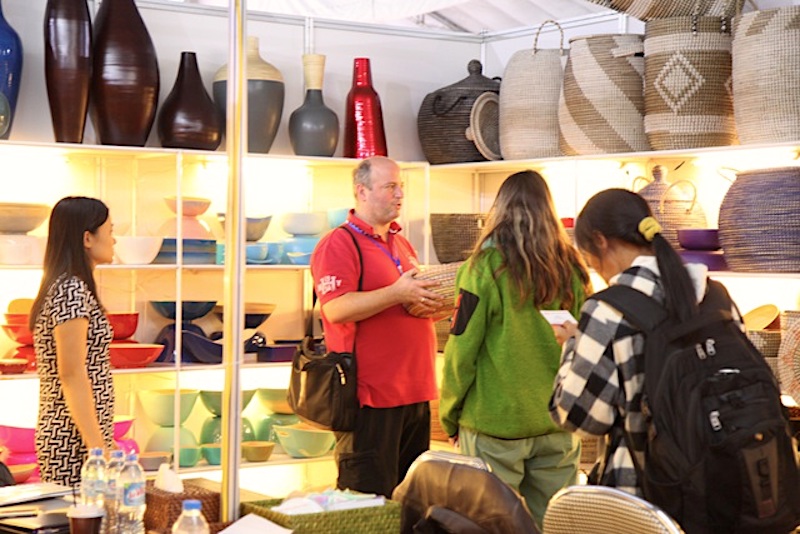
| Hanoi will hold a series of promotion activities to support rural facilities in 2020. Photo: dantri.com.vn |
In the new phase, the program is recommended to focus on solutions to support the development of large-scale commodity production taking into account value chains, associating raw material production with processing and consumption on the basis of promoting regional advantages, and in this way, increasing the rural facilities' competitiveness in domestic and foreign markets.
In order to continue to support rural enterprises and industrial facilities in 2020, Hanoi will organize handicraft training courses; support the facilities to apply modern equipment in production; organize a series of activities such as Hanoi's handicraft product design competition; international handicrafts fairs; the exhibition of new and creative handicraft design products; the survey on the city’s industrial extension schemes.
Director of the city’s Center for Industrial Promotion and Industrial Development Consultant Dao Hong Thai said that in 2020, the industrial extension program will focus on supporting and scaling up advanced production models, applying solutions for energy efficiency, improving the working environment and promoting cleaner production; connecting key industrial product manufacturers with domestic and foreign partners.
In the 2021-2025 period, Hanoi aims to have over 10,000 enterprises and rural industrial facilities participating in the industrial extension program which will create jobs for about 50,000 rural workers. Handicrafts exports are expected to increase by an average of 5-8% per year, reaching US$550 million by 2025.
Besides, the program strives to support the industrial facilities to apply the energy management system so as to achieve energy savings of 5-7% of total energy consumption and reduce 5-8% of raw materials, fuels and materials in production.
To achieve that goal, Hanoi will continue to implement solutions to remove difficulties, support businesses to promote sales and improve competitiveness. Vocational training will be based on local labor demands.