Hanoi faces waste management during Covid-19 outbreak
Waste from medical service and takeout are head aching local authorities to push up measures to protect the environment.
Waste treatment brought upon by the Covid-19 pandemic is once again challenging Hanoi's authorities, demanding them to give a dynamic response against environmental pollution.
Like many parts of Vietnam facing isolation or social distancing, the volume of goods from big to small purchased via online shopping has rapidly increased in the capital city, making waste in packagings such as adhesive tape, plastic bags, and single-use containers.
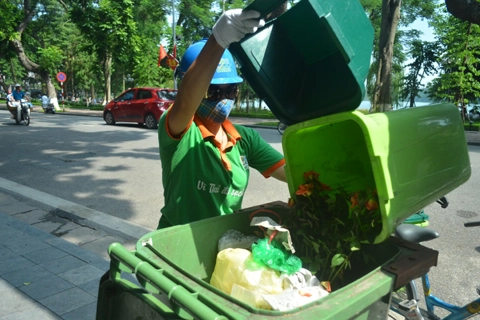
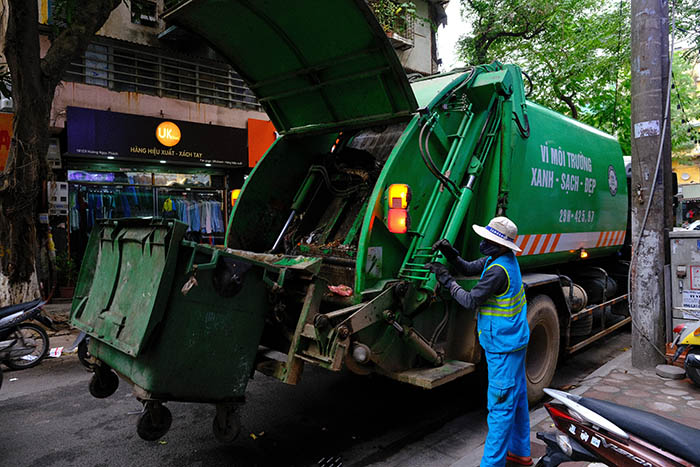
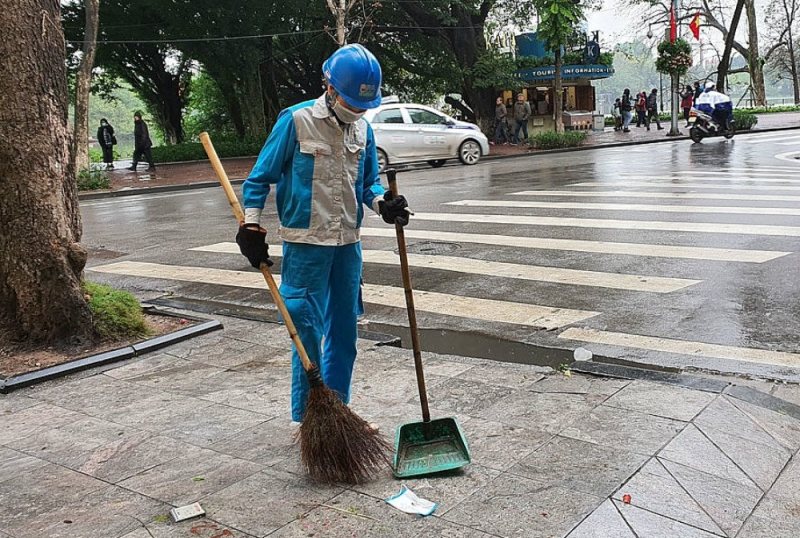
| A waste collector at work on Hoang Ngoc Phach Street, Hanoi. Photo: Pham Hung |
According to the latest survey from Nielsen Vietnam on the impact of Covid-19 on consumer behavior, 82% of consumers have reduced the frequency of eating out activities. Besides, 34% of people ordered food more from delivery services.
Hoang Anh, a resident of Hanoi’s Hai Ba Trung District, told Hanoitimes that since last month after the city suspended all restaurants and eateries with sit-down table service, he has to buy takeout and every day he throws away a number of single-use plastic bags and boxes.
“When I bought or ordered takeout at a shop or restaurant, I always received a meal packaged with adhesive tape, plastic bags, and disposable plastic items,” Anh said. “I have no choice. The only way that I can do to protect the environment is to separate the different types of waste.”
A restaurant owner in To Hien Thanh Street said that he has to pay more cost for plastic bags and single-use containers due to the growth of customers buying takeout and online.
“More customers come to buy takeout, but few bring their own containers, so we must provide those,” the shop owner, who wanted to be anonymous, told Hanoitimes.
Prof. Dr. Dang Kim Chi, Vice President of the Vietnam Association for Conservation of Nature and Environment, said disposable plastic items are convenient and cheap but create a burden on the environment because most of them cannot be recycled and cost a few hundred years to be destroyed.
Chi said the Covid-19 pandemic is also leading to a rapid increase in medical waste, and plastic products for the prevention, control, testing, and treatment.
In concentrated isolation areas, hospitals, and medical facilities in Hanoi, a set of masks, gloves, droppers, and protective suits is considered an inseparable object of doctors and patients, and their family members to prevent infection.
“There is an undeniable fact that the increasing volume of these types of waste is a burden for the city’s waste treatment work,” Chi said.
Nguyen Xuan Thiem, Head of the Ha Dong General Hospital’s Infection Control Department, said on average, about 40kg of hazardous waste is discharged every day from the hospital’s centralized screening and isolation areas.
“These types of waste are sorted, disinfected, and labeled before they are transported to the hospital's hazardous rubbish bin. Then the garbage collection company will come to collect the waste on the same day,” Thiem said.
Waste separation
A report from the Hanoi Urban Environment Company Limited (Urenco) showed that during the pandemic, the volume of waste, plastic waste from ready-to-eat food, and medical waste has rapidly increased in recent months.
The company has promoted collecting and treating waste in the city, especially in concentrated isolation areas where the garbage will be collected under a special process, and guiding people to sort garbage into two categories including normal household waste and potentially contaminated waste.
Urenco has three units specializing in the treatment of medical waste and hazardous waste. With the ongoing pandemic situation, these units have been doing their full capacity to meet the demand for waste treatment.
Prof. Dr. Chi told Hanoitimes that management agencies, local authorities, and people must seriously implement source segregation of waste. In addition, it’s needed to provide waste collectors with personal protective equipment to help them prevent infection at work.
“We also need to protect and remind dong nat [who collect and buy the recyclable plastic waste from households and companies] to protect themselves and prevent the Covid-19 outbreak,” Chi said.
“I think that for the act of throwing masks on the streets, there must be stronger sanctions,” she added.
| A used mark was discharged in a public place. Stronger sanction is expected to stop such an unconscious act in the country. Photo: Nam Thanh |
In such a critical period of the pandemic, Chi said the environment company needs to set up a force specializing in collecting used masks and medical supplies discharged by people. This force would get people into the habit of creating the source segregation of waste.
“The most important thing is to promote propaganda to raise people's awareness on minimizing waste and use of single-use items that should be replaced by environmentally friendly products like cloth masks,” Chi said.
The Vietnamese Government has since 2019 launched the anti-plastic waste program in Hanoi and Ho Chi Minh City, the two major cities of Vietnam where discarded about 80,000 tons of plastic and plastic bags discarded every day. The program has been actively responded to by the community, however, it is facing challenges brought about by the Covid-19 pandemic. |