Hanoi to speed up relocation of universities, hospitals, industrial establishments
Hanoi needs a specific mechanism for land requisition as soon as possible.
The ministries of Health, Education and Training, Labor, Invalids, and Social Affairs must urgently complete the roadmap for the relocation of universities, hospitals, and polluting production facilities outside the Hanoi metropolitan area.
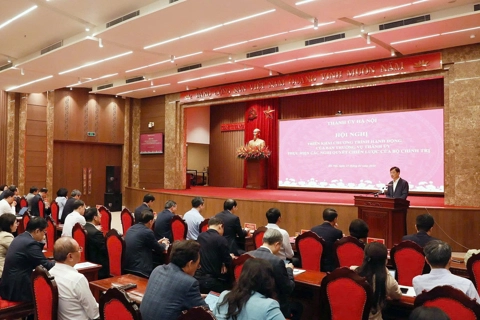
Minister of Construction Nguyen Thanh Nghi made this appeal at an interpellation session at the 15th National Assembly on October 31 in Hanoi.
The Ministry of Construction has reviewed the relocation work of 36 central agencies, Nghi said, adding that it remains slow due to changes in guidelines, policies, and laws, especially the Land Law.
"While relocation requires large budgets, the implementation process encountered many difficulties in mobilizing resources. In addition, the coordination and implementation work of the agencies was not sufficient," said Nghi.
Minister of Construction Nguyen Thanh Nghi is one of four members of the Government who has answered questions at the 4th session of the 15th National Assembly. Photo: Quochoi.vn |

"This law regulates that the headquarters of the ministries, agencies, industrial establishments, and universities be built on land for a defined time and within the assigned period. Therefore, as their owner has not expired, many units are keeping the old headquarters even though they have been allocated other land to build the new offices," said Nghi.
"Thus, Hanoi needs a specific mechanism for land requisitioning soon after the relocation of an entity. Then, districts in metropolitan areas would have more land available for infrastructure development," the minister gave the solution.
"However, the implementation is not simple. Hanoi's responsibility also needs the drastic participation of all levels, branches, and the whole political system with great determination to achieve the goals soon," he stressed.
The policy of relocating ministries, branches, and central agencies outside Hanoi's urban core was approved in a Vietnamese government resolution in 2008.
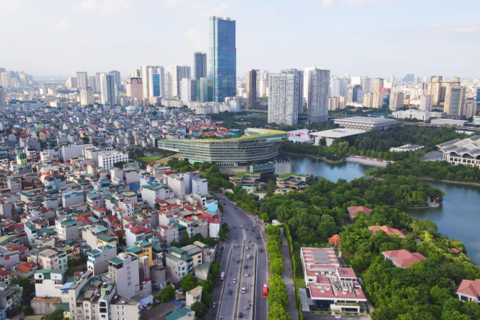
Numerous Hanoi residents have been yearning for concrete measures by the municipal authorities to speed up the relocation of universities, hospitals, and polluting production facilities to reduce environmental pollution and traffic jams and save land for public spaces.
"It's a really wise policy. Like many others, I hoped the project would be realized as soon as possible. Industrial production plants are located in densely populated residential areas in central districts, which is inappropriate. It is very important to quickly find solutions to get them out of the metropolitan area of Hanoi," Nguyen Thi Thanh Hao, a resident of Thanh Xuan District, told The Hanoi Times.
“To reduce traffic pressure in Hanoi’s four core districts with a very large population, moving universities and hospitals to the newly developed areas is a sound policy,” said Dang Quoc Hoang, a resident of Dong Da District.