Hanoi opts for smart water drainage solution during rainy season
In recent years, Hanoi has prioritized and invested resources in renovating, upgrading, and modernization of the sewerage and drainage system.
Hanoi Sewerage and Drainage Company (HSDC), the city's flood prevention agency, is implementing a smart drainage initiative to manage the challenges of the rainy season.
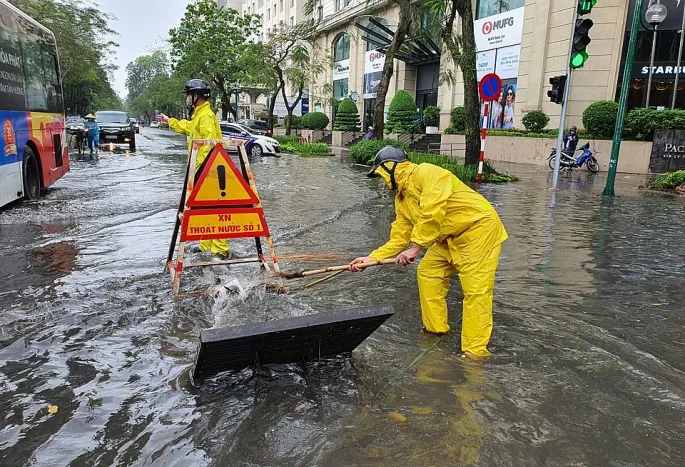
| Workers drain water from a flood zone in Hanoi. Photos: The Hanoi Times |
HSDC General Director Phan Hoai Minh said the plan involves deploying sensors at various locations to collect and transmit data back to the city's central system, enabling the creation of a comprehensive flood map. This map will inform residents of flooded areas' locations, visual representations of affected locations, and the extent of flooding.
"Residents can make informed decisions about their mobility and living conditions based on the available flood information," Minh said.
He noted that the company also emphasizes dredging culverts and drainage ditches in critical flood-prone areas.
"We have increased technology integration into the process of dredging major and primary sewers. This includes the use of cameras to inspect sewers in key flood-prone areas to identify and correct existing problems and system deficiencies," he continued.
Minh also mentioned the adoption of a flexible approach to tree pruning in the city to improve aesthetics while reducing the risk of trees falling during the rainy season.
The occurrence of fallen trees on stormy days not only affects traffic safety but also hinders and delays the progress of drainage in flooded areas in the city, he noted.
Vo Nguyen Phong, Director of the Hanoi Department of Construction, said the department had developed specific waterlogging scenarios for each area in the city.
For example, in the western region, which includes Ha Dong, Nam Tu Liem, Bac Tu Liem, Hoai Duc, and Dan Phuong, the department works with the Ministry of Agriculture and Rural Development to draw up a comprehensive plan for water diversion in the event of heavy rainfall. This includes coordinating responses, conducting clean-up operations, and diverting water to the Yen Nghia Pumping Station.
In addition, Phong said the two departments are working together to ensure the efficient operation of the drainage system, which regulates water levels between the city and suburban areas.
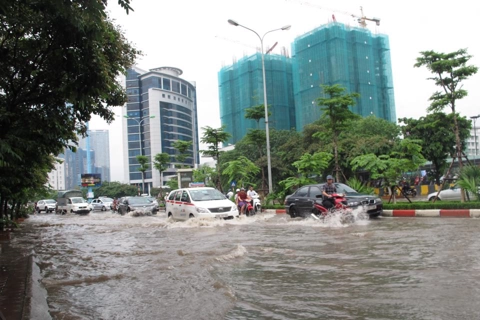
| Heavy rain caused partial flooding in Hanoi's streets on June 12. |
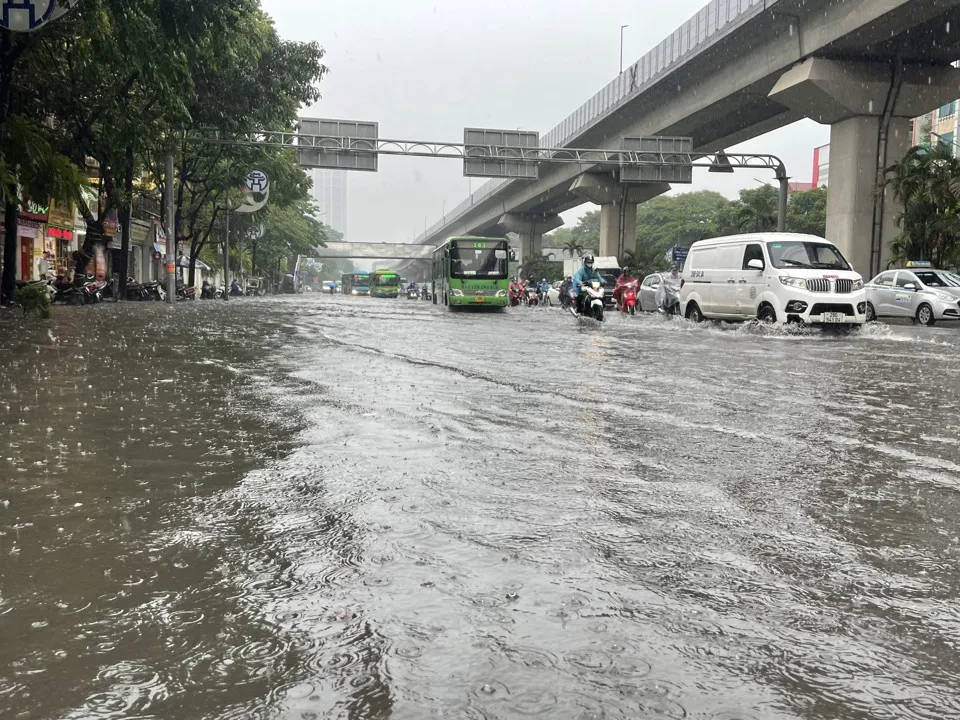
High risks of flooding
In recent years, Hanoi has prioritized the management and investment of resources in renovating, upgrading, and modernization of the canal and ditch system, resulting in significant improvements in street drainage and a gradual reduction in prolonged flooding events.
However, despite these efforts, several areas in Hanoi have experienced severe flooding during recent heavy rains.
According to the Hanoi Department of Construction, the problem is due to a combination of subjective and objective factors.
Irregular heavy rains and excessive water volumes that exceed the design capacity of the drainage system contribute to severe flooding. However, the existing drainage infrastructure still helps to mitigate the duration of flooding situations.
With rainfall rates of 50 to 70 mm per hour, several locations such as Nguyen Khuyen, Hoa Bang, Duong Thanh - Bat Dan - Nha Hoa intersection, Cao Ba Quat, Thuy Khue (La Pho slope), Minh Khai (the foot of Vinh Tuy Bridge), Thang Long Avenue, Ngoc Lam Street, and Hoang Nhu Tiep Street are expected to be flooded.
In the event of heavy rainfall in a short period of time, 100 mm per hour or more, causing overloading of the drainage system, 19 other venues in the city are expected to be affected, resulting in localized flooding.
Some of the areas prone to flooding under such conditions are Tong Dan, Dinh Tien Hoang, Phung Hung, Cau Giay - Dich Vong junction, Mac Thi Buoi, Quan Nhan, Cu Loc, Nguyen Trai, Phan Van Truong, Duong Dinh Nghe, Tran Binh and Ke Ve, Ecohome3, Resco urban area, Do Duc Duc Street, Nguyen Xien, Co Linh - Dam Quang Trung section, National Highway 3, Mai Lam Commune (Dong Anh District) section, and Road 23B, Co Dien Village (Dong Anh District) section.
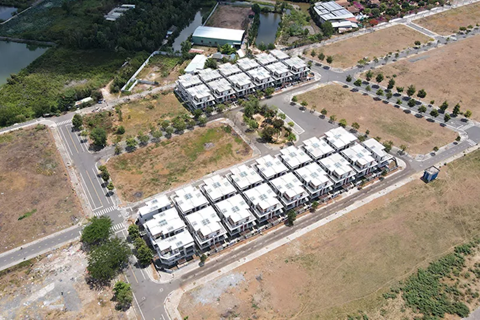
Phong, from the construction department, cited rapid urbanization in certain areas as a key factor in worsening flooding.
"Rapid urbanization has led to a lack of synchronized development of technical infrastructure according to the city's planning. Ongoing construction projects related to technical and transport infrastructure also significantly impact the drainage system's functioning," he said.
In addition, there is still a lack of awareness among some residents and businesses about proper waste disposal. Some continue to litter and discharge untreated chemical residues, such as oil and grease, into the drainage system, accumulating sediment and membranes in sluice gates and manholes, impairing drainage capacity and exacerbating flooding during heavy rainfall.
The National Center for Hydrometeorological Forecasting predicts an increase in the frequency of storms affecting Hanoi by 2023. As a result, it warned that there will be an average annual increase of 5-10% in regional rainfall, especially of short duration.