Hanoi’s residents alarmed at indoor air pollution
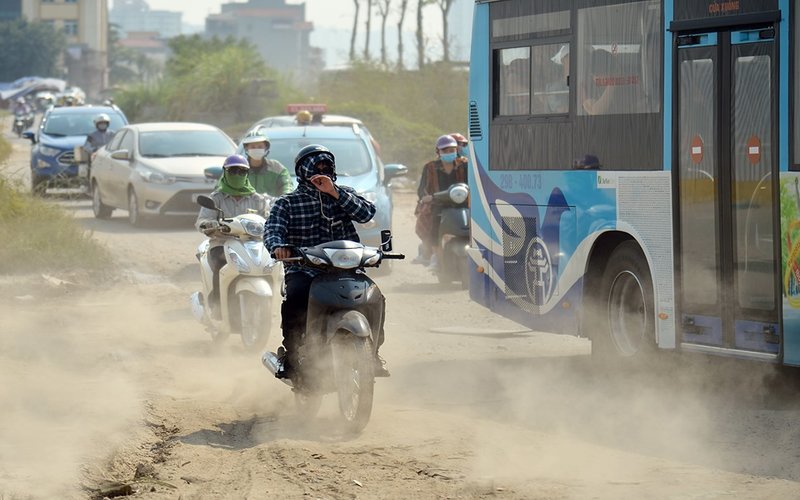
Outdoor air pollution is considered a major factor leading to increased indoor air pollution in Hanoi.
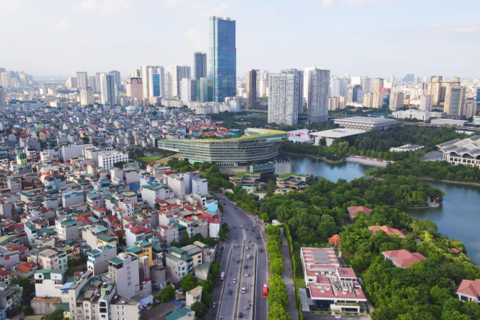
Along with bad air conditions in Hanoi, a metropolis of over eight million people, indoor air pollution has become a big problem for dwellers.
Hanoi’s air quality index (AQI) measured at all automatic monitoring stations in the city show levels close to serious pollution, with the average range of 150 to 200. Experts said air quality at this level could aggravate health issues for people with sensitive health conditions.
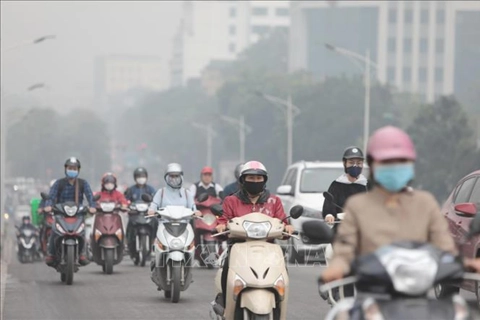
| Indoor air pollution concerns people. Photo: Internet |

Outdoor air pollution is considered a major factor leading to increased indoor air pollution in the capital city.
At the conference "Hanoi Air Quality - Situation and solution orientation" organized by the Vietnam Union of Science and Technology Associations (VUSTA) last year, scientists made public a study on indoor and outdoor air quality in Hanoi and pointed out much worrying information.
Accordingly, a research at six outdoor places and inside six apartments in Hanoi show that outdoor, the concentration of ultra-fine dust during peak hours is up to 27,000 - 31,000 particles per cubic centimeter.
President of the Vietnam Clean Air Network Hoang Duong Tung said the research has shown that the indoor air pollution situation needs to be paid more attention to.
| Outdoor air pollution is considered a major factor leading to increased indoor air pollution in Hanoi. Photo: Pham Hung |
“This is a matter of great concern in developed countries, but Vietnam has not really paid enough heed to,” Tung commented.
He said each sources of emissions need proper measures to tackle. In downtown, Hanoi needs to set policies to control motorcycle emissions, expand public transport and increase the fleet of buses using clean fuels.
"Pollution from thermal power, cement, iron and steel plants in neighboring provinces and cities needs coordination among Hanoi, the neighboring localities and the Ministry of Industry and Trade to be reduced," Tung said.
Besides, in the long term, Hanoi’s authorities need to soon move polluting factories out of the city, Tung stressed.
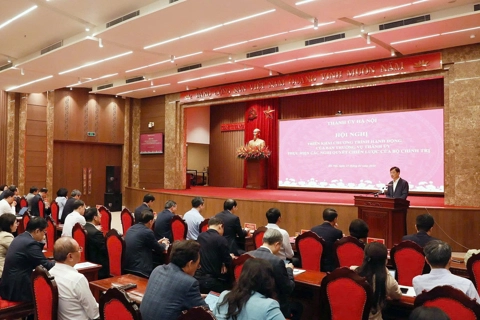
Regarding the above-mentioned issue, Deputy Minister of Natural Resources and Environment Vo Tuan Nhan told Hanoitimes that his ministry is working with the Ministry of Construction and the Hanoi city government to relocate polluting factories away from Hanoi’s downtown.
| Deputy Minister of Natural Resources and Environment Vo Tuan Nhan. Photo: Hung Nam |

At the same time, the Ministry of Natural Resources and Environment also issues regulations to minimize air pollution due to construction and factories in the capital city.
"We need to identify the causes, accurately assess the situation, and inform the people so that they can protect themselves from pollution," the deputy minister said.
He emphasized that if all people understand the danger of air pollution, they will take action to minimize air pollution, protect the environment in urban areas, and protect their own health and that of the community.
“It is more importantly to change people’s mindset so that they join hands and prevent polluting acts. It is not only a "should" or "should not", it is all people’s responsibility,” Nhan told Hanoitimes.
He added that Hanoi’s authorities inform real-time air quality indices to help its residents protect themselves and raise awareness over the matter.
When people are aware that the air quality is bad for their health, they will demand actions to fix the problem, as that's what has happened in other cities like China’s Beijing, Nhan said.