Highly received by local passengers, e-ticketing shows Hanoi on the way to become a smart city
The introduction of electronic bus tickets is in line with Hanoi's digital transformation strategy to build an intelligent transport system.
More than 16 million passengers have used the travel pass issued by e-ticketing since its launch in November 2023, according to the Hanoi Public Transport Management Center.
The Hanoi bus system has issued more than 135,000 e-tickets, including more than 77,000 virtual tickets and 36,000 chip-embedded tickets. The number of e-tickets is expected to grow even faster in the future, replacing traditional paper tickets.
Interphase of the phone application for electronic (virtual) bus tickets in Hanoi. Photos: Anh Kiet/The Hanoi Times |
.jpeg)
"With an electronic bus ticket, I can easily pay without cash, and I can also register and renew monthly passes online. I no longer have to stand in line to get a physical monthly pass, which saves me a lot of time," Le Vu Ngoc Tram, a student at the Pedagogical University in Cau Giay District, told the Hanoi Times.
"I requested an e-ticket and received it three days later. I found it very convenient because it is on my phone and all I have to do is scan it when I get on the bus. I no longer have to worry about losing my ticket or leaving it at home," said Lam Thai Son, a resident of Nam Tu Liem District.
Instead of standing in line to buy a monthly pass for his thirteen-year-old daughter to go to school, Do Dinh Trong downloaded the app on his child's cell phone. "Thanks to electronic bus tickets, I can renew the monthly pass and track my daughter's travel history anytime, anywhere," Trong told the Hanoi Times.
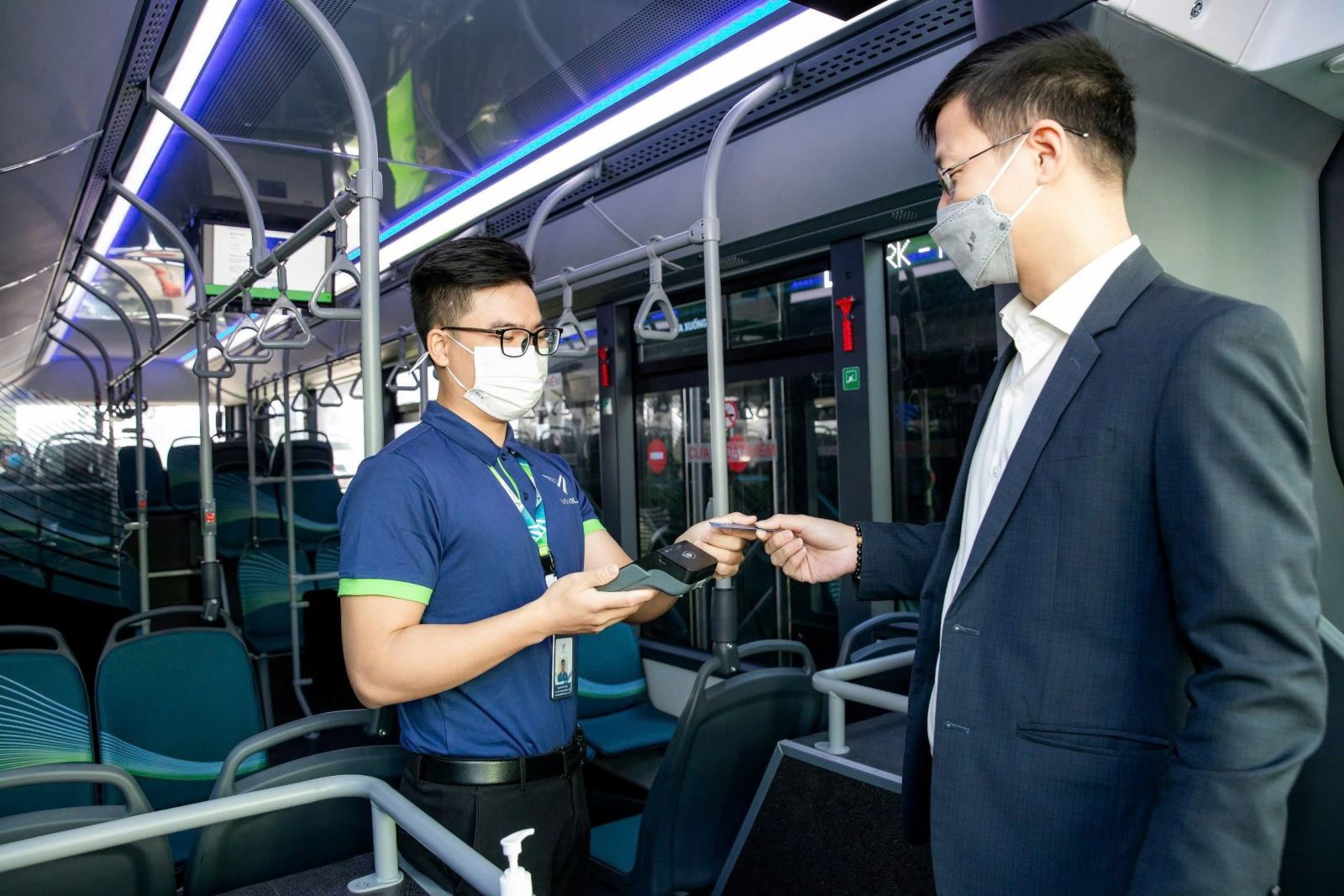
Once registered, the e-ticket displays full images, personal information, card code and expiration date on the application. Passengers only need to carry a mobile phone with the application installed to ride the bus.
"The e-ticket is convenient and fast for users. It contributes to environmental protection by limiting the amount of waste from physical ticket cards issued, reduces the cost of the state budget, and improves the quality and efficiency of service to people," Trong added.
An e-ticket with a chip is scanned on a bus in Hanoi. Photo courtesy of the Hanoi Public Transport Management Center |
.jpeg)
The introduction of electronic bus tickets is in line with Hanoi's digital transformation strategy to build an intelligent transport system, said Dao Viet Long, Deputy Director of the city’s Department of Transport.
"It is a leap forward in making services more convenient for passengers. The gradual introduction of the electronic bus ticketing system is the core component to lay the foundation for building a smart traffic system in the Capital," Long told the Hanoi Times.
He noted that by facilitating sales and control, the electronic bus ticketing system encourages people to use public transportation services.
“People can easily manage their travel expenses and track their travel history. It's all done through an application that is updated in a smart and convenient way,” he said.
“This is how digital transformation improves the quality of public transport services, and is a prerequisite for interoperability of tickets across all modes of public transport.”
He stressed that the e-ticket cards will help to increase the number of public transport users in the future, contributing to the city's project to improve public transport and reduce the number of private vehicles in the city.
A passenger uses an e-ticket with a chip to board a bus in Hanoi. Photo courtesy of the Hanoi Public Transport Management Center |
Tran Thi Phuong Thao, Deputy Director of the Hanoi Public Transport Management Center, said that the electronic bus tickets not only help customers save time, but also help the regulator survey customers.
“A recent survey conducted by the center showed that most passengers are satisfied with this type of ticket and expect that Hanoi will continue to expand e-ticketing for the entire public transport network,” she said.
She added that the e-ticketing system will help the regulator build a database for policy planning, support operations and make informed decisions.
The Hanoi Public Transport Management Center will replace diesel vehicles with electric ones, creating more favorable conditions for innovation and investment in bus infrastructure, Thao said.
"Therefore, Hanoi will implement an interoperable e-ticketing system for the city’s public passenger transport network,” Thao added.
Regarding the roadmap, the deputy director noted that the e-ticketing system will be available for the entire bus network in 2025. After that, it will be used with Cat Linh-Ha Dong and Nhon-Hanoi Station metro lines in 2026.
Currently, there are a total of 38 bus routes using e-tickets under the pilot program for public transport in Hanoi, including both regular routes and the Bus Rapid Transit (BRT) line.