How to corroborate Chinese promise on water management?
The leading Southeast Asia specialist said China has always looked to its own interests first.
China’s Premier Li Keqiang has pledged to share data on water management on the Upper Mekong River with downstream countries, leading to some comments on the fulfilment of the promise.
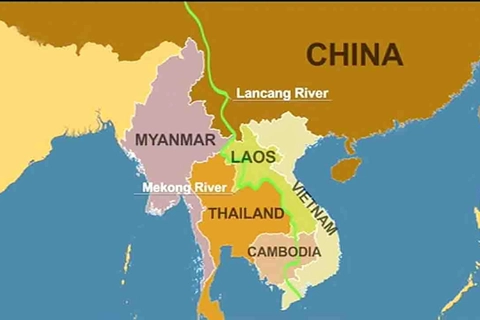
Premier Li made this pledge at the third Mekong-Lancang Cooperation Leaders’ Meeting held online on August 24 by prime ministers from the Lancang Mekong Countries (LMC) that includes China, Cambodia, Laos, Myanmar, Thailand, and Vietnam.
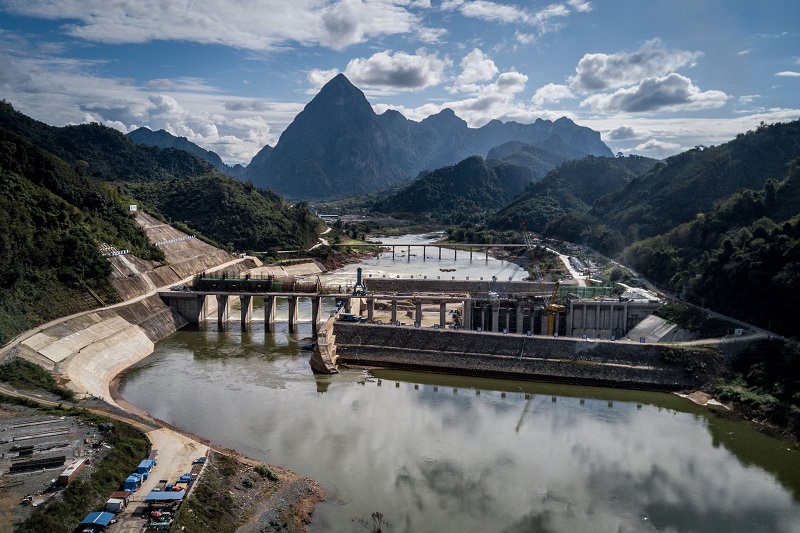
The site of the Nam Ou 1 dam in northern Laos on the Nam Ou River, a key tributary of the Mekong. The dam is being built by China’s largest hydropower company. Photo: Sergey Ponomarev for The New York Times |
Sharing the entire-year hydrological data is a request made by Thailand with an aim to demand China to be transparent in water management of the river that originates from Lancang in China’s southwestern province of Yunnan.
Carl Thayer, a well-known expert on Southeast Asia affairs, said there are two questions that arise from Premier Li’s pledge: How far China will go to be completely transparent about its water management practices on the Upper Mekong and how this information will be shared.
With respect to transparency, “China has always looked to its own interests first. China is unlikely to release complete details of its water management practices especially if this data reveals that downstream states are disadvantaged,” Prof. Thayer said in a recent brief.
If past practice is a guide, China will only dole out limited data, Mr. Thayer added.
With respect to how China will share this information, it is clear that China prefers to deal with this issue within the framework of the LMC.
Premier Li was quoted by Xinhua News Agency as saying “China is willing to offer more assistance within its capacity to other Lancang Mekong countries for better utilizing water resources.”
The LMC, as it is presently constituted, does not have the resources, personnel or expertise to utilise data on China’s water management in the Upper Mekong efficiently. That is why Thailand suggested that China share its data with the Mekong River Commission (MRC) and work out an effective information-sharing platform.
Comprising four members, Cambodia, Laos, Thailand and Vietnam and two observers including China and Myanmar, the MRC is funded by its four members plus eleven partners, the European Union and the World Bank.
Professor Thayer said because the US, Japan, and Australia are MRC’s development partners, China has worked to advance its interests by creating an alternative, the LMC.
China will not want to share data on water management in the Upper Mekong with these rivals because it could lead to criticism of Chinese water management practices, the professor noted.
A narrow section of water flowed through the dried-out riverbed of the Mekong near Sangkhom, Thailand, in January. Photo: Adam Dean for The New York Times |
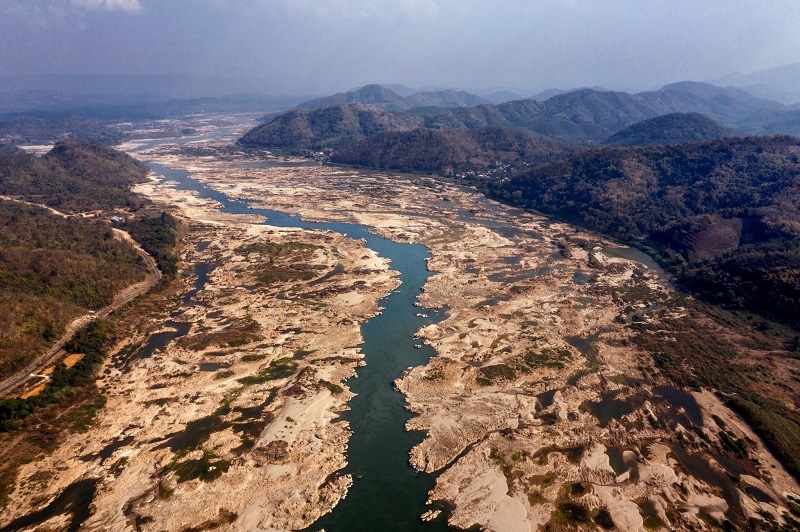
The Mekong river
The Mekong river originates from the Tibetan plateau and runs through six countries: China, Myanmar, Thailand, Laos, Cambodia, and Vietnam.
With 4,350 kilometers long, it is the seventh longest river in Asia and the 10th longest in the world. The average mean discharge for the Greater Mekong Basin is about 460 km3 of water annually and approximately 65 million people live in the Lower Mekong Basin.
The Mekong’s headwaters spring forth high in the Tibetan plateau, but in China the river holds little utility for humans. The Lancang, as the Mekong is known there — a name that means “turbulent” — is too fast and steep to do much more than power turbines.
Seven dams have been built on the Mekong’s upper reaches since 2000, according to The New York Times.
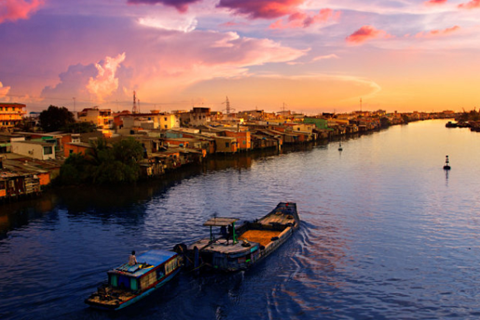
But for the downriver nations, the Mekong is a lifeblood. Like the Nile, the Tigris and the Yangtze, the Mekong watered empires. Two capitals, Vientiane of Laos and Phnom Penh of Cambodia, stand on its banks.
The world’s most productive rice growers, in Thailand and Vietnam, depend on the Mekong’s generosity in depositing rich alluvial soil during the rainy season. The river network is the world’s largest inland fishery.
More than any other country, Cambodia is nourished by the Mekong. The country’s 16 million people get about 80% of their protein intake from its system, which includes a tributary that is the only river in the world that changes course seasonally.