Identifying value of creative spaces
Many sculptures not only beautify public spaces but also breathe new life into them, bringing distinctive values to the community.
Most travelers visit Hanoi for fantastic food. Yet the Hanoi art scene is doing well to compete for attention with the city’s food scene.
Hanoi’s public sculpture
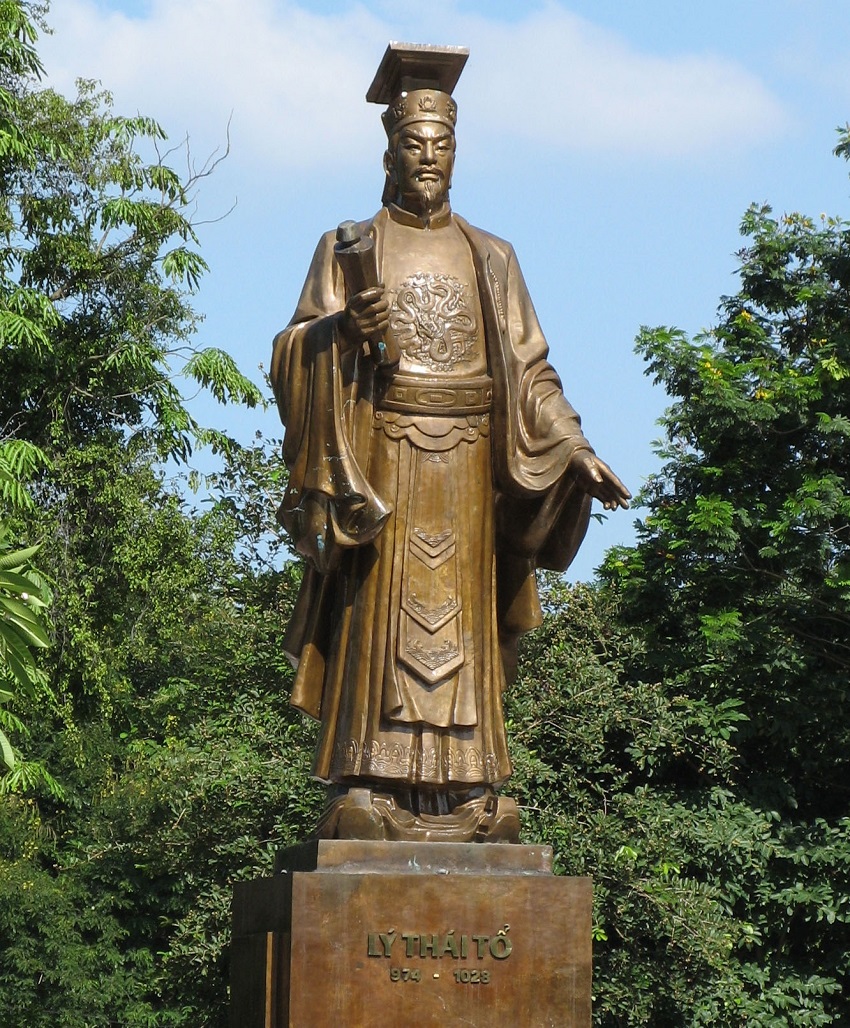
| The statue of King Ly Thai To is located at Ly Thai To Flower Garden in Dinh Tien Hoang Street, Hoan Kiem District, Hanoi. Photo: VISTA |
According to architect-sculptor Nguyen Truong Giang, after a long time of being ignored, public sculpture in Hanoi has regained public attention with many issues to deal with. Looking back at history, this kind of art appeared in the capital with the arrival of the French. In the old French quarter, many crossroads and central squares were built for displaying sculptures. Typically, there used to be a memorial to French soldiers who died in battle, with the sculpture of a soldier above and the ranks of scholars, farmers, craftsmen, and merchants below.
“In the spatial landscape dedicated for outdoor art, the memorial conveyed the French's spirit, culture, and domination. But no matter what purpose it served, contemporaries were still able to admire a piece of public sculpture,” affirmed sculptor Giang.
Another example was the monument in front of the palace of French Indochina’s Governor-General or today’s the Presidential Palace, depicting a woman sitting on the throne - which symbolized France, above the carvings of native soldiers and women below, representing the Indochinese territory. According to the sculptor, some of the artworks inherited Asian cultural stories, combined with the traits of the French and Europeans.
| The demolished statue of Paul Bert (1833 -1886) - French physiologist, politician, and diplomat in Nha Ken House or today's Octagonal House Flower Garden in Ly Thai To Street. File photo |
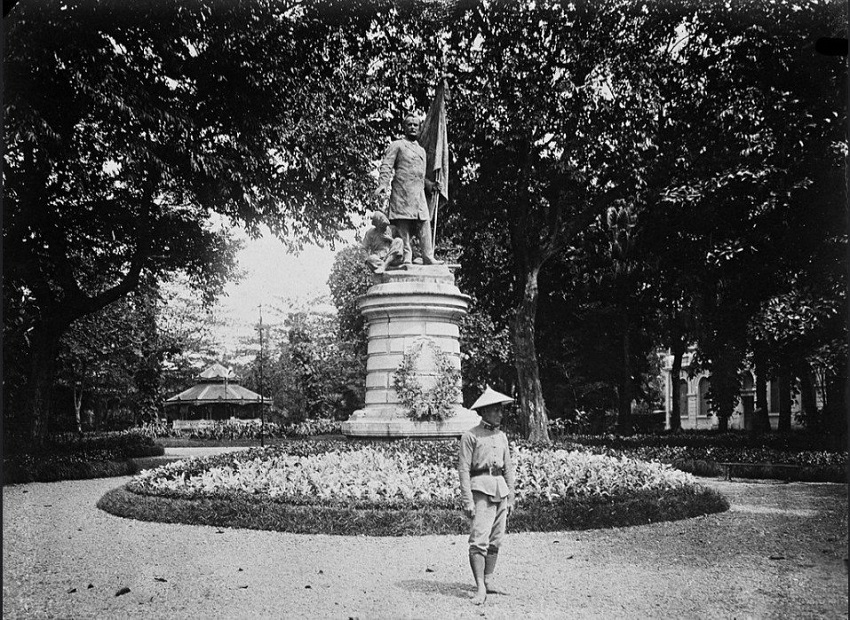
Public spaces in Hanoi were also embellished with numerous fountains, sculptures in the roundabout such as the Statue of Liberty, Paul Bert's in Nha Ken or Trumpet House or Octagonal House Flower Garden in Ly Thai To Street, Marshal Ferdinand Foch's in René Robin Flower Garden or currently Lenin Flower Garden in Dien Bien Phu Street, Jean Dupuis’ in the Opera House square in Trang Tien Street, among others.
However, after the French’s departure, these public sculptures were either pulled down or melted down.
The soul of the urban space
“Looking back nearly 100 years ago, we can see that Hanoi used to have public spaces and landscape architecture with many aesthetic sculptures, not inferior to the ones that existed in Europe at the same time,” sculptor Nguyen Truong Giang commented.
Since the Doi Moi or Renovation in 1986, the economic reforms initiated in Vietnam in 1986 with the goal of creating a “socialist-oriented market economy”, up to now, the art of public sculpture in Hanoi has strongly developed with large number of strategically-invested statues and reliefs.
Following statues of historical figures such as those of Vietnamese King Ly Thai To and the founder of the Russian Communist Party, Lenin (1870 - 1924), many monuments and reliefs have been created with rich content, becoming the highlights of public spaces that attract both locals and foreign tourists.
| Determined to Brave Death for the Survival of the Fatherland in Van Xuan Flower Garden in Quan Thanh Street, Ba Dinh District, Hanoi. Photo: Phuong Nguyen |
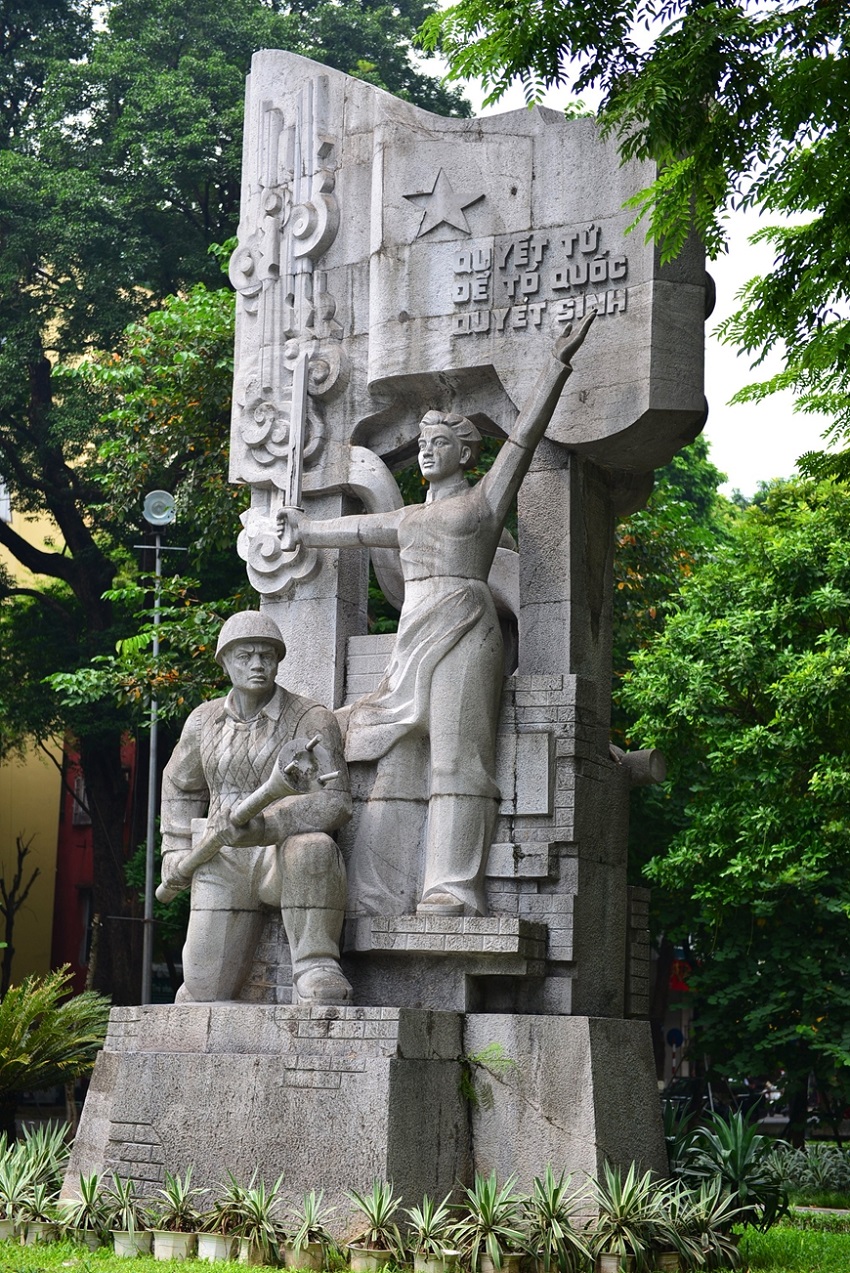
For example, there are monuments of Determined to Brave Death for the Survival of the Fatherland at Ba Kieu Temple and Hanoi - Winter 1946 in Hang Dau Flower Garden, the relief Sculpture Hanoi in winter 1946 at Dong Xuan Market, the statues of craftsmen-farmers-soldiers at the Hanoi Friendship Cultural Palace, Hoang Van Thu’s statue, Nguyen Trai’s statue, a memorial to martyrs at Hoa Lo Prison, and many others.
Monuments in Hanoi are not only symbolic and historical, but gradually become the soul of the urban space with their deep meaning and expressiveness.
Having created many sculptures in the capital, sculptor Nguyen Truong Giang said that urban space sculpture can be called artworks of the era.
“The word ‘splendor’, in addition to its literal meaning as ‘large’, also has a spiritual connotation. The more recent artworks convey more original stories with clear depth, individuality and spatial expression,” he stated.
According to the sculptor, with the number of newly-made works increasingly growing, apart from the ones displayed in public places, many eventually return to studios.
“That’s why I want to mention that after exhibitions and creation camps, in a short time, works are brought back to where they were made without any value for the public. We need positions and creation camps to place the works. Without a background, landscape architecture and placement, sculptures will hold no appeal for the public,” he added.
| The statute of Lenin (1870 - 1924) at Lenin Flower Garden in Dien Bien Phu Street, Ba Dinh District, Hanoi. Photo: VGP |
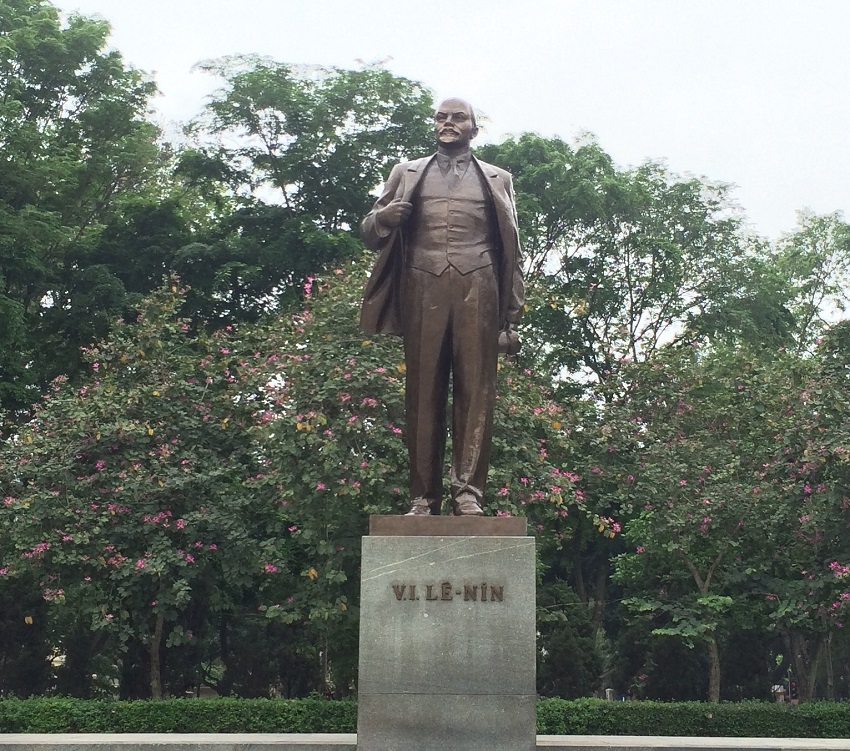
The sculptor pointed to the creation camp at Flamingo Dai Lai in the nearby province of Vinh Phuc that opened in 2015. In the annually organized camp, artists are allowed to create based on pre-selected backgrounds and locations.
With different groups of artists from year to year, the camp was initially successful in that the spatial, cultural and artistic values were enhanced, in direct proportion to the level of investment in services and real estate. After more than five years, this place has developed into the Flamingo Contemporary Art Museum, bringing true art to life.
“It can be affirmed that a public sculpture could not stand alone, but when presented to a public space, it must harmonize with the background and culture to have a life of its own, as well as values to the community,” the sculptor emphasized.