ILO, the Netherlands promote Vietnam's garment skills
The two-year project will start in January 2022.
The International Labour Organization (ILO) and the Government of the Netherlands have inked an agreement to launch a new project with the aim to better address future skills needs in Vietnam’s garment sector.
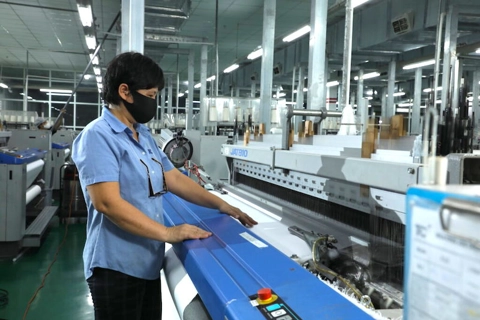
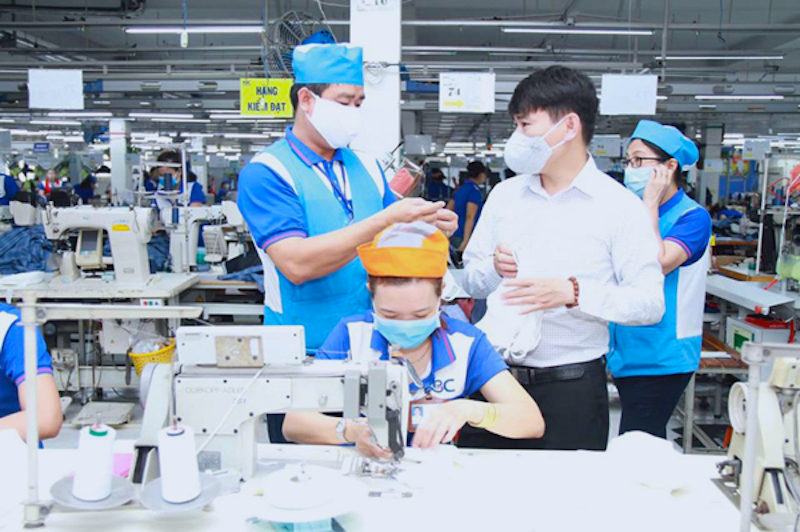
| Laborers are working at the Nha Be garment factory. Photo: Nha Be Garment JSC |
The ILO will support the Vietnamese Government, employers’ and workers’ organizations to understand what skills the industry and its workers will need now and in the future. The project will focus on those at the highest risk of losing their jobs as a result of the Covid-19 crisis and the increased automation and digitalization in the industries.
This is an important step towards building a more resilient, inclusive, and sustainable industry with decent work opportunities for more women and men, according to the ILO.
Vietnam’s textiles and garment industry is key to the country’s growth and development. It employs about 2.7 million people, of which a vast majority are women, according to the Ministry of Industry and Trade. The latest report from the Vietnam Textile and Apparel Association estimated that the textiles and garment industry will reach its target of US$39 billion in export revenue this year, equal to the 2019 figure.
However, the Covid-19 crisis has hit the industry hard. In addition to factory closures and lost incomes, the pandemic has accelerated the drivers and megatrends that are changing textiles and garment production and work profoundly. These include automation and digitalization as well as the introduction of greener and cleaner production to mitigate climate change.
Skills development and lifelong learning play a key role in addressing the impact of Covid-19, in building the resilience of workers and firms, and in shaping a future that works for all, said Nilim Baruah, ILO Vietnam Officer-in-Charge.
“Timely investment in skills can help speed up the economic recovery, a safe return to work, reduce the career scarring effects of prolonged unemployment and skills mismatch, and take advantage of opportunities that may otherwise dissipate over time.”
“It includes specific technical skills needed by the industries to grow, new technical skills due to technological and other changes in work and production, and core employability skills,” he added.
The Netherlands believes that a sustainable textile value chain is a precondition for a healthy recovery from the impact of Covid-19.
Elsbeth Akkerman, Ambassador of the Kingdom of the Netherlands said sustainable business models, including employability and skills development, contribute to the various current and future challenges of the industry.
“I am proud that with this project we are taking the next step towards a future proof and sustainable textile and garment sector,” she said.
The new project is guided by the ILO Centenary Declaration for the Future of Work (2019), the ILO Global Call to Action for a Human-Centered Recovery (2021), and the recent International Labour Conference resolution concerning skills and lifelong learning.
It will apply lessons learned from similar ILO garment sector skills anticipation projects in the garment sector in Brazil, Ethiopia, Jordan, and Peru. It will build on the achievements of past ILO skills development programs in Vietnam.
The project will be implemented in close collaboration with the IFC-ILO Better Work Vietnam program, and the findings and achievements in Vietnam will be shared with other Member States of the ILO through the creation of a regional knowledge platform on future skills needs in textiles and garments in Asia and the Pacific.