Econ
Local enterprises urged to quickly adapt to digital economy
Vietnam is considered to have huge potential for digital economy development, said experts at Vietnam Chamber of Commerce & Industry (VCCI)`s launching ceremony of Vietnam Business Annual report on May 17.
Digital economy plays a key role in narrowing the gap between large enterprises and micro, small & medium enterprises (MSME), in turn to motivate small enterprises becoming the driving force of the global economy.
Most economies in the world set priority for the development of digital technologies, said Vu Tien Loc, Chairman of VCCI at the event.
Digital economy in ASEAN has experienced high growth rate of 27% per year, equivalent to US$50 billion and 2% of the region's GDP, according to a report of Google and Temasek. The figure is expected to reach 6% GDP by 2025, mainly thanks to significant contribution from online tourism, e-commerce, online media and entertainment, online booking.
Loc said digital trend in Vietnam has been presented in every fields, from trade, payment, to transportation, education and health care.
However, there remains shortcoming in actual development of digital economy in Vietnam, in which e-commerce accounted for 3.6% of Vietnam's retail market revenue. In Asia - Pacific region, this number is stood at 14.5%.
Vice Minister of Science & Technology Bui The Duy urged enterprises could not miss the opportunity to develop utilizing digital technologies.
On the current trend, digital economy with new business model is creating opportunities for enterprises to expand business, said Loc. Through digital economy, enterprises can improve business efficiency, expanding market shares and infiltrating new markets.
In particular, digital economy will motivate SMEs to be the driving force of economic growth, Loc continued. Nevertheless, there will be challenges as most of Vietnamese enterprises are MSMEs.
Stepping in the digital economy, enterprises will face difficulties of obtaining market shares, while foreign enterprises have set foothold in Vietnamese markets. This could potentially lead to a struggle for local enterprises right in the home ground.
Additionally, Vietnamese enterprises are facing the shortage of personnel in information and technology, the lack of completed legal framework for digital economy development, as well as threat to security and privacy.
A number of enterprises attending the meeting shared difficulties in accessing technologies. Enterprises plans for business expansion through digital economy, but facing obstacle in accessing internet, as well as the lack of technologies and huge investment on IT equipment.
However, enterprises should take step by step in utilizing digital technologies, which should partially to take focus on business strategy and enterprises' competency. A lesson draws from Japan showing that Japanese enterprises can still be successful from sustainable business strategy and choosing the right target.

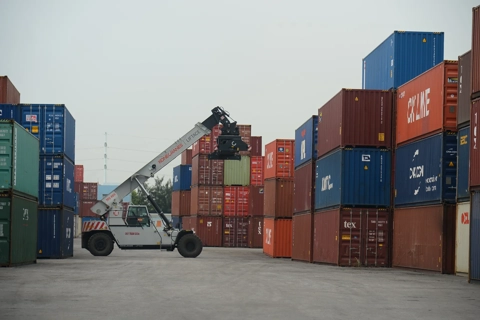
Illustration photo.
|
Digital economy in ASEAN has experienced high growth rate of 27% per year, equivalent to US$50 billion and 2% of the region's GDP, according to a report of Google and Temasek. The figure is expected to reach 6% GDP by 2025, mainly thanks to significant contribution from online tourism, e-commerce, online media and entertainment, online booking.
Loc said digital trend in Vietnam has been presented in every fields, from trade, payment, to transportation, education and health care.
However, there remains shortcoming in actual development of digital economy in Vietnam, in which e-commerce accounted for 3.6% of Vietnam's retail market revenue. In Asia - Pacific region, this number is stood at 14.5%.
Vice Minister of Science & Technology Bui The Duy urged enterprises could not miss the opportunity to develop utilizing digital technologies.
On the current trend, digital economy with new business model is creating opportunities for enterprises to expand business, said Loc. Through digital economy, enterprises can improve business efficiency, expanding market shares and infiltrating new markets.
In particular, digital economy will motivate SMEs to be the driving force of economic growth, Loc continued. Nevertheless, there will be challenges as most of Vietnamese enterprises are MSMEs.
Stepping in the digital economy, enterprises will face difficulties of obtaining market shares, while foreign enterprises have set foothold in Vietnamese markets. This could potentially lead to a struggle for local enterprises right in the home ground.
Additionally, Vietnamese enterprises are facing the shortage of personnel in information and technology, the lack of completed legal framework for digital economy development, as well as threat to security and privacy.
A number of enterprises attending the meeting shared difficulties in accessing technologies. Enterprises plans for business expansion through digital economy, but facing obstacle in accessing internet, as well as the lack of technologies and huge investment on IT equipment.
However, enterprises should take step by step in utilizing digital technologies, which should partially to take focus on business strategy and enterprises' competency. A lesson draws from Japan showing that Japanese enterprises can still be successful from sustainable business strategy and choosing the right target.