New measure expected to boost low-cost housing development
Difficulties in getting investment licenses, the imbalance of market supplies due to the investors’ lack of appetite for budget housing projects, and the Covid-19 pandemic have led to a rise in housing prices.
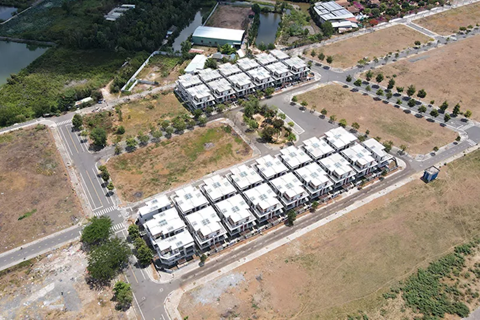
Clearing bottlenecks in the land portfolio is seen as a key measure for the development of budget commercial housing projects in Vietnam.
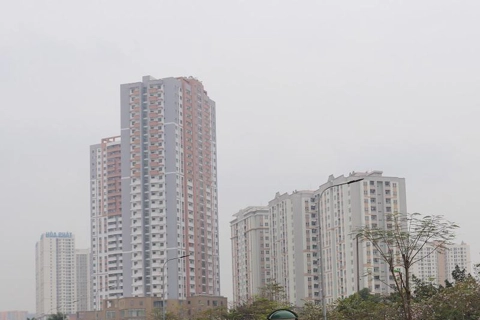
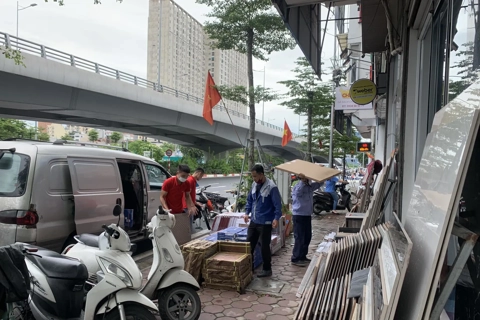
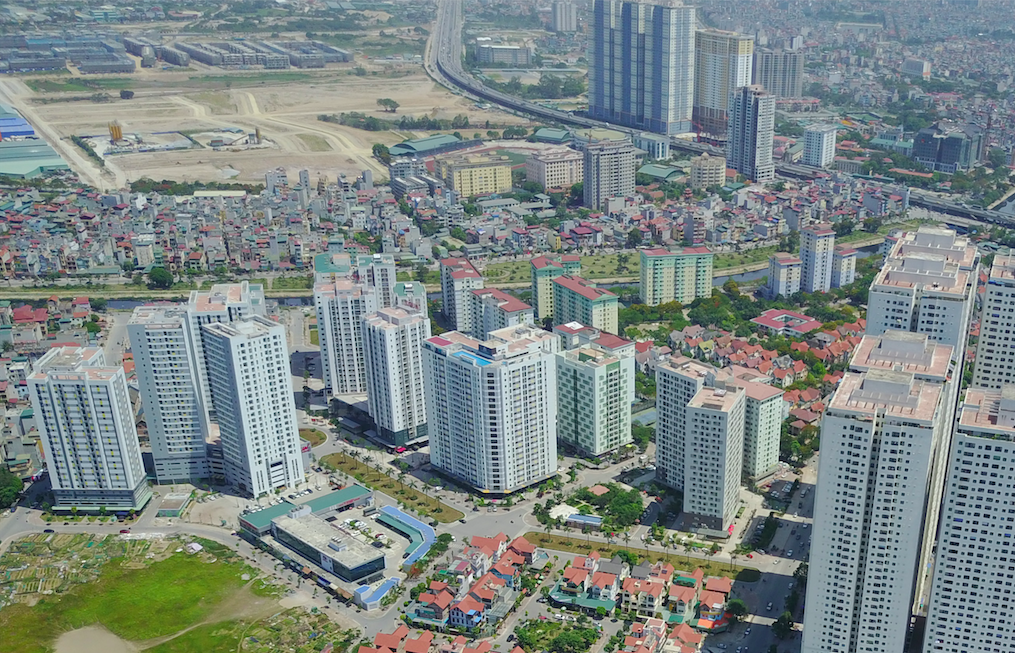
| Budget housing projects are becoming more scared in Hanoi. Photo: Pham Hung |
The measure is part of the Ministry of Construction (MIC)’s efforts in offering incentives for the development of budget commercial houses during the 2022-25 period that should later be incorporated in the draft Law of Housing, which is pending approval of the National Assembly.
Nguyen Thu Thuy in Thanh Tri District, Hanoi, shared with The Hanoi Times her difficulties in the search for a budget apartment in the Ha Dong District, near her workplace.
“A real estate broker offered us an apartment from the BID Residence project in To Huu Street at around VND25-30 million ($1,100-1,300) per square meter. As far as I know, there is currently no project in Hanoi this year that is listing apartments at prices lower than the one I was offered and is 50% higher than the price in 2020 which was VND20 million ($877),” Thuy said.
A report from the Vietnam Association of Realtors (VARS) suggested that real estate prices have been on the rise since 2014 by an annual average of 10%.
In 2021, the prices even increased by 15%, with the listing price of the mid-range apartment hovering around $1,522 per square meter. Experts pointed out the lack of supplies as the main reason.
Last year, only a handful of property development projects were put on the market, with the majority in the South West of the city.
The price, however, was mostly in the range of VND30-40 million per square meter and above, with very few below VND30 million, such as Rose Town (Hoang Mai District) of VND26 million per square meter; Binh Minh Garden (Long Bien) of VND26.3 million.
Meanwhile, there were no projects priced around VND20 million per square meter.
“A few years ago, around VND20 million per square meter for a budget apartment was considered quite high, but at present, the price has surged to VND25 million,” VARS Chairman Nguyen Van Dinh told The Hanoi Times.
“The trend is particularly concerning, given the fact that people’s income has been on the decline due to the pandemic impacts,” he added.
Statistics from the real estate website batdongsan.com.vn revealed in 2022, Hanoi has six property projects completed but only one with a price below VND30 million per square meter, as others are in the range of VND32-53 million.
In Ho Chi Minh City, there has not been any commercial housing project with a price below VND30 million per square meter this year.
“Difficulties in getting investment licenses, the imbalance of market supplies due to the investors’ lack of appetite for budget housing projects, and the pandemic situation are causing a rise in house prices,” a representative of the batdongsan.com.vn said.
Turning to land fund for social housing
Deputy Director of the MIC’s Housing and Real Estate Market Development Department Nguyen Manh Khoi said the ministry is in the process of drafting new incentives to encourage investors to this market segment.
“This would serve as a legal basis for localities to work out their respective budget housing development plans,” Khoi told The Hanoi Times.
In the case of Hanoi and Ho Chi Minh City, where the land prices are much higher compared to other cities/provinces, Khoi acknowledged the construction of budget housing projects would not be feasible without the Government’s support policies.
“Incentive policies, are, therefore, essential in this case, to ensure housing prices are affordable to the public,” he said.
Khoi suggested the Government to allow investors turn to the land fund for social housing as part of the solution.
Urban planning expert Anh called for the Government to further simplify administrative procedures in issuing construction licenses for budget housing projects, or lower tax rates for businesses involved in budget housing development.
“The Government may consider limiting the number of luxury property projects and raise taxes for individuals, organizations buying these products, to limit the capital flowing into the segment,” Anh told The Hanoi Times.
“There is an imbalance of market supplies with the lack of budget products but the abundance of luxury ones. The lack of supplies and the fact that investors are looking to maximize projects are driving prices higher, especially at a time when housing projects are still in high demand,” Chairman of Ho Chi Minh City Real Estate Association Le Hoang Chau. “High housing prices come from the fact that property developers are amassing a large number of lands for, they said, developing upcoming projects, but in reality, they are waiting for land prices to rise. This led to a land shortage for actual projects and subsequently to rising market prices,” economist Le Xuan Nghia. |