Offshore wind in Vietnam: lack of rules on environmental impact assessment
Experts have said that concise and detailed regulations will facilitate investors and mitigate the impact on the environment.
Local experts have warned that Vietnam lacks regulations on environmental impact assessment (EIA) for offshore wind power projects despite lots of potentials.
Review on Vietnam’s law regarding EIA shows that regulations on project examination remain brief and general without full guidance for offshore wind projects, experts said at the online conference titled “Offshore wind development in Vietnam: Environmental and social impact assessment regulations” held on August 18.
At the event, policymakers, researchers, businesses, and international organizations exchanged views on the prospects of offshore wind power but they had multidimensional discussions about environmental and social impact assessment regulations in Vietnam.
An insufficient legal document has resulted in differences between domestic EIA and international standards, Cao Thi Thu Yen from the Vietnam Initiative for Energy Transition (VIET).
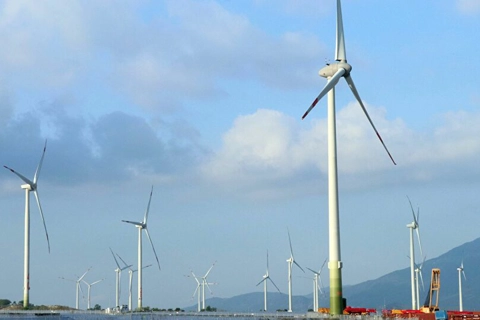
| Bac Lieu Wind Farm. Photo: Mekong Delta Explorer |
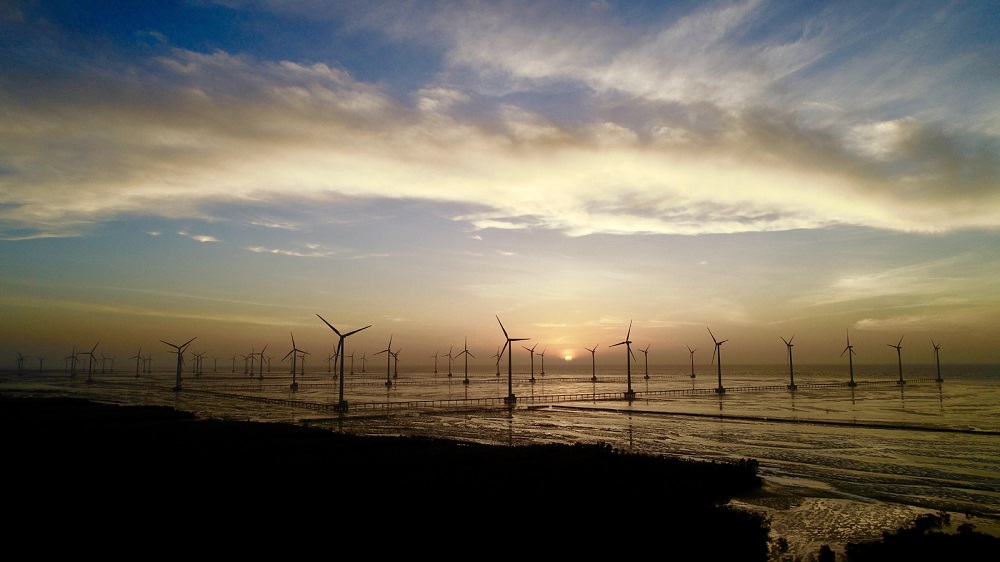
Offshore wind power projects occupying a vast area might overlap with other activities in oil and gas exploitation, telecommunications, and habitat of seabirds, fish, corals, among others, she said.
Investors, therefore, should consider environmental and social regulations for good compliance in addition to information on investment cost and license time, Yen suggested.
Associate Prof. Nguyen Chu Hoi, deputy head of the Vietnam Fisheries Society (VINAFIS), stressed the importance of selecting projects that harm the maritime environment, ecology, and fishing. Therefore, concise and detailed regulations will enable the authorities to do that in an easy way.
“Importantly, environmental impact assessment must be done carefully, for example, on how the impact of underwater sound on corals and sea creatures is and how to avoid overlapping development of wind power, oil and gas, and fishing,” Hoi noted.
Sharing the same idea, Deputy General Director of Russia-Vietnam Joint Venture (Vietsovpetro) Vu Mai Khanh said the role of state agencies in verifying EIA and supervising the projects is essential to the development of the projects.
Andy Ho, head of Government and Regulatory Affairs, Asia-Pacific New Markets at Danish multinational power company Ørsted A/S, recommended that there should issue EIA that is in line with international standards to facilitate the investment.
Yen from VIET stressed the need to issue a legal document that meets international standards to make EIA the foundation for the authorities’ decisions on licensing and supervising offshore wind power projects.
According to the World Bank’s “Offshore Wind Roadmap for Vietnam” report released a few months ago, offshore wind likely contributes 12% to Vietnam’s power by 2035.
Offshore wind is projected to supply between 5% and 12% of Vietnam’s electricity needs by 2035 in two possible growth scenarios built by the World Bank (WB).
It’s equivalent to 11 GW and 25 GW by 2035 in the low and high growth scenarios, respectively.
The World Bank’s experts made some recommendations for the successful offshore wind industry in Vietnam, including stable policies and pipeline visibility; a coherent industrial strategy; resourced institutions; competitive environment; supportive and engaged public; a commitment to safety; and using the best locations.
Vietnam can accelerate offshore wind projects rapidly over the next few years. The success of this acceleration will depend on the clarity of the government’s long-term ambition and the actions that the government takes to facilitate growth, they said.