Remembering the Paris Peace Accords: Silent Revolution at Camp Davis
Thanks to the Camp Davis struggle, which was waged silently but persistently, a turning point was reached in the nation's reunification.
While the Paris Peace Accords to end the war and restore peace in Vietnam were the culmination of a long, drastic, and complicated diplomatic struggle, the struggle to force the US and the Saigon regime to comply with the terms of the agreement was quiet but no less drastic.
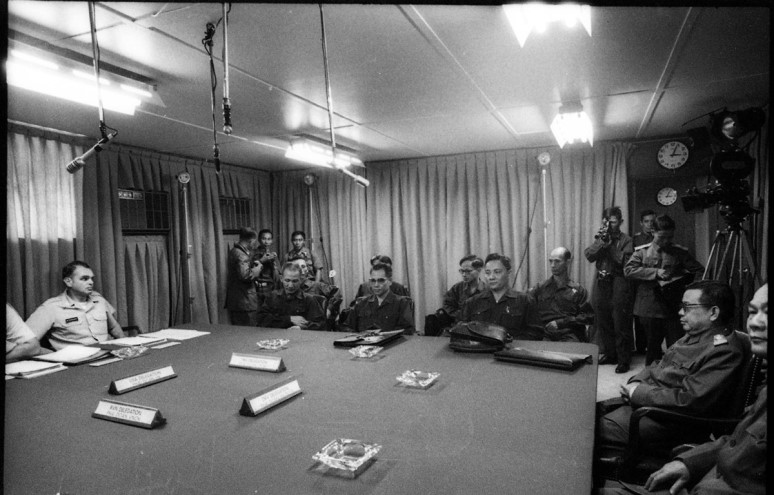
Immediately after the conclusion of the Paris Conference, the Four-Party Joint Military Commission was established at Camp Davis (Saigon) to ensure the strict implementation of the provisions of the Paris Peace Accords by the parties.
To commemorate Reunification Day (April 30), Colonel Dao Chi Cong, former liaison officer at Camp Davis, told The Hanoi Times about little-known stories in the "revolutionary oasis" of Camp Davis.
Revolutionary battlefield in the enemy's heart
Colonel, tell me about Camp Davis' activities after the Paris Peace Accords were signed.
On January 27, 1973, after nearly five years of negotiations, the Paris Peace Accords were signed by four parties: the Provisional Revolutionary Government of the Republic of South Vietnam; the Government of the Democratic Republic of Vietnam; the United States; and the Republic of Vietnam (Saigon Regime).
| The view of Camp Davis at Tan Son Nhat Airport. File Photo |
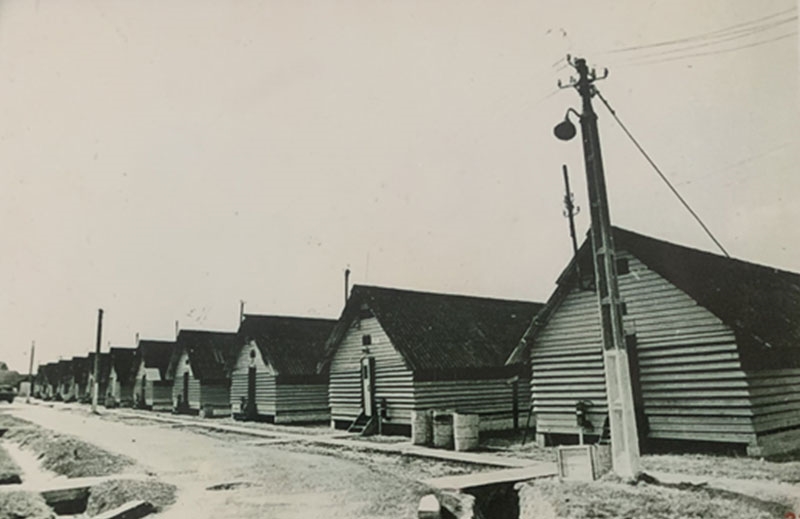
According to Article 16, the four parties will immediately appoint representatives to form the Quadripartite Joint Military Commission to implement the agreement's provisions on withdrawal, dismantlement of US military bases, return of prisoners, and search for missing persons.
Camp Davis, a former US Army barracks located just southwest of Tan Son Nhat International Airport in the heart of the Republic of Vietnam, is the headquarters of the Joint Military Commission.
We have talked a lot about the process of negotiating and signing the Paris Peace Accords. However, in my opinion, fighting for the strict implementation of the agreement is also very important but not fully known.
Until April 30, 1975, after 823 days and nights, the courage, ingenuity, and perseverance of the revolution at Camp Davis contributed to the historic victory of the struggle for the liberation of the South and the reunification of the country.
When you arrived at Camp Davis, what was your first impression?
As soon as we arrived at Tan Son Nhat Airport from Hanoi, the puppet government in Saigon made trouble and asked us to go through immigration. They were implicitly claiming that the Republic of Vietnam was a separate country. This was an unreasonable demand that violated the Paris Agreement. We steadfastly spent almost a day refuting this claim.
The Saigon government made concessions but sent a white-flagged van to pick us up at Camp Davis. Once again, the delegation protested because we are the enforcers of the Paris Agreement for the sake of peace, not the capitulators.
| Colonel Dao Chi Cong recalled memories of Camp Davis. Photo: Ngo Minh/The Hanoi Times |
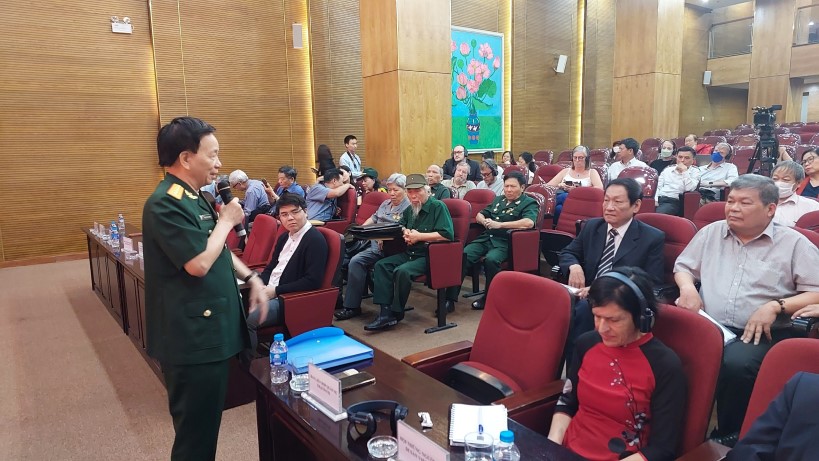
We arrived at Camp Davis in the late afternoon of January 29, 1973. An extensive barbed wire fence surrounds the camp, which consists of rows of houses with fiber cement roofs. There was only iron furniture. The Saigon heat made the room occasionally reach temperatures of more than 40 degrees Celsius, and the constant sound of takeoffs and landings kept us under pressure.
Several jamming and listening devices were installed around the camp to spy on and disrupt communications.
Military diplomatic offensive
In such difficult conditions, how did the revolutionary soldiers fight?
Outside we worked normally, increased production, and played sports and volleyball. Inside the buildings, we used the sound of planes taking off and landing to dig shelters and prepare for the general offensive and uprising in the Spring of 1975.
We were also in secret contact with the Ministry of Foreign Affairs, which cooperated in rendering the jamming equipment ineffective. As a result, communication with Hanoi remained secure and smooth.
Camp Davis thus became an "underground fortress" where the Joint Military Commission kept abreast of the battlefield situation to plan and conduct operations.
| A meeting between four parties at Camp Davies in southern Vietnam in 1973. Photo: VNA |
In addition to military options, how did the revolutionary soldiers at Camp Davis conduct the political and diplomatic struggle?
We hold press conferences attended by hundreds of national and international reporters every week.
On the diplomatic front, we resolutely forced the US troops to withdraw from our country, but we supported the US in repatriating prisoners.
For example, the US once asked Vietnam to repatriate prisoners in Laos. This is an unreasonable demand because Laos is an independent country outside the scope of Vietnam's intervention. Our party strongly expressed this opinion but still quietly contacted the Laotian government to coordinate the return of the prisoners because we had a friendship with Laos.
This is a humane act that has a great impact on the American people and world opinion. This incident forced the US government to fulfill its promise to withdraw troops and played an important role in the future normalization of Vietnam-US relations.
How did the years of arduous revolutionary struggle at Camp Davis end?
The revolutionary flag was raised over the highest point of Camp Davis, the water tower, at 9:30 a.m. on April 30, 1975. We were moved to tears as we watched the flag fly, both in joy and remembrance of our dead comrades. One hour later, the revolutionary flag was raised at the Palace of Independence.
The deputy commander of the Ho Chi Minh Campaign, Lieutenant General Tran Van Tra, came to see us on May 2 and told us that we were directly involved in the campaign and that we were the sixth offensive force, the Military Diplomatic Offensive, in addition to the five offensive forces attacking Saigon from five directions.
Thank you for your time.