Photo exhibition shows Uncle Ho's love for Hanoi
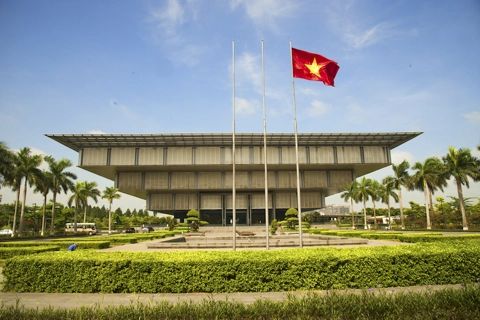
An exhibition entitled "Uncle Ho and Hanoi" has opened at the Hanoi Museum as part of activities to commemorate the 133rd birth anniversary of late President Ho Chi Minh (May 19, 1890-2023).
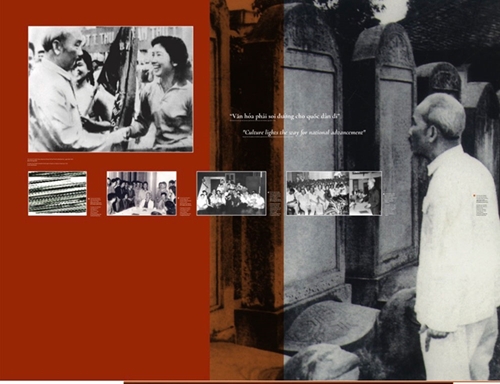
President Ho Chi Minh was always interested in culture, education, and respect for talent. Although he was swamped with work as a president, he visited Van Mieu-Quoc Tu Giam, an icon of Vietnamese intelligentsia, three times (1945, 1960 and 1962).
The photo was taken during his visit on January 26, 1960. The inscription of the examination held in 1442 reads: "Virtuous and talented men are the original vitality of a state".
President Ho Chi Minh inherited the tradition of honoring talented people in the nation's history and developed new conditions for treating talents. During his lifetime, he often said, "We must cultivate talented people" because "nation-building needs talented people". President Ho Chi Minh inspired many talented people to participate in the liberation and reconstruction of the country.
The exhibition showcases more than 200 documents and objects about the founder of modern Vietnam, highlighting revolutionary milestones related to the president that took place in the city, his ties with locals, and how people in the capital followed his teachings.
| Photos of Uncle Ho are displayed at the exhibition. Photo courtesy of Hanoi Museum |
The exhibition has three themes: "Hanoi with Uncle Ho", "Uncle Ho with Hanoi", and "Hanoi Following Uncle Ho's Teachings".
The "Hanoi with Uncle Ho" theme presents documents and artifacts about places that mark important milestones in Uncle Ho's life and revolutionary activities in Hanoi.
There are pictures of Hanoians welcoming Uncle Ho and responding to his call to contribute to the resistance war. The section displays many documents about the relics of President Ho Chi Minh in the Presidential Palace and pictures of Uncle Ho's funeral.
The theme "Uncle Ho and Hanoi" presents documents and pictures showing Uncle Ho's concern and guidance to the Party Committee, the government, and the people of Hanoi in national security, economic development, health care, and education. This exhibition also has many documents and pictures demonstrating his affection for people from all walks of life.
| People visit the exhibition at the Hanoi Museum on May 18. (Photo:VNA) |
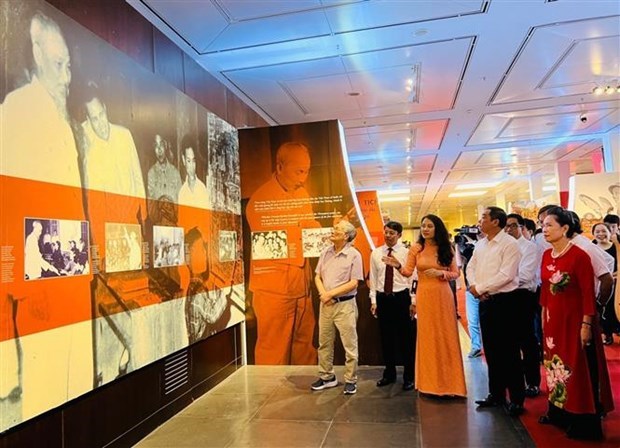
The section "Hanoi Follows Uncle Ho's Word" presents documents and pictures of the untiring efforts and unity of the Party Committee, the government, and Hanoians to build the capital city into an ever more developed, civilized, and modern city.
At the opening ceremony, Do Dinh Hong, director of the Hanoi Department of Culture and Sports, said that the leader spent the longest period of his revolutionary life in the capital (from 1945 to 1946 and from 1954 to 1969).
"His profound thoughts, feelings, and instructions have guided all the work of local authorities and people, contributing to the city's development towards modernity and civilization," Hong said.
Meanwhile, the art space features nearly 40 calligraphic works on President Ho Chi Minh's poems and life maxims.
These are calligraphic lotus paintings from the "Lotus in Vietnamese Cultural Life" collection by Nguyen Thi Thanh Tam.
The exhibition will last until the end of the year.