Econ
Private sector considered key to lead Industry 4.0 in Vietnam
Vietnam is in need to secure new technologies and achieve innovation for manufacturing, particularly in reinforcing R&D competence of companies and adopt new technologies, said a South Korean expert.
The private sector should be considered a key actor to lead the Fourth Industry Revolution in Vietnam, according to Chang-whan Ma, vice president of the Korea Industrial Technology Association (KOITA).
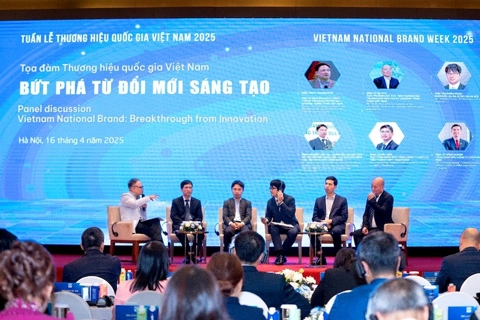
Ma made the statement in a conference organized by the Central Institute for Economic Management (CIEM) in Hanoi on August 1 discussing South Korea’s experiences in research and development (R&D), innovation and economic growth and lesson for Vietnam.
According to Ma, thanks to science and technologies development, South Korea made a big jump in economic growth with GDP per capita from US$1,870 in 1980 to US$31,370 in 2018.
During the course of economic development, South Korea transformed from a light industry-based economy in 1981 towards that of heavy industry with greater added-value products, such as semiconductors manufacturing, shipbuilding and automobiles, among others.
“The R&D sector, which was once led by the public sector in the 80s, now becomes the playing field of private companies,” Ma said, stressing the importance of the private sector behind South Korea’s economic achievements.
South Korea currently ranks top among OECD countries in terms of R&D investment, while there are currently 40,000 corporate R&D centers run by local small and medium enterprises (SMEs), accounting for 79.4% of South Korea’s R&D expenditures.
Notably, the SMEs, with only 46 R&D centers in 1981, or 1% of the total in South Korea, has now accounted for 95.9% of total centers in the country in 2019.
By promoting greater investments in R&D in the private sector, Vietnam would be able to address its shortcomings of low competitiveness in industrial technology, as well as the lack of financial-tech infrastructure, Ma said.
Meanwhile, Ma expected Vietnam to maintain its status as an ideal investment destination in the region, thanks to high economic growth, huge domestic market and the ongoing US – China trade dispute. With regard to the latter, China’s manufacturing companies are relocating their production plants to Vietnam to export their products as “made in Vietnam”.
“This can serve as an opportunity, but it can also be a threat as the US is seeking measures to impose duties on such products,” he asserted.
“South Korea, with rich experiences in fostering industries and improving national competitiveness through R&D, could support Vietnam in R&D and industrial cultivation at government level,” Ma stated.
This is increasingly important for Vietnam, as the country is in need to secure new technologies and achieve innovation for manufacturing, particularly reinforcing R&D competence of companies and adopt new technologies.
Ma suggested Vietnam implement policies promoting the advancement of high-value-added industries using the manufacturing industry as a growth engine.
The CIEM’s Director Nguyen Dinh Cung said the Industry 4.0, digital economy and IT advancement are presenting both opportunities and challenges to Vietnam.
“Vietnam has to take advantage from new opportunities and stand ready to apply exclusive technologies emerged from the Industry 4.0 to overcome challenges,” Cung stated.
Park Seung Chang, president of Korean IT-Ethics Leaders’ Association (KITELA), said Vietnam should focus on investing in human resources, infrastructure and smart technologies in order to grasp opportunities from the Industry 4.0.

Overview of the conference. Source: Ngoc Thuy.
|
According to Ma, thanks to science and technologies development, South Korea made a big jump in economic growth with GDP per capita from US$1,870 in 1980 to US$31,370 in 2018.
During the course of economic development, South Korea transformed from a light industry-based economy in 1981 towards that of heavy industry with greater added-value products, such as semiconductors manufacturing, shipbuilding and automobiles, among others.
“The R&D sector, which was once led by the public sector in the 80s, now becomes the playing field of private companies,” Ma said, stressing the importance of the private sector behind South Korea’s economic achievements.
South Korea currently ranks top among OECD countries in terms of R&D investment, while there are currently 40,000 corporate R&D centers run by local small and medium enterprises (SMEs), accounting for 79.4% of South Korea’s R&D expenditures.
Notably, the SMEs, with only 46 R&D centers in 1981, or 1% of the total in South Korea, has now accounted for 95.9% of total centers in the country in 2019.
By promoting greater investments in R&D in the private sector, Vietnam would be able to address its shortcomings of low competitiveness in industrial technology, as well as the lack of financial-tech infrastructure, Ma said.
Meanwhile, Ma expected Vietnam to maintain its status as an ideal investment destination in the region, thanks to high economic growth, huge domestic market and the ongoing US – China trade dispute. With regard to the latter, China’s manufacturing companies are relocating their production plants to Vietnam to export their products as “made in Vietnam”.
“This can serve as an opportunity, but it can also be a threat as the US is seeking measures to impose duties on such products,” he asserted.
“South Korea, with rich experiences in fostering industries and improving national competitiveness through R&D, could support Vietnam in R&D and industrial cultivation at government level,” Ma stated.
This is increasingly important for Vietnam, as the country is in need to secure new technologies and achieve innovation for manufacturing, particularly reinforcing R&D competence of companies and adopt new technologies.
Ma suggested Vietnam implement policies promoting the advancement of high-value-added industries using the manufacturing industry as a growth engine.
The CIEM’s Director Nguyen Dinh Cung said the Industry 4.0, digital economy and IT advancement are presenting both opportunities and challenges to Vietnam.
“Vietnam has to take advantage from new opportunities and stand ready to apply exclusive technologies emerged from the Industry 4.0 to overcome challenges,” Cung stated.
Park Seung Chang, president of Korean IT-Ethics Leaders’ Association (KITELA), said Vietnam should focus on investing in human resources, infrastructure and smart technologies in order to grasp opportunities from the Industry 4.0.