Public investment remains priority for Vietnam economy’s post-pandemic recovery
Amid a slowdown in private investments and consumption, expert suggested public spending is essential to spur economic growth and ensure decent living standards for the people.
Due to growing impacts of the Covid-19 pandemic, an increase in public spending with a focus on greater disbursement of public investment is a key measure to help Vietnam's economy recover in the post-pandemic period, local economists have said.
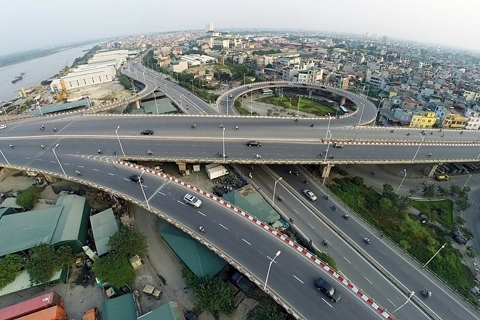
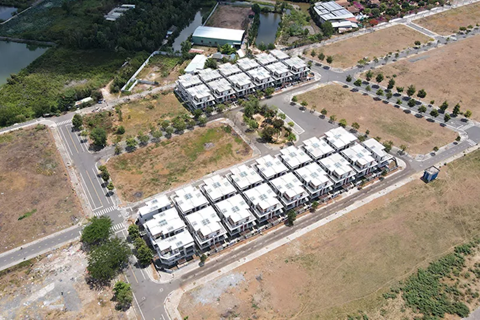
| Illustrative photo. |
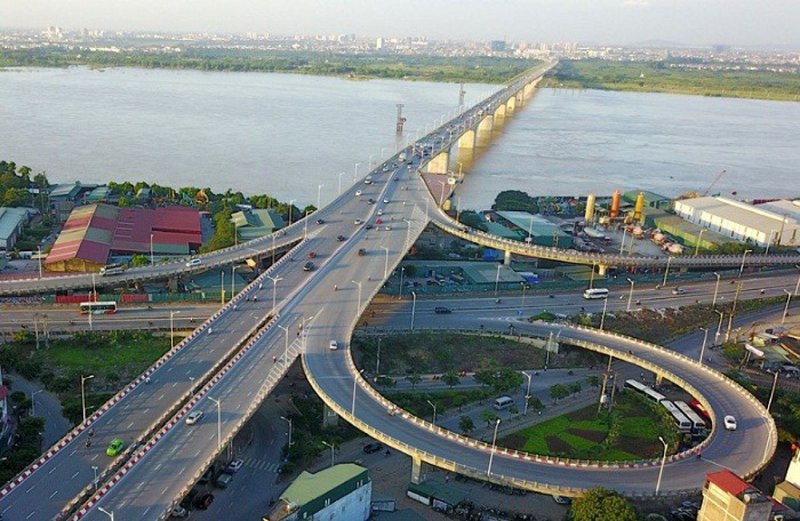
In the first quarter, total investment capital of the economy stood at VND367 trillion (US$15.73 billion), up 2.2% year-on-year, or 31% of the nation's GDP.
Upon breaking down, investment capital from the private sector accounted for 45.2%, up 4.2% year-on-year, and foreign invested capital made up 24.3%, representing a decline of 5.4%. Meanwhile, public investment recorded the highest growth rate of 5.8% among economic players, contributing 30.5% of the total.
As the pandemic is slowing trade and services, an acceleration of public investment would help boost aggregate demand and motivate enterprises to resume operations.
Moreover, investments in basic infrastructure via public spending would set the stage for long-term development by exerting a positive spill-over effect.
Amid a slowdown in private investments and consumption, expert suggested public spending is essential to spur economic growth and ensure decent living standards for the people.
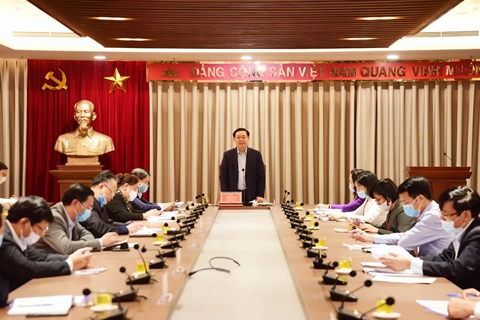
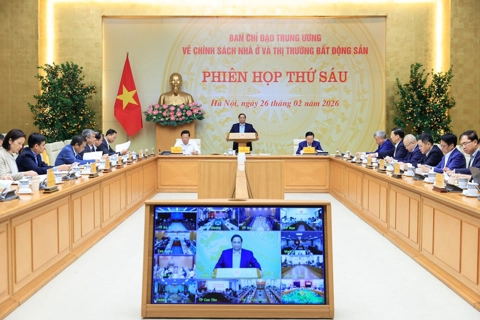
In a recent cabinet meeting, Prime Minister Nguyen Xuan Phuc requested government agencies to accelerate public investment in various fields of the economy.
Do Thien Anh Tuan, lecturer at Fulbright University Vietnam said public investment not only helps offset declining investment capital from the private sector in the short term, but also create a foundation for economic recovery once the pandemic is contained, in turn enhancing competitiveness of the economy.
Tuan suggested in the time of crisis and with limited funding, the government should focus on projects with high spillover effects while requesting government agencies, provinces to focus on disbursement plans with the same intensity as in the fight against the coronavirus.
As of February 29, disbursement of public investment reached 7.38% of the target set by the National Assembly at VND34.74 trillion (US$1.47 billion), nearly doubling the rate of 3.89% recorded in the same period last year,
The rate, however, remains low compared to this year’s plan, which is, according to financial expert Can Van Luc, attributable to inefficient legal framework and the lack of responsibilities from government agencies.
Among measures to speed up disbursement of public investment, Luc said, it is important to simplify investment procedures and ensure efficient decentralization between various levels of government agencies in implementing state budget-sourced projects.
According to Luc, leaders of ministries, cities and provinces should be more responsible in this regard. A higher disbursement rate should be considered a task for each individual, ministry, province and city.
At an online national conference held on April 10, both Minister of Finance Dinh Tien Dung and Minister of Planning and Investment Nguyen Chi Dung agreed more urgency is needed to realize this year’s disbursement target of VND700 trillion (US$30 billion), more than double the actual amount in 2019 at VND312 trillion (US$13.4 billion), in a bid to maintain economic growth and stimulate social investment.