State-owned corporations set to pilot offshore wind power projects
Private and foreign investors are currently not being considered for pilot projects due to unresolved legal and security issues.
The Ministry of Industry and Trade (MoIT) has proposed that state-owned enterprises such as EVN, PVN, or units under the Ministry of Defense be tasked with piloting offshore wind power projects initially, rather than private entities.
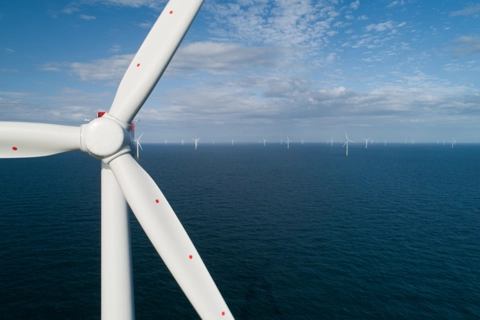
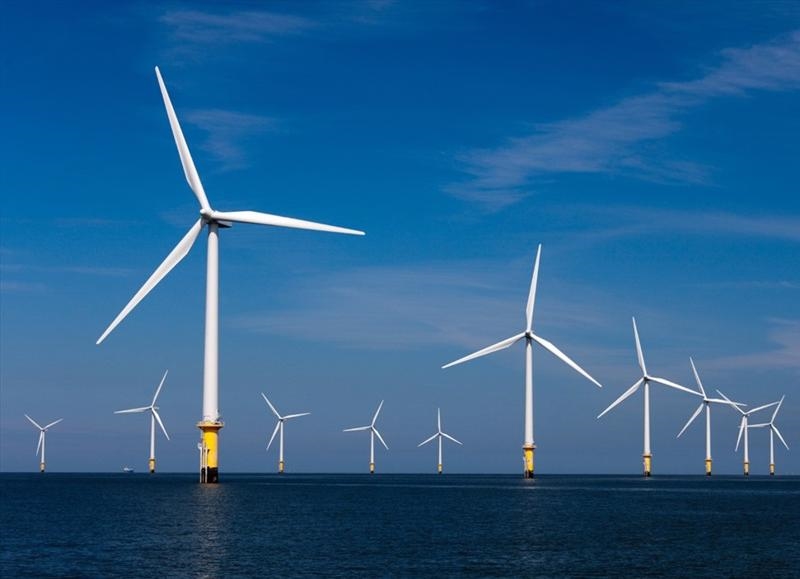
| Offshore wind power projects have huge potential for Vietnam. Source: EVN |
This proposal was made in the Ministry’s report to the Government on the pilot offshore wind power project plan.
According to Power Development Plan VIII, Vietnam aims to achieve an offshore wind power capacity of 6,000 MW by 2030, and between 70,000 and 91,500 MW by 2050. However, no projects have yet been approved or assigned to investors. The plan also lacks details on the number, capacity, and locations of offshore wind projects and their connection schemes.
The MoIT presented three options for selecting pilot project investors. Option 1 identified the Vietnam Oil and Gas Group (PVN) as the pilot investor. The Ministry believes PVN has advantages due to its experience and resources in offshore oil and gas projects, which share similarities with offshore wind projects.
The agency cited experts’ opinions that the involvement of oil and gas giants can accelerate the development of offshore wind as a major industry. According to the International Energy Agency (IEA), expertise from the oil and gas industry can account for 40-45% of the cost of offshore wind projects. Global leaders in offshore wind, like Equinor, Shell, Repsol, Total, BP, and Chevron, are predominantly oil and gas companies. In Southeast Asia, Malaysia's Petronas has entered the market by acquiring a stake in an offshore wind project in Taiwan (China).
However, assigning this task to PVN would require policy adjustments, as PVN is currently not authorized to invest in offshore wind. PVN would also need to adapt to the specific requirements of the offshore renewable energy sector.
Option 2 involves Vietnam Electricity (EVN). The Ministry notes that EVN has experience in investing in and managing power plants and transmission systems. As both a buyer and seller of electricity, EVN would not need to negotiate power prices. However, offshore wind is a new field with different requirements from traditional power projects.
Option 3 proposes that a unit within the Ministry of Defense piloting the offshore wind project. This option would require evaluation to ensure consistency with defense policies and feasibility.
The Ministry admits there is insufficient data to fully assess the effectiveness of entrusting the PVN, EVN, or a unit under the Ministry of Defense with pilot offshore wind projects. The field is new and involves complex issues related to national defense, security, and maritime sovereignty. Additionally, no offshore wind projects have been implemented, so there is a lack of regulatory and technical experience.
It also explains that private and foreign investors are not currently being considered for pilot projects due to unresolved legal and security issues. However, several foreign investors have expressed interest, including Denmark's CIP, which is planning a 3.5 GW project in Binh Thuan, and Germany's PNE, which is planning a $4.6 billion project in Binh Dinh. Over two years ago, 36 domestic investors applied for offshore wind surveys, but legal issues halted progress.
The Ministry notes that private investors are primarily involved in traditional power projects or smaller-scale solar and wind projects. They suggest waiting until the legal and regulatory framework is in place before involving private and foreign investors in offshore wind.
Prime Minister Pham Minh Chinh and Deputy Prime Minister Tran Hong Ha have tasked the Ministry of Industry and Trade with researching and developing pilot offshore wind projects. For legal validity, the Ministry suggests that the National Assembly passed a resolution authorizing these pilot projects.
Government agencies estimate that it takes 6-8 years from the start of surveys to complete offshore wind projects. Therefore, even if a resolution is passed this year, achieving the 6,000 MW target by 2030 will be challenging.
Given the significance of this issue, the Ministry recommends that higher authorities be consulted before the Government decides to propose a resolution to the National Assembly for piloting offshore wind development.