Thang Long Imperial Citadel archaeological excavation continues
The secrets of Vietnam's history and the capital of Thang Long-Hanoi will continue to be unearthed at the Thang Long Imperial Citadel.
The Ministry of Culture, Sports and Tourism recently authorized the Thanh Long-Hanoi Cultural Heritage Preservation Center to coordinate with the Institute of Archaeology on the excavation of the central area of the Thang Long Imperial Citadel in Hanoi.
The excavation on the area of nearly 1,000 square meters, led by archaeologist Ha Van Can, Institute of Archaeology, will run until December 25.
In particular, the excavation pit on the foundation of Kinh Thien Palace is 30 square meters. The excavation pit in the Hau Lau (rear palace) area has an area of 200 square meters, and the excavation pit in front of the Operations Department House covers an area of 640 square meters. The remaining excavation pit takes up an area of 120 square meters.
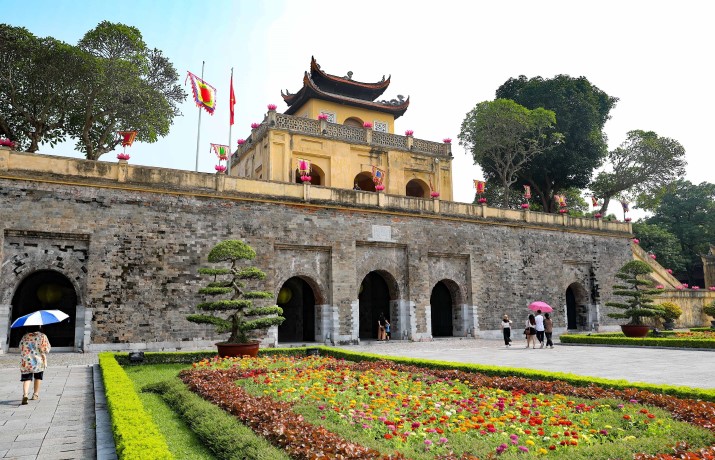
| The Thang Long Imperial Citadel is a must-see destination in Hanoi. Photo: Ngo Minh/The Hanoi Times |
The agency authorized to carry out the excavation must protect the stratigraphy of the monument. At the same time, it is responsible for informing the population about the protection of the local cultural heritage and not to announce any official conclusions without the consent of the governing body and the Department of Cultural Heritage.
The artifacts from the excavation will be under the care of the Thang Long-Hanoi Heritage Conservation Center.
Upon completion of the excavation, the Thang Long-Hanoi Heritage Conservation Center and the Institute of Archaeology will have to prepare a preliminary report and propose a management and protection plan for the excavation site to the Ministry of Culture, Sports and Tourism.
In late 2023, for the first time, archaeological researchers were able to accurately determine the underlying structure and overall morphology of the Kinh Thien Palace - the most important architecture considered to be the heart of the Thang Long Imperial Citadel.
With this archaeological breakthrough, the public's desire to better understand the palace is probably closer to being fulfilled than ever.
| Excavations at the ancient Thang Long citadel have been going on for 20 years. Photo: Minh An/The Hanoi Times |
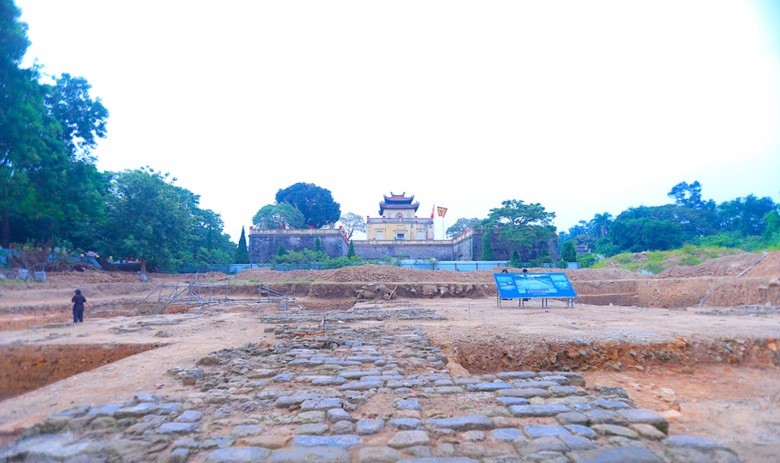
Excavations at the ancient Thang Long Citadel have been going on for 20 years, revealing many architectural remains of palaces and countless artifacts. The Imperial Citadel of Thang Long is a complex of historical imperial structures located in the center of Hanoi. It was first built in 1011 under the reign of King Ly Thai To of the Ly Dynasty. Situated in the heart of Hanoi, the Thang Long Imperial Citadel is an outstanding landmark not only for the capital city but also for the entire country. The site is one of the ten special national heritage sites proclaimed by the Prime Minister in 2009, and was inscribed on the World Heritage List by the UNESCO World Heritage Committee in 2010.