The hidden fury on Vietnam’s streets: when traffic turns violent
Welcome to Words on the Street, where we explore the hidden tensions behind Vietnam’s bustling urban life. Today, we’re looking at an unsettling phenomenon that has quietly become a part of daily traffic road rage.
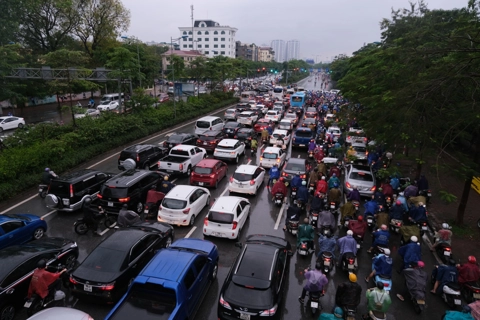
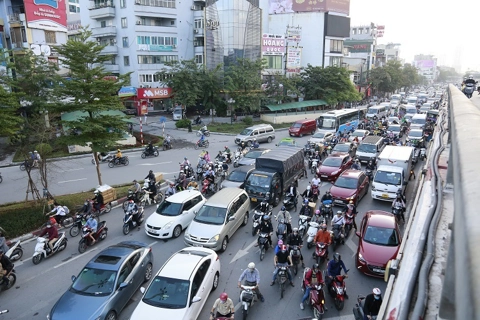
Hanoi’s streets are always alive, filled with the relentless hum of motorbikes, honking cars, and people weaving their way through the chaos. But beneath this constant movement lies a quieter, more dangerous reality anger simmering just below the surface, ready to explode at the slightest trigger. Road rage is no longer an occasional burst of frustration; it has become a regular occurrence, sometimes leading to tragic consequences.

Recent incidents have sparked public outcry. A Lexus driver brutally attacked a delivery worker with dissabilities, striking him repeatedly with a helmet over a minor collision. A simple parking dispute escalated into a physical altercation in broad daylight. In another case, a young man died after being kicked in the head following a minor motorbike accident. These are not isolated events they are part of a growing pattern of unchecked aggression on Vietnam’s roads.
"After 20 years, I still remember the fear of being threatened on the road," said Jennifer Ta, recalling a moment that left a lasting scar. "It’s not something you forget." For some, road rage is a distant news headline. For others, it is a memory that lingers, shaping the way they drive and react to traffic today.
Tri Nguyen, who recently moved to Hanoi, describes a different frustration. "Driving here is exhausting. In my hometown, the roads are wider, traffic flows smoothly. Here, you never know when you’ll be stuck." The unpredictability of traffic has become a common grievance. There is no pattern, no way to calculate the exact time needed for a trip. What should take fifteen minutes can stretch into an hour, leaving drivers irritated, anxious, and desperate to move forward.
For those with families, the frustration turns into worry. "When I drive with my child in the car, I’m always on edge," said Lam Nguyen. "I just hope that one day, cities will have better urban planning and transportation solutions." Meanwhile, ride-hailing drivers struggle with time lost in congestion. "I can’t predict traffic," said Toan Do, a Grab driver. "Sometimes a trip takes twice as long as planned. And if an accident happens, I end up losing more money than I make."
I have felt this same frustration in my own life. I plan my commutes down to the minute, sometimes avoiding picking up my partner just because a short drive could turn into an hour-long ride. I have changed my habits, leaving home earlier to avoid rush hour or staying out late just so I can return home without battling congestion. Even a simple task like commuting has become a mental calculation.
The psychology behind road rage is complex, but studies suggest that it isn’t just about traffic it’s about how people handle stress and control their emotions. Some drivers carry their frustrations onto the road, seeing every traffic mistake as a personal attack. Anonymity behind the wheel emboldens aggression. "People feel untouchable when they’re driving," a psychologist specializing in urban behavior once told me. "It’s easier to lash out at someone you’ll never see again." Impatience also plays a role. The desire to get ahead, to move faster, makes even the smallest delay unbearable.
Some people handle their anger constructively. Others let it dictate their actions. And when aggression meets chaos, things spiral quickly. I witnessed this firsthand when I saw the aftermath of a road rage incident a crash that left a man lifeless on the pavement. People gathered around, some recording on their phones, others arguing over who was at fault. It was a moment of irreversible fate, a life lost in a split second of anger. It left me thinking how many of us have narrowly avoided such encounters? How close are we to becoming part of one?
For many, the problem is not just traffic congestion but a deeper sense of losing control. "I can never be sure how long it will take to get anywhere," a friend once told me. "It feels like no matter how well I plan, something unexpected always happens." This uncertainty creates stress, and stress, when combined with impatience, fuels aggressive behavior.
But road rage is not inevitable. The solution isn’t just harsher penalties or better road design it is also about how we, as individuals, approach driving. A moment of anger can have lifelong consequences. Avoiding confrontation is not weakness; it is self-preservation. Letting go of the need to be right can prevent a minor dispute from turning into a life-altering mistake. The road is a shared space, and how we navigate it reflects how we interact with one another.
Driving courses focus on technical skills but rarely emphasize emotional control. Public awareness campaigns warn against drunk driving but say little about aggression behind the wheel. In a country where traffic laws are often loosely enforced, many drivers feel emboldened to act out, believing there are no real consequences. Yet, every road rage incident leaves behind scars some physical, some emotional, and some permanent.
I still think about that crash. What if that driver had taken a deep breath instead of throwing a punch? What if they had chosen to let go of their anger instead of letting it control them? On the streets of Vietnam, where life moves fast and tempers run high, perhaps the most radical thing we can do is pause, take a breath, and choose to drive with a little more understanding.