TOD model for solving urban traffic challenges in Hanoi
Under the current implementation method and situation, the completion of nearly 600 km of urban rail lines in Hanoi and Ho Chi Minh City in the next 12 years is not feasible. Therefore, a change is essential.
Nguyen Phi Thuong, Director of the Hanoi Department of Transport, told Hanoimoi Newspaper that the TOD (Transit-Oriented Development) model is a way to address the existing challenges of urban transport.
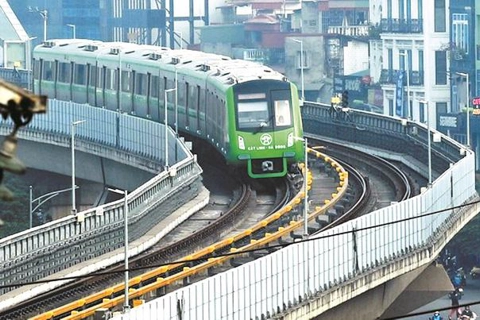
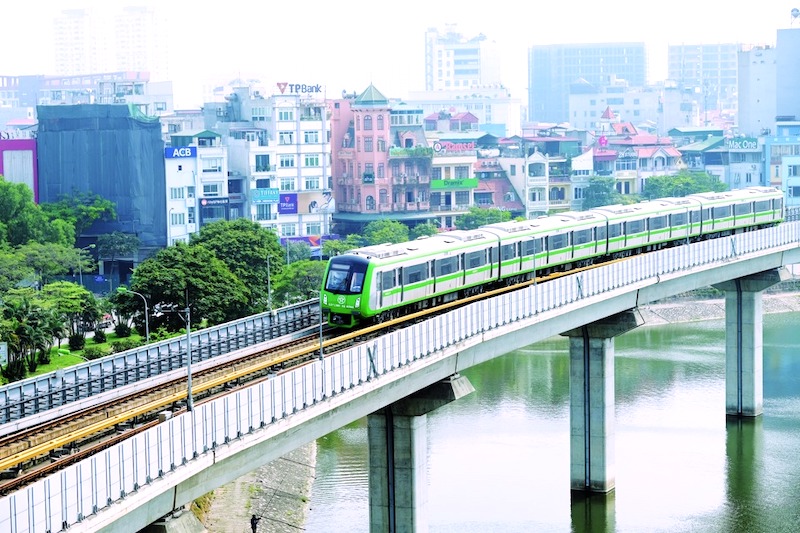
| The Cat Linh - Ha Dong metro line. Photos: Pham Hung/ The Hanoi Times |
What are the reasons behind the challenges faced by the metro projects in Hanoi and Ho Chi Minh City in meeting the 12-year deadline?
According to the plan, Hanoi aims to construct 10 metro lines totaling 417 kilometers, with an estimated total investment of about $40 billion. Similarly, Ho Chi Minh City is considering the development of eight lines totaling 220 kilometers, requiring an approximate investment of $25 billion.
Nonetheless, the execution of the proposed lines is currently progressing at a sluggish pace. Up to now, Hanoi has only managed to open the Cat Linh-Ha Dong railway line. The 8.5-kilometer elevated segment of the Nhon - Hanoi Station metro line is anticipated to commence operations by the conclusion of the third quarter of 2023. In Ho Chi Minh City, solely the Ben Thanh - Suoi Tien metro line No. 1 is undergoing trial operation.
The investment demands for urban railway projects are substantial, surpassing the capabilities of the State budget. Recent urban railway ventures have unveiled numerous inadequacies. Alongside gradual advancement, there have been instances of cost overruns that have inflated the overall investment amount.
The urban metro lines lack harmonization with urban space restructuring and integration with the existing transportation system. Moreover, challenges in station accessibility undermine the efficiency of mass transit. Additionally, each railway line employs distinct technologies based on the sponsors' circumstances.
The achievement of a complete urban railway network in Hanoi and Ho Chi Minh City is projected by 2035, in accordance with the Development Orientation of Vietnam's Railway Transportation to 2030, with a perspective extending to 2045, sanctioned by the Politburo.
However, given the present implementation approach and circumstances, accomplishing the remaining nearly 600 kilometers of urban railway within the next 12 years poses considerable challenges.
What feasible solutions could be implemented to accomplish the objective?
| Nguyen Phi Thuong, Director of the Hanoi Department of Transport |

Presently, the Transit-Oriented Development (TOD) model is being explored and implemented by numerous countries and cities worldwide as a long-term solution to address significant urban development issues, including infrastructure congestion, traffic congestion, environmental pollution, shortages in social housing, and inadequate investment resources for infrastructure expansion.
TOD is an urban development approach centered around public transport hubs, typically railway stations, that integrate diverse functions such as residential, office, financial, and commercial activities in the vicinity of the station area, spanning a maximum radius of 800-1,000 meters. This range corresponds to commuters' 10-15 minute walk to the station.
At the heart of TOD lies the synergy between public transportation and land utilization, encouraging vertical urban growth (compact cities) instead of sprawling horizontally.
Through the emphasis on public transportation, the model ensures sustainable urban advancement while generating resources for the maintenance and augmentation of public transport services.
The model is primarily reliant on rail transport, although it can also be implemented in conjunction with bus rapid transit systems.
Is it feasible for Hanoi and Ho Chi Minh City to adopt the TOD model?
Drawing from international examples, it is imperative for both Hanoi and Ho Chi Minh City to explore and implement the TOD model to facilitate the growth of their urban rail systems and uphold the overarching, sustainable urban development vision.
This entails synergizing governmental leadership with the resources and inventive capabilities of the private sector, transforming it into a propelling force for progress.
Revamping the present investment strategies for urban rail networks is critical, and the TOD model presents a viable solution to the multifaceted urban transportation issues confronting both cities.
So what needs to be done to successfully implement the TOD model?
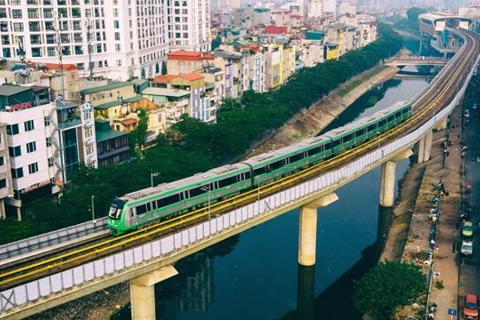
| The elevated section of the Nhon - Hanoi Station metro line. |
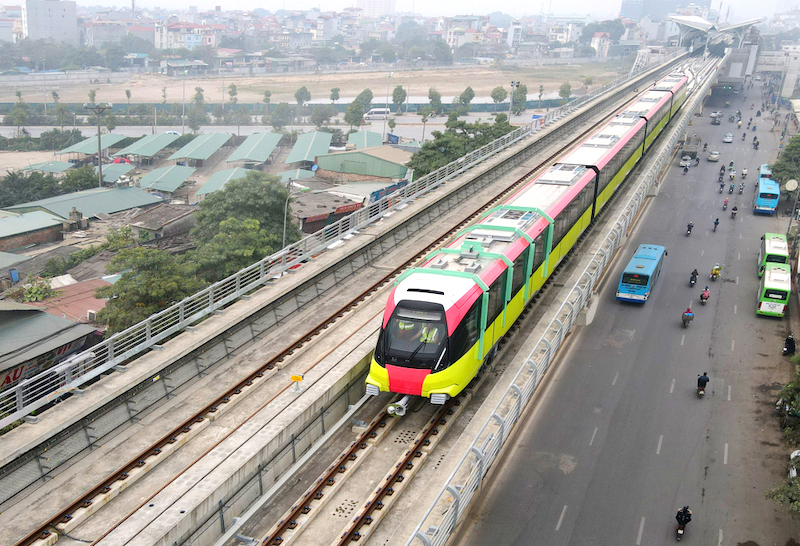
Implementing TOD is a complex and lengthy process that requires extensive research and the involvement of multiple stakeholders at multiple levels.
As a result, the model always presents risks and challenges that must be thoroughly examined. Successful TOD models in practice have shown the need for four fundamental elements, including political vision and determination, mechanisms and policies for integrating transportation and land use in urban development, coordination mechanisms among stakeholders involved in TOD development, and financial mobilization mechanisms and risk-sharing arrangements.
Adapting to specific circumstances, cities can execute Transit-Oriented Development (TOD) initiatives through various mechanisms.
The fundamental principle behind TOD implementation involves amalgamating rail, bus rapid transit, and real estate development undertakings into a unified system. This can be achieved through avenues like public-private partnerships (PPP), leveraging property taxes and transfer fees, or leasing/auctioning land use rights to investors to procure funds for transportation expansion.
What are your suggestions for accelerating the implementation of TOD in Vietnam, given that this model is still new and lacks a legal framework?
I believe the initial step involves revisiting and enhancing the legal framework associated with the TOD model across domains such as land, planning, investment, construction, real estate business, public-private partnerships (PPP), and other relevant regulations, with the aim of ensuring harmonization.
The government should task pertinent ministries and agencies with formulating an appropriate TOD development strategy that factors in Vietnam's specific circumstances.
It should also permit the initiation of pilot projects based on this model in select cities, initially concentrating on the urban rail lines in Hanoi and Ho Chi Minh City. This iterative process can lead to the refinement of an effective and enduring TOD development strategy.
Individual municipalities should engage in research and release resolutions and strategies tailored explicitly for TOD, recognizing it as a central and prioritized solution for sustainable urban advancement.
They should review and adapt urban rail network blueprints to incorporate TOD models at stations and depots, considering the feasibility of land reclamation and urban growth.
Furthermore, it is essential to establish specialized mechanisms and policies to incentivize investor participation in TOD ventures rooted in the principles of equitable benefit distribution and shared risks.
Thank you!