Transnational economic recovery to be key topic in Japan PM's Vietnam visit
Vietnam and Japan are expected to relax traveling restrictions to meet the increasing demand.
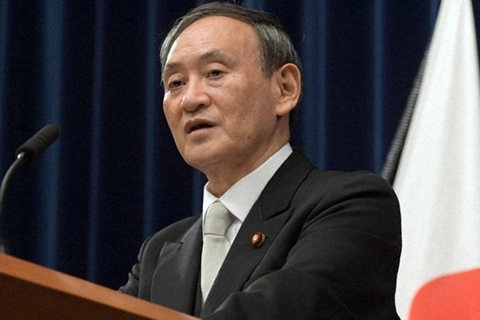
Seeking measures for the transnational economic recovery in the face of the Covid-19 pandemic is believed one of the main topics in the Vietnam visit by Japan’s newly-elected Prime Minister Suga Yoshihide.
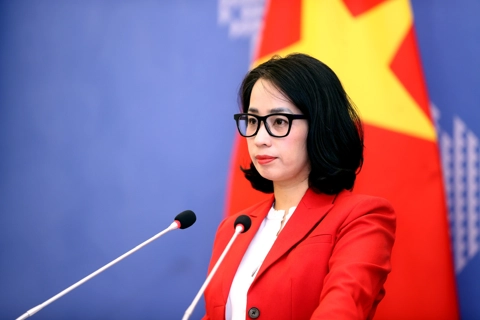
Spokesperson Le Thi Thu Hang of Vietnam’s Ministry of Foreign Affairs at a press conference on Thursday confirmed that the Japanese PM will visit Vietnam “very soon”.
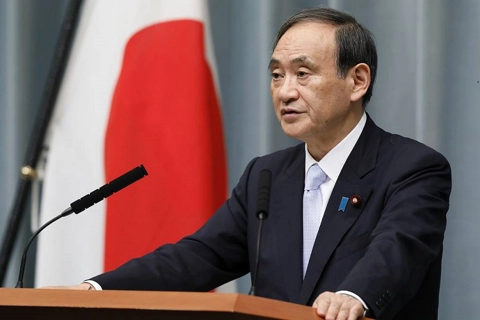
| Japan’s Prime Minister Yoshihide Suga. Photo: Mamoru Yago |
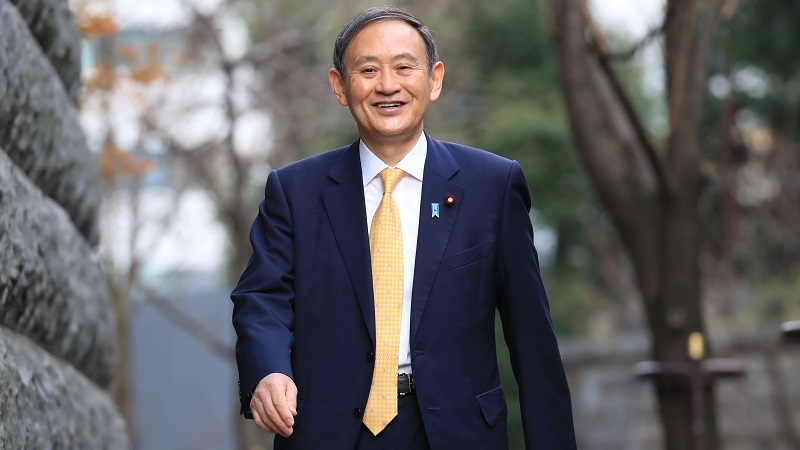
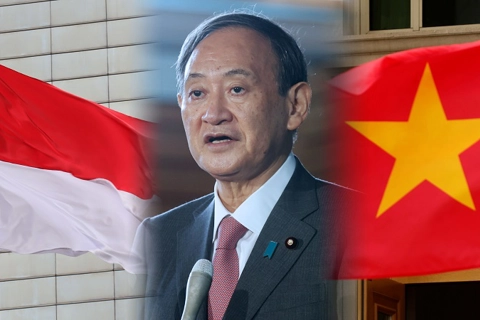
Earlier on Tuesday, Japan’s Prime Minister Yoshihide Suga confirmed his first foreign trip since taking office in September to Vietnam and Indonesia from October 18 to October 21, Vietnam News Agency reported.
Trans-border economic cooperation
Yoshikazu Kato, currently Adjunct Associate Professor at the Asia Global Institute, University of Hong Kong, predicted that Suga and Vietnamese leaders would openly debate treatment methods, vaccines, information transparency and trans-border economic recovery in the near future.
Nguyen Quoc Cuong, former Vietnamese Ambassador to Japan in 2015-2018, told VnExpress that Japan is trying to diversify its supply chains while Southeast Asia and Vietnam in particular are destinations that Japanese companies are looking for.
In July, the Japan External Trade Organization (JETRO) announced a list of 30 Japanese firms (out of 100 companies signing up for supply chain diversification projects) to receive the Japanese government’s aid to move their production from China to Southeast Asian countries. Half of the supported businesses decided to move to Vietnam.
Echoing Mr. Cuong, Nguyen Phu Binh, former Vietnamese Ambassador to Japan in 2008-2011, said Japan is struggling with difficulties caused by major changes in the global supply chains, mostly in China, due to Covid-19. In addition, Tokyo is making efforts to balance relations with both China and the US amid US-China trade tensions.
Meanwhile, Hanoi has contained the virus and turned challenges into opportunities, promoting its external relations, he noted.
“Japan might choose Vietnam the first destination for the production shift from China thanks to geographical and cultural similarities,” Mr. Binh said, adding that the relocation to Vietnam would enable Japanese companies to avoid sanctions that Washington applies to Chinese goods.
Sharing the same ideas, Michael Thomas Cucek, Assistant Professor, Temple University, said the two countries share strategic interests and support each other in economic development. Industries in Japan are attracting Vietnam’s manpower.
ASEAN
Suga wants to affirm that Tokyo continues to highlight the role of ASEAN in the new cabinet’s foreign policy, Ambassador Nguyen Quoc Cuong said, adding that the Japanese PM might continue supporting the ASEAN Centrality and have new initiatives for the Japan-ASEAN relations and the ASEAN itself.
“Vietnam is the ideal destination for Mr. Suga to affirm Japan’s policy toward the region thanks to Vietnam’s ASEAN Chair 2020 and membership of the UN Security Council,” Mr. Cuong said.
According to Yoshikazu Kato, Suga’s visit is also aimed to boost the strategic relations with the Southeast Asian region, which is put within Japan’s Indo-Pacific Vision. Japan and Vietnam might discuss geo-political factors relating to the South China Sea.
Go Ito, Professor, Political Science, Meiji University, highlighted the importance of Mr. Suga’s Vietnam visit in the course of ASEAN’s growing role in the international community and Vietnam’s leading role in maritime security – a key pillar in Japan’s policy.
Expectations
Mr. Cuong said that the Japanese PM and Vietnamese leaders would ink specific agreements on Covid-19 response and preparations for the post-pandemic, including the resumption of transport and traveling.
He said Japan would strongly support Vietnam in the remaining events in the ASEAN Chair 2020.
Hanoi expects to hold a series of meetings in person thanks to its initial containment of the novel coronavirus.
Japan and Vietnam would reach consensus on regional and international issues, including the South China Sea ones, Mr. Cuong commented.
Meanwhile, Mr. Binh expected that Japan would become Vietnam’s largest investor from the second currently with total registered foreign direct investment (FDI) of US$60 billion. At present, Japan is the fourth largest trade partner of Vietnam with two-way trade of US$40 billion in 2019.
He attributed a number of trade agreements to the tightened economic ties, citing the Vietnam-Japan Economic Partnership Agreement (VJEPA) signed in 2008, the ASEAN-Japan Comprehensive Economic Partnership (AJCEP) Agreement enforced in 2008, and the Comprehensive and Progressive Agreement for Trans-Pacific Partnership (CPTPP) signed in 2018.