Vietnam's Deputy PM assigned to take care of national power planning
Vietnam is working toward green growth with a significant increase in renewable energy to reduce the coal-led portion in the 2021-2030 period.
Deputy Prime Minister Le Van Thanh has been assigned to supervise the implementation of the national electricity planning and big projects.
| Vietnam's Deputy Prime Minister Le Van Thanh. Photo: VGP |
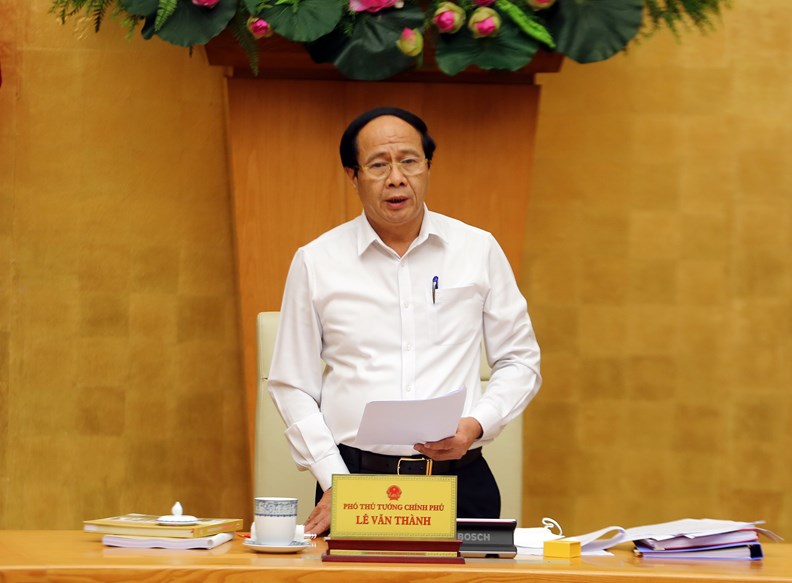
Thanh will lead a committee with members being ministers and deputy ministers of Industry and Trade (MoIT), Construction, and deputy head of the Commission for the Management of State Capital at Enterprises (CMSC).
The committee is tasked with checking the building of the master plans and the execution of national power generation and distribution projects approved by the prime minister, mostly key projects that are essential to the economy.
It also monitors the power import, the development roadmap of renewable energy development, the building of infrastructure for the import of coal and liquefied natural gas (LNG), and the deals on coal and LNG import.
In addition, it works with local leaders to ensure the deadline of power projects, site clearance, and resettlement issues.
As of 2020, the country’s total generation capacity is about 69.3 gigawatt (GW), including 16.5 GW of solar power (24% of the total capacity) and 0.6 GW of wind power, according to Vietnam Electricity (EVN).
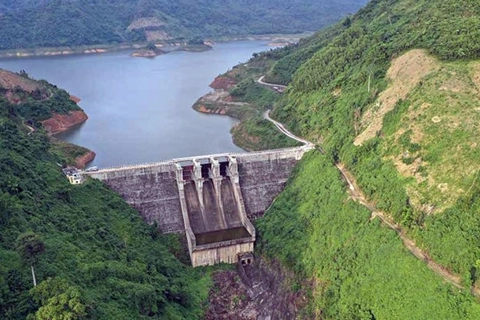
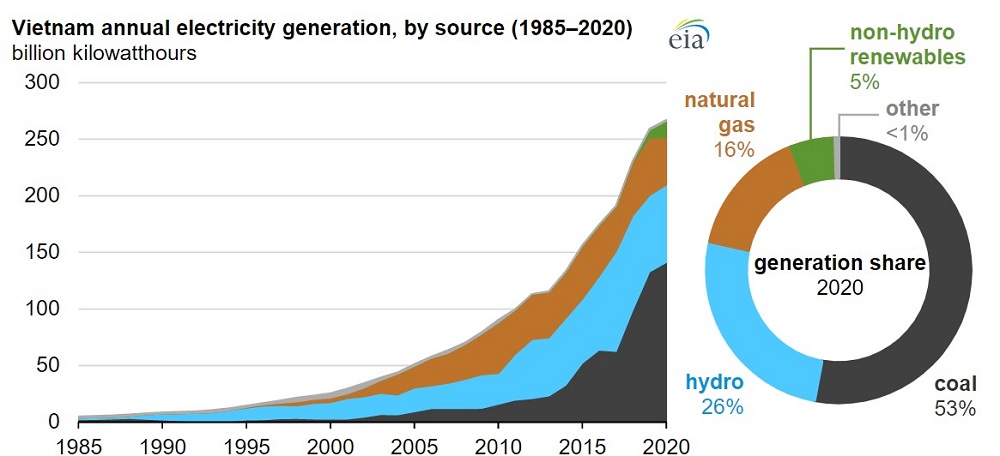
In terms of the generation shares, more than half of Vietnam’s electricity generation came from coal in 2020. The country’s reliance on coal-fired power remains heavily to meet rapidly increasing electricity demand. Meanwhile, hydroelectric generation is also significant as the country is home to a number of large rivers, including the Mekong. Non-hydro renewable sources such as wind and solar made up 5% of Vietnam’s electricity generation in 2020.
| Vietnam's power mix for years. Graph created by the US Energy Information Administration (EIA) |
In April 2021, Vietnam released the draft National Power Development Plan VIII (PD8) for 2021-2030 and its vision to 2045.
Under the draft PDP 8, Vietnam plans to increase solar capacity to 18.6 GW and wind capacity to 18 GW by 2030.
The draft PDP 8 expands wind and solar capacity and increases their shares in the country’s generation mix. It also prioritizes enhancing grid infrastructure to ensure a stable operation with a higher share of renewables.
Expanding non-hydro renewable capacity will likely help Vietnam become less dependent on coal, reduce carbon emissions, and increase electricity generating capacity to meet the country’s growing electricity needs. With its strong emphasis on renewables, the draft PDP 8 departs significantly from previous plans, which relied heavily on hydropower, coal, and natural gas sources, according to the US Energy Information Administration (EIA).
Vietnam is expecting a significant increase in offshore wind power, according to international law firm Watson Farley & Williams.
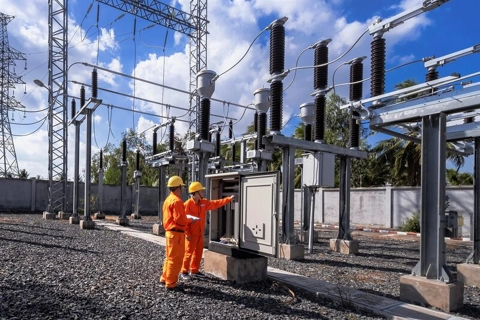
In the planning, Vietnam also prioritizes grid development. Grid priorities include building more high-voltage transmission lines and expanding grid infrastructure, which would help ease grid congestion and integrate renewables.
As a matter of fact, Vietnam’s underdeveloped grid hampers these capacity additions. The country needs new transmission and distribution infrastructure to accommodate capacity additions and to transmit electricity to where it’s needed. The government recently adopted new legislation that improves and prioritizes grid development.
“Grid improvement is a major issue in Vietnam and both MoIT and EVN are aware. It is one of the biggest issues for curtailment risks,” said Watson Farley & Williams.