Econ
Vietnam economy steps into the late phase of business cycle: Brokerage
For 2018, Vietnam`s inflation is estimated at 4-4.2% year-on-year.
The Vietnamese economy is stepping into the late phase of the business cycle, while FDI corporations alone cannot drive the economy, according to Vietnam Dragon Securities Corporation (VDSC).
Although there are large-scale private projects, most of them still depends on credit flows.
The ratio of total credit to GDP has now reached 164%, the second highest level compared with other regional countries. On top of that monetary policy will be tighter in the next few years. The economy's recent momentum has been driven by domestic consumption.
Moreover, Vietnam's macro-stability is being somehow threatened. It is possible to think about cost-push inflation as input costs rose sharply in the past few months. Oil and electricity prices are the main drivers. In addition, food prices surged. Although core inflation is still low, VDSC recorded a slightly stronger month-over-month growth. Producers might eventually pass it on to consumers.
For 2018, Vietnam's inflation is estimated at 4-4.2% year-on-year.
According to official data, GDP growth in the January - September period is approximately at 7%, the highest level since 2011. However, Vietnam's economy grew at an annual pace of 6.9% in the third quarter, lower than the third quarter of 2017's 7.6% growth rate. On the aggregate supply front, the agriculture sector saw the most improvement. Manufacturing and services sectors growth slowed down compared with the same period a year ago.
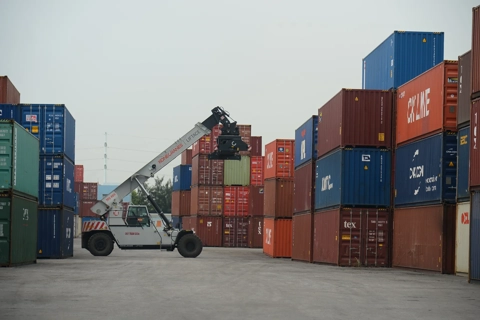
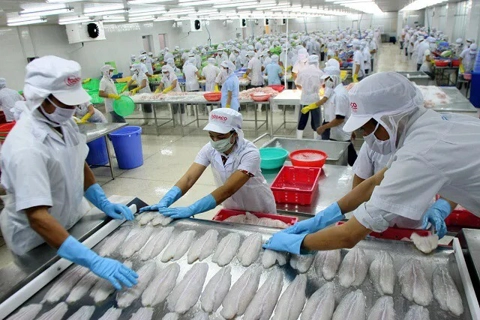
Agriculture producers have had a good year due to better export orders. While rice exporters are busy, fruit and fish exports are showing signs of strength. Notably, Vietnam's fish sector seems to benefit from trade tensions as the US softens its regulation and taxes put on imported fish. Meanwhile, China also reduced its import tariffs to meet domestic demand. Forestry products exports growth soared in 9M2018.
In the manufacturing sector, growth slowed down in the third quarter compared with 2017 although it is higher than during the 2011-2016 period. While large-scale projects in steel and the oil refinery sectors are in their initial phase, textile, furniture, pharmaceutical and car producers are benefiting from trade tensions and Vietnam's tariffs. Nevertheless, Samsung is still an essential part of the economy.
According to a Nikkei report, Vietnam's manufacturing PMI gradually decreased and was at 52 in September, the lowest level since November 2017. Although the country is still the 'bright star' in ASEAN, there were less orders in September while output and job creation softened.
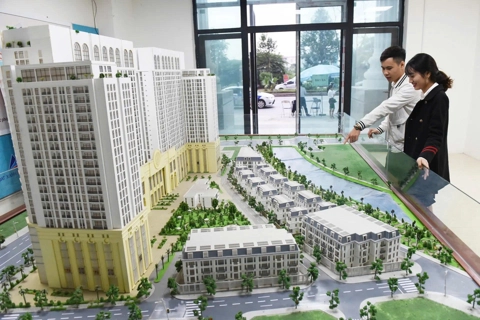
Meanwhile, the service sector, contributing nearly a half of Vietnam's GDP, also recorded a slower growth. Wholesale and retail sales, accommodation and catering services, finance and banking as well as real estate saw lower growth.
The slip of wholesale and retail sales is an early signal of a potential peak in consumption. Slower growth of international visitors is not good for the accommodation and catering services. Tighter monetary conditions are affecting the financial services sector.
Third quarter business results decisive
The fact that Vietnam was added to FTSE Russell's watch list is very positive news. In addition, liquidity gradually increased. Fears of 'missing out' may encourage investors to return to the market.
In September 27, FTSE Russell added Vietnam's equity market onto its watch list for possible reclassification. This was a positive news for Vietnam, after failing to join the MSCI list this June.
FTSE Russell and MSCI are the two biggest institutions providing global indices that are used as tracking benchmarks by exchange-traded funds (ETFs) around the globe. 250 ETFs track MSCI's indices while 156 ETFs use FTSE.
After dropping in the past few months, the VND has stabilized. Interest rates have also not fluctuated dramatically. In that context, the third quarter business results will likely determine the trend for the market.
VDSC expected that there will be more diversion between companies' stock price movements. Positive results overall will support the market. However, the amplitude of share price movements will not be as big as what happened in the beginning of 2018. In summary, VDSC stressed its belief that the worst period of 2018 has been left behind. After the weak performance in the first half of 2018, emerging and frontier markets have started recovering. Vietnam is not an exception.

Illustrative photo.
|
The ratio of total credit to GDP has now reached 164%, the second highest level compared with other regional countries. On top of that monetary policy will be tighter in the next few years. The economy's recent momentum has been driven by domestic consumption.
Moreover, Vietnam's macro-stability is being somehow threatened. It is possible to think about cost-push inflation as input costs rose sharply in the past few months. Oil and electricity prices are the main drivers. In addition, food prices surged. Although core inflation is still low, VDSC recorded a slightly stronger month-over-month growth. Producers might eventually pass it on to consumers.
For 2018, Vietnam's inflation is estimated at 4-4.2% year-on-year.
According to official data, GDP growth in the January - September period is approximately at 7%, the highest level since 2011. However, Vietnam's economy grew at an annual pace of 6.9% in the third quarter, lower than the third quarter of 2017's 7.6% growth rate. On the aggregate supply front, the agriculture sector saw the most improvement. Manufacturing and services sectors growth slowed down compared with the same period a year ago.
Agriculture producers have had a good year due to better export orders. While rice exporters are busy, fruit and fish exports are showing signs of strength. Notably, Vietnam's fish sector seems to benefit from trade tensions as the US softens its regulation and taxes put on imported fish. Meanwhile, China also reduced its import tariffs to meet domestic demand. Forestry products exports growth soared in 9M2018.
In the manufacturing sector, growth slowed down in the third quarter compared with 2017 although it is higher than during the 2011-2016 period. While large-scale projects in steel and the oil refinery sectors are in their initial phase, textile, furniture, pharmaceutical and car producers are benefiting from trade tensions and Vietnam's tariffs. Nevertheless, Samsung is still an essential part of the economy.
According to a Nikkei report, Vietnam's manufacturing PMI gradually decreased and was at 52 in September, the lowest level since November 2017. Although the country is still the 'bright star' in ASEAN, there were less orders in September while output and job creation softened.
Meanwhile, the service sector, contributing nearly a half of Vietnam's GDP, also recorded a slower growth. Wholesale and retail sales, accommodation and catering services, finance and banking as well as real estate saw lower growth.
The slip of wholesale and retail sales is an early signal of a potential peak in consumption. Slower growth of international visitors is not good for the accommodation and catering services. Tighter monetary conditions are affecting the financial services sector.
Third quarter business results decisive
The fact that Vietnam was added to FTSE Russell's watch list is very positive news. In addition, liquidity gradually increased. Fears of 'missing out' may encourage investors to return to the market.
In September 27, FTSE Russell added Vietnam's equity market onto its watch list for possible reclassification. This was a positive news for Vietnam, after failing to join the MSCI list this June.
FTSE Russell and MSCI are the two biggest institutions providing global indices that are used as tracking benchmarks by exchange-traded funds (ETFs) around the globe. 250 ETFs track MSCI's indices while 156 ETFs use FTSE.
After dropping in the past few months, the VND has stabilized. Interest rates have also not fluctuated dramatically. In that context, the third quarter business results will likely determine the trend for the market.
VDSC expected that there will be more diversion between companies' stock price movements. Positive results overall will support the market. However, the amplitude of share price movements will not be as big as what happened in the beginning of 2018. In summary, VDSC stressed its belief that the worst period of 2018 has been left behind. After the weak performance in the first half of 2018, emerging and frontier markets have started recovering. Vietnam is not an exception.