Log in
Business

Vietnam gov't greenlights Mobile Money

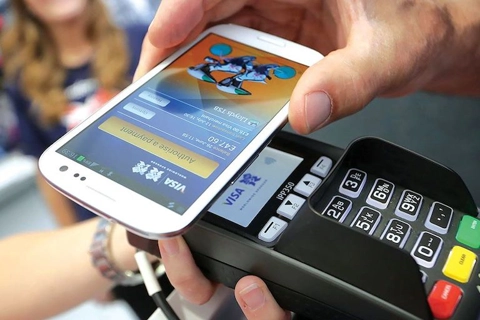
The regulation on mobile payment will not allow users to recharge from scratch cards but they must conduct deposits and withdrawals from the registered bank account.

Prime Minister Nguyen Xuan Phuc has agreed the deployment of the pilot project on direct carrier billing services, also known as Mobile Money, according to a latest government resolution.

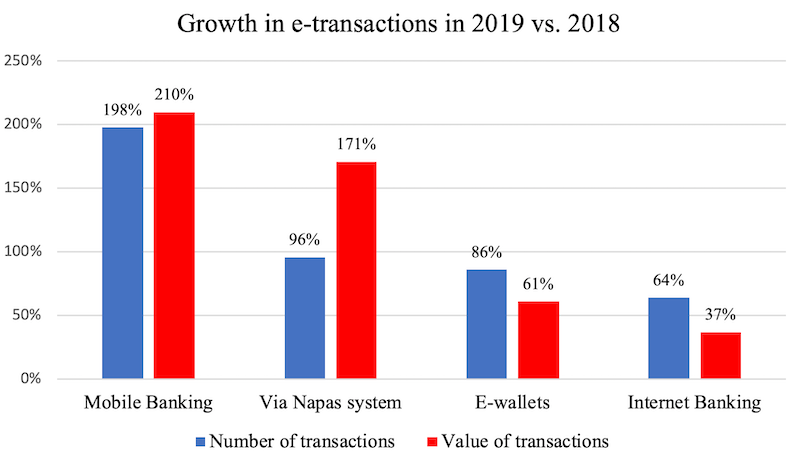
 Source: State Bank of Vietnam. Chart: Nhat Minh

The State Bank of Vietnam (SBV), the country's central bank, in April submitted the Mobile Money project to the government after completing the pilot scheme allowing online purchases with mobile devices.

In 2019, the government asked the SBV to research and propose a pilot scheme of mobile payment service given the absence of specific regulations on telecom-based financial services and a sharp increase of e-wallet transactions.

According to Pham Tien Dung, head of the Payment Department under the SBV, the regulation will not allow these accounts to recharge from scratch cards but users must conduct deposits and withdrawals from the registered bank account. The transaction limit is set at VND10 million (US$428.9) per month.

Mobile payment in Vietnam is growing rapidly, leading to the stricter requirement on security. The biggest risk in cyber-transactions is anonymity, according to Dung, therefore, customer identification is mandatory. 

The similarity between mobile money and e-wallet is the use of an identification account. However, while e-wallet identifiers are provided by banks, in mobile money, users’ identifiers are provided by telecommunication companies. The challenge for telecom companies is how to identify the client correctly in the same ways as banks do, to avoid any fraudulent transactions.

To deal with this problem, up to two-thirds of the draft document on cashless payment, which is set to replace Decree No.101 dated 2012, is being built and focused on management of transaction risks, prevention of cybercrime and money laundering.

Leading telecom carriers including VNPT and Viettel have been granted licenses by the SBV to carry out such services. A national personal database has also been built for issuing personal identification numbers and also adopting e-KYC (electronic Know-Your-Customers).

Statistics from the BIDV Training and Research Institute shows that 90 countries are providing the direct carrier billing service with nearly 870 million subscribers and 272 apps. Daily transactions average US$1.3 billion and over one million accounts remain active for at least 90 days.

At the end of 2019, Vietnam had around 129.5 million mobile subscribers, around half of them using 3G and 4G, while the national smartphone penetration reached 45% of the country’s population or 43.7 million people, the report cited SBV figures released last November.

The government targeted to reduce the ratio of cash payments from 11.3% in 2019 to less than 10% by the end of this year, and 8% by 2025.

Reactions:
Share:
Trending
Most Viewed
Related news
Vietnam honors 50 transparent listed companies as stock market reaches new milestones

Vietnam honors 50 transparent listed companies as stock market reaches new milestones

Vietnam honored 50 listed companies for excellence in transparency at the 2025 Vietnam Listed Company Awards, which spotlighted standout annual reports, corporate governance and sustainability disclosures amid rising foreign investor interest and growing alignment with international reporting standards.

Vietnam to tighten biometric authentication for new bank cards next year

Vietnam to tighten biometric authentication for new bank cards next year

Bank card issuers must conduct a face-to-face meeting and match the biometric data of individual customers or the legal representative of organizational customers with their identity documents.

Make in Vietnam forum spotlights breakthroughs shaping digital future in the country

Make in Vietnam forum spotlights breakthroughs shaping digital future in the country

Vietnam will host the seventh National Forum on Vietnamese Digital Technology Enterprises on December 25 in Hanoi, highlighting policy directions, strategic technologies and progress under the “Make in Vietnam” initiative as the country pushes toward a stronger digital economy.

Hanoi and Moscow seek new economic momentum as partnership marks 75 years

Hanoi and Moscow seek new economic momentum as partnership marks 75 years

At the Moscow–Hanoi Business Forum, leaders from both capitals said 75 years of Vietnam–Russia ties provide a strong foundation to deepen economic and investment cooperation, especially in technology, trade and urban development.

Vietnam manufacturing maintains strong momentum despite storms disrupting supply chains

Vietnam manufacturing maintains strong momentum despite storms disrupting supply chains

Vietnam’s manufacturing sector continued to expand in November, marking the fifth straight month of improvement, even as severe storms caused supply-chain delays and slowed production, according to S&P Global.

Techfest 2025 returns to Hanoi, spotlighting Vietnam’s vibrant startup community

Techfest 2025 returns to Hanoi, spotlighting Vietnam’s vibrant startup community

Hanoi’s Hoan Kiem pedestrian street will host Techfest Vietnam 2025 from December 12 to December 14, welcoming entrepreneurs, investors and the public to explore emerging technologies and celebrate the country’s growing culture of innovation.

Vietnam expands major entrepreneurship program to unlock opportunities for women nationwide

Vietnam expands major entrepreneurship program to unlock opportunities for women nationwide

The Vietnam Women’s Entrepreneurship Support Program has surpassed nearly every target set for 2017–2025, empowering more than 118,000 women to launch new ventures and laying the groundwork for a stronger, more inclusive entrepreneurial ecosystem in the next decade.

HHTIP accompanies businesses in efficient energy use for sustainability

HHTIP accompanies businesses in efficient energy use for sustainability

As green transition becomes a decisive factor shaping future growth, Hanoi is intensifying efforts to push energy efficiency across its industrial zones. The city’s management board is building a development model centered on clean energy, responsible production and sustainable operations.