Vietnam initiates ASEAN post-Covid recovery strategy: Carl Thayer
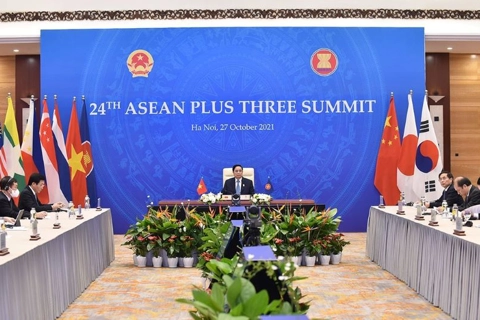
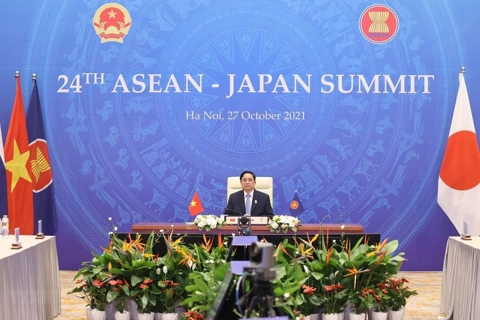
Vietnam has commenced anti-Covid initiatives and measures to foster coordination of dialogues with partners, including ASEAN+3.
Vietnam, as ASEAN Chair in 2020, has contributed to boosting ASEAN’s solidarity and cooperation on battling the pandemic and economic recovery.
Emeritus Professor Carl Thayer of the University of New South Wales (UNSW) in Canberra gave his reflections on the issue.
“From the very beginning, Vietnam set the stage for planning a post-Covid recovery strategy among ASEAN members,” Prof. Thayer told The Hanoi Times.
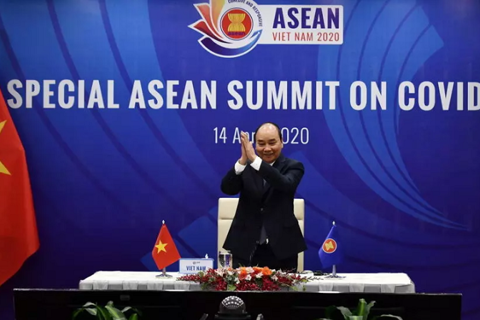
| Vietnam launched the Special ASEAN Plus Three Summit on Covid-19 in April 2020. Photo: MoFA |
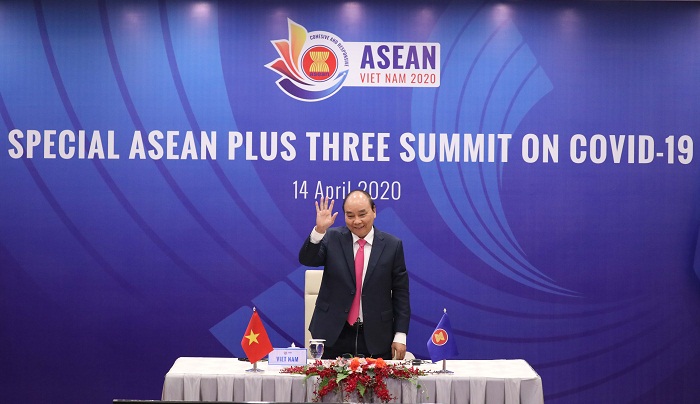
Vietnam has put forth several anti-Covid initiatives, proposals, and measures, including activating virtual channels to ensure continuous communication among ASEAN members, fostering coordination of dialogues with partners (such as organizing ad-hoc ASEAN+3 discussions), providing medical equipment and protective gear to many countries in different continents, establishing a regional reserve for medical equipment and essential products to meet urgent requirements.
“All of ASEAN should be grateful that Vietnam was ASEAN Chair in 2020,” Prof. Thayer said, adding that Vietnam quickly pivoted from “business as usual” to proactive leadership to address the Covid-19 pandemic on a regional and global basis.
Vietnam pioneered the use of virtual conferences to bring together both key ministers and high-level government leaders to adopt policies for Southeast Asia as a region. Vietnam also used its extensive diplomatic network to solicit the support of major countries for ASEAN and its members, he said.
Vietnam was also a champion of the developing world, as exemplified by President Nguyen Xuan Phuc’s address to the General Assembly. The country sought equitable access to vaccines for all countries and the transfer of intellectual property and technology to enable local production of Covid vaccines.
“In sum, Vietnam’s handling of the Covid crisis, while ASEAN Chair and subsequently, demonstrate why it has the reputation of being a responsible member of the international community,” Prof. Thayer noted.
Regarding its pandemic fight, the professor highlighted Vietnam’s achievements in the initial stages and its flexible response to bring the situation to the new normal.
In 2020 and early 2021, Vietnam kept Covid-19 at bay through a combination of border closures and social distancing enforcement. Recently, Vietnam has scrapped a “zero-Covid” strategy in favor of a more flexible approach such as living safely with the virus, battling the pandemic, and developing economy at the same time through vaccinating all people, adults, including workers, first and children later, applying the stay-at-work mode first, and allowing workers to travel freely later.
According to the professor, the major anti-Covid measures that Vietnam has taken at different periods of time have shown effectiveness.
He emphasized that Vietnam experienced four waves of the Covid-19 pandemic from early 2020 to the present. Vietnam acted swiftly and decisively when the first wave appeared by adopting global best practices in public health measures: closing its borders, testing, contact tracing, isolation and quarantine, closing schools and public gatherings, wearing face masks, social distancing. These initial measures worked well. The subsequent waves of the pandemic required stringent measures such as lockdowns and limitations on travel.
One problem Vietnam has confronted throughout this period was acquiring sufficient vaccines to inoculate vulnerable members of society as well as essential workers.
The emergence of the Delta variant created a major public health emergency because of the speed of its spread and lethality. Vietnam’s leaders quickly concluded that its policy of Zero-Covid was not feasible. In response, Vietnam’s leaders adopted a proactive two-track policy – acquiring sufficient vaccines to inoculate the population to be able to return to normal life and resume economic activity.
On the first track, Vietnam launched a highly successful international campaign of vaccine diplomacy to acquire the vaccines needed. The country is now acquiring the technology and developing the capacity to produce Covid vaccines domestically.
On the second track, Vietnam stepped up its vaccination efforts with a focus on Ho Chi Minh City and affected provinces in southern Vietnam. High numbers of the population were vaccinated and the stringent lockdown measures were rescinded, Prof. Thayer stressed.