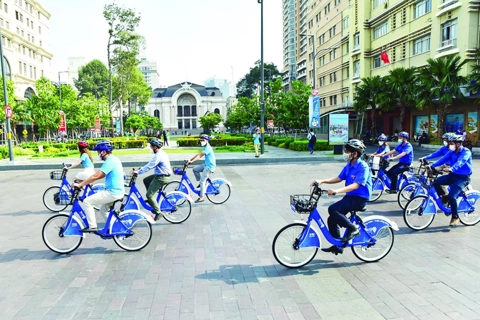
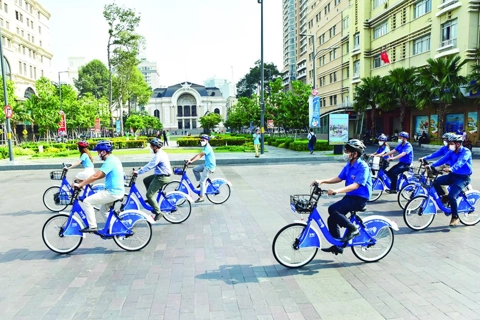
Bicycles contribute to green city development in Vietnam
Planning Bicycle Infrastructure in Urban Areas will make cycling safer and more comfortable for people.
The Urban Bicycle Infrastructure Design Technical Guide, the first in Vietnam, is based on lessons learned from recent bicycle infrastructure and road safety projects in Vietnamese cities and contributes to green city development.
It is heard at the launching ceremony jointly held by the Ministry of Construction (MoC) and the German Agency for International Cooperation (GIZ) in Hanoi on May 29.
According to Daniel Herrmann, chief technical advisor for the Support to Vietnam for the Implementation of the Paris Agreement, Phase II project, The guide will make cycling safer and more comfortable for people and promote cycling as an everyday travel option for people in Vietnam.
"Prioritizing bicycles as a daily mode of transport is an effective and low-cost strategy that can help cities achieve their green growth goals and contribute to the country's net-zero emissions commitment," Daniel Herrmann said.
Children ride bicycles on bike lanes. Photo: Kien Trung/GIZ |

Retno Wihanesta, Senior Program Lead for Urban Transport Planning at the World Resources Institute, said the technical guideline for bicycle infrastructure design is an important step towards achieving sustainable urban mobility in the country.
"We recognize the vital role of cycling as an economical, healthy, and environmentally friendly mobility option. This guideline lays the groundwork for safer, more accessible bicycling, which promotes urban livability. This is an important initiative, and we expect this guideline to inspire more cities in Asia and worldwide to adopt bicycle-friendly infrastructure and promote a healthier and more inclusive urban future," said Wihanesta.
Nguyen Thi An, Vietnam Country Director, HealthBridge, stressed that cycling is good for health and well-being and can also help reduce pollution and emissions as a sustainable transportation method.
"To make cities livable, safe and sustainable, the development of support infrastructure for cycling should become a fundamental part of urban development," An said, adding that the implementation of cycling infrastructure in coordination with other public transport projects will improve the efficiency of the transport system and maximize the impact of the investment.
For his part, Ta Quang Vinh, Director General of the Vietnam Administration of Technical Infrastructure (ATI) under the MoC, stressed that the guideline provides both theoretical and technical solutions to problems related to bicycle facilities, which are in line with the newly issued standard 13592:2022 Urban Roads - Design Requirements in Vietnam.
"We encourage urban planners, urban designers, road engineers, and city managers to use this guideline as a reference in their work," Vinh said.
In addition, the transportation sector is responsible for more than 20% of global emissions, of which road transport is responsible for more than 70%, and urban traffic for about 40% of the sector's total emissions. Conversely, cycling is an accessible, safe, healthy, and environmentally friendly means of transport.
Moreover, the launch is key to Vietnam's efforts to address its rapidly growing urban population, expected to reach 50% of the total population by 2025. Rapid urbanization is putting pressure on the management of urban public services, including a range of issues related to urban transport and the environment. The existing urban road network often poses risks to cyclists and other vulnerable road users, and many smaller streets lack the space and facilities necessary for safe cycling and walking.