Social Affairs
Vietnam: One of the safest countries in the world
Vietnam is considered to be one of the few safest countries in the world, according to the Global Terrorism Index 2017 report of the Australian Institute for Economic & Peace.
The 2017 report highlights how terrorism remains unevenly spread throughout the world. Central America and the Caribbean continues to be the least affected region. There were only 12 deaths recorded in 2016, which accounts for less than 0.4 per cent of all terrorism deaths. Meanwhile, 94 per cent of all terrorist deaths are located in the Middle-East and North Africa, sub-Saharan Africa and South Asia.
The 2017 GTI report highlights a turning point in the fight against radical Islamist extremism. The main positive finding shows a global decline in the number of deaths from terrorist attacks to 25,673 people, which is a 22 per cent improvement from the peak in 2014. Terrorism has fallen significantly in the epicenters of Syria, Pakistan, Afghanistan and Nigeria, which are four of the five countries most affected by terrorism. The ten countries with the largest improvements experienced 7,348 fewer deaths while the 10 countries with the largest deteriorations experienced only 1,389 terrorism deaths. This highlights the strength of the positive trend with the number of people killed by terrorism decreasing for the second successive year.
Among 134 countries and regions covered in the report with regard to risks and impact of terrorists, Vietnam is considered as the safest country in the 5th consecutive year, with the national security is totally safe against the threat of terrorism.
In 2016, the Asia-Pacific region had the third lowest impact from terrorism. However, there is large variation within the region with the Philippines ranking 12th globally while six countries including Mongolia, North Korea and Papua New Guinea all rank 134th as they have not experienced a terrorist incident in the last five years. Since 2002 the region has seen an increase in terrorist activity with an increase in both the number of attacks and fatalities resulting from these attacks. Over the last fifteen years, there has been a 720 per cent increase in the number of terrorist attacks from 106 in 2002 to 870 in 2016. In 2002, there were 350 fatalities related to terrorism in the Asia-pacific region. This figure increased to 744 deaths in 2014 but declined to 469 deaths in 2016. The Philippines, China and Thailand have suffered the highest numbers of fatalities from terrorism since 2002 in accounting for 85 per cent of the total deaths in the region. Since 2002, the Philippines, Thailand and Myanmar have seen the largest increases in terrorist activity. In 2016, these three countries accounted for 94 per cent of attacks, which is a significant increase from 55 per cent in 2002. This increase is due to varying factors in each country. In 2016 in the Philippines, jihadist forces took control of the city of Marawi on Mindanao Island for many months; in 2002 in Thailand, Malay Muslim groups reignited conflict with the Thai government; and in 2016 in Myanmar, the Arakan Rohingya Salvation Army (ARSA) was formed and has increasingly targeted police posts.
The global economic impact of terrorism in 2016 was slightly lower than 2015 although it still cost the global economy US$84 billion. While this is a significant number in its own right, it is important to note that the economic impact of terrorism is small compared to other major forms of violence. This amount is only one per cent of the total global economic impact of violence, which reached $14.3 trillion in 2016. However, the figures for terrorism are conservative as they do not account for the indirect impacts on business, investment and the costs associated with security agencies in countering terrorism. As a result, terrorism is one of the few categories of violence where the costs associated with containment likely exceed its consequential costs. However, while the economic impact of terrorism is small it is still critical to contain it as it has the potential to spread quickly and with major social ramifications.
The GTI is produced by the Institute for Economics & Peace (IEP) and is based on data from the Global Terrorism Database (GTD). Data for the GTD is collected and collated by the National Consortium for the Study of Terrorism and Responses to Terrorism (START); a Department of Homeland Security Centre of Excellence led by the University of Maryland. The GTD is considered to be the most comprehensive global dataset on terrorist activity and has now codified over 170,000 terrorist incidents.

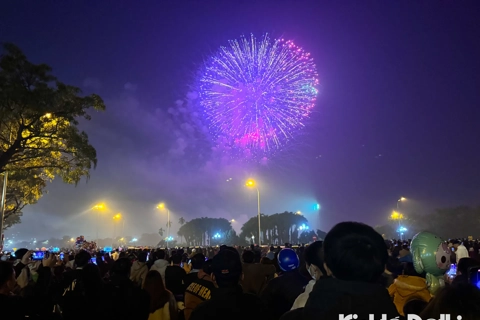
Vietnam is one of the safest countries in the world.
|
Among 134 countries and regions covered in the report with regard to risks and impact of terrorists, Vietnam is considered as the safest country in the 5th consecutive year, with the national security is totally safe against the threat of terrorism.
In 2016, the Asia-Pacific region had the third lowest impact from terrorism. However, there is large variation within the region with the Philippines ranking 12th globally while six countries including Mongolia, North Korea and Papua New Guinea all rank 134th as they have not experienced a terrorist incident in the last five years. Since 2002 the region has seen an increase in terrorist activity with an increase in both the number of attacks and fatalities resulting from these attacks. Over the last fifteen years, there has been a 720 per cent increase in the number of terrorist attacks from 106 in 2002 to 870 in 2016. In 2002, there were 350 fatalities related to terrorism in the Asia-pacific region. This figure increased to 744 deaths in 2014 but declined to 469 deaths in 2016. The Philippines, China and Thailand have suffered the highest numbers of fatalities from terrorism since 2002 in accounting for 85 per cent of the total deaths in the region. Since 2002, the Philippines, Thailand and Myanmar have seen the largest increases in terrorist activity. In 2016, these three countries accounted for 94 per cent of attacks, which is a significant increase from 55 per cent in 2002. This increase is due to varying factors in each country. In 2016 in the Philippines, jihadist forces took control of the city of Marawi on Mindanao Island for many months; in 2002 in Thailand, Malay Muslim groups reignited conflict with the Thai government; and in 2016 in Myanmar, the Arakan Rohingya Salvation Army (ARSA) was formed and has increasingly targeted police posts.
The global economic impact of terrorism in 2016 was slightly lower than 2015 although it still cost the global economy US$84 billion. While this is a significant number in its own right, it is important to note that the economic impact of terrorism is small compared to other major forms of violence. This amount is only one per cent of the total global economic impact of violence, which reached $14.3 trillion in 2016. However, the figures for terrorism are conservative as they do not account for the indirect impacts on business, investment and the costs associated with security agencies in countering terrorism. As a result, terrorism is one of the few categories of violence where the costs associated with containment likely exceed its consequential costs. However, while the economic impact of terrorism is small it is still critical to contain it as it has the potential to spread quickly and with major social ramifications.
The GTI is produced by the Institute for Economics & Peace (IEP) and is based on data from the Global Terrorism Database (GTD). Data for the GTD is collected and collated by the National Consortium for the Study of Terrorism and Responses to Terrorism (START); a Department of Homeland Security Centre of Excellence led by the University of Maryland. The GTD is considered to be the most comprehensive global dataset on terrorist activity and has now codified over 170,000 terrorist incidents.