Econ
Vietnam rapid economic development requires road traffic law revision
Some of the regulations and policies of road traffic could not keep up with Vietnam`s current socio-economic development and new challenges in road traffic management, stated the representative of the Ministry of Transport (MoT).
The 2008 Law on Road Traffic has been a vital legal framework stipulating transportation activities in Vietnam, however, the law now requires major changes during Vietnam's process of economic development, according to Vietnam Chamber of Commerce and Industry (VCCI).
In 10 years of implementation, the law has contributed significantly to reducing traffic accidents and improving Vietnam's transportation infrastructure, said Hoang Cong Phong, vice president of VCCI, at a conference on August 27.
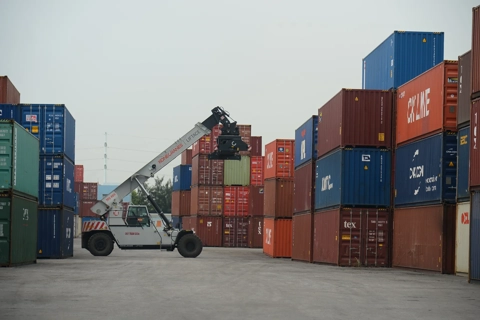
However, with Vietnam's rapid economic development, road transportation is considered a major bottleneck, leading to high transportation costs compared to other countries in the region, Phong added.
"There remains a poor connection between air transportations, waterways, railways and roads," he continued.
According to Phong, the number of road traffic fatalities in Vietnam has been decreasing, but remains high in the world, which comes from the inconsistence and impracticality of the Law on Road Traffic.
Therefore, the revision of the law is considered as a matter of urgency, especially in the context of the Fourth Industrial Revolution, Phong stressed.
Sharing Phong's view, Trinh Thi Hang Nga, director general of Legal Department of the MoT, said the law has played its part in the development of Vietnam's transport sector, raising public awareness about traffic safety and ensuring traffic order.
Nga identified a number of shortcomings which should be revised as Vietnam is on course for integration into the global economy and sustainable development. Among those issues, Nga pointed to the fact that some of the regulations and policies of road traffic could not keep up with Vietnam's current socio-economic development and new challenges in road traffic management.
Since 2008, the National Assembly has approved the 2013 Constitution, and other laws such as the Law on Investment and Law on Enterprises, among others, with new regulations on transport infrastructure development projects.
Nga informed the revision of the Law on road traffic will focus on the following issues:
Firstly, the revised law should be in conformity with the Vienna Convention on Road Signs and Signals and Convention on Road Traffic, while removing obsolete regulations.
Secondly, adjusting the classification of road traffic system and clarifying the responsibilities of government agencies in transport infrastructures management.
Thirdly, providing new legal framework for new and smart transportation vehicles.
Fourthly, regulating the color of license plate to make it more convenient for transportation management and operation.
Fifthly, car owners are now required to have bank account.
Sixthly, revising classes for driving license in conformity with Vienna Convention on Road Traffic.
Seventhly, classifying transport modes to revise conditions for transportation business.
With regard to the revised law, Nguyen Van Thanh, chairman of the Vietnam Automobile Transport Association, suggested the MoT should take a cautious approach as the law would have a broad impact to the society.
Thanh added that technology should be applied in transport management to create a more transparent and fair playground to all parties involved, which later received strong support from the MoT's representative.

Overview of the conference. Source: Ngoc Mai.
|
However, with Vietnam's rapid economic development, road transportation is considered a major bottleneck, leading to high transportation costs compared to other countries in the region, Phong added.
"There remains a poor connection between air transportations, waterways, railways and roads," he continued.
According to Phong, the number of road traffic fatalities in Vietnam has been decreasing, but remains high in the world, which comes from the inconsistence and impracticality of the Law on Road Traffic.
Therefore, the revision of the law is considered as a matter of urgency, especially in the context of the Fourth Industrial Revolution, Phong stressed.
Sharing Phong's view, Trinh Thi Hang Nga, director general of Legal Department of the MoT, said the law has played its part in the development of Vietnam's transport sector, raising public awareness about traffic safety and ensuring traffic order.
Nga identified a number of shortcomings which should be revised as Vietnam is on course for integration into the global economy and sustainable development. Among those issues, Nga pointed to the fact that some of the regulations and policies of road traffic could not keep up with Vietnam's current socio-economic development and new challenges in road traffic management.
Since 2008, the National Assembly has approved the 2013 Constitution, and other laws such as the Law on Investment and Law on Enterprises, among others, with new regulations on transport infrastructure development projects.
Nga informed the revision of the Law on road traffic will focus on the following issues:
Firstly, the revised law should be in conformity with the Vienna Convention on Road Signs and Signals and Convention on Road Traffic, while removing obsolete regulations.
Secondly, adjusting the classification of road traffic system and clarifying the responsibilities of government agencies in transport infrastructures management.
Thirdly, providing new legal framework for new and smart transportation vehicles.
Fourthly, regulating the color of license plate to make it more convenient for transportation management and operation.
Fifthly, car owners are now required to have bank account.
Sixthly, revising classes for driving license in conformity with Vienna Convention on Road Traffic.
Seventhly, classifying transport modes to revise conditions for transportation business.
With regard to the revised law, Nguyen Van Thanh, chairman of the Vietnam Automobile Transport Association, suggested the MoT should take a cautious approach as the law would have a broad impact to the society.
Thanh added that technology should be applied in transport management to create a more transparent and fair playground to all parties involved, which later received strong support from the MoT's representative.