Vietnam ready to absorb investment capital in semiconductor industry
The Vietnamese Government is formulating highly competitive policies to attract investment in the semiconductor industry.
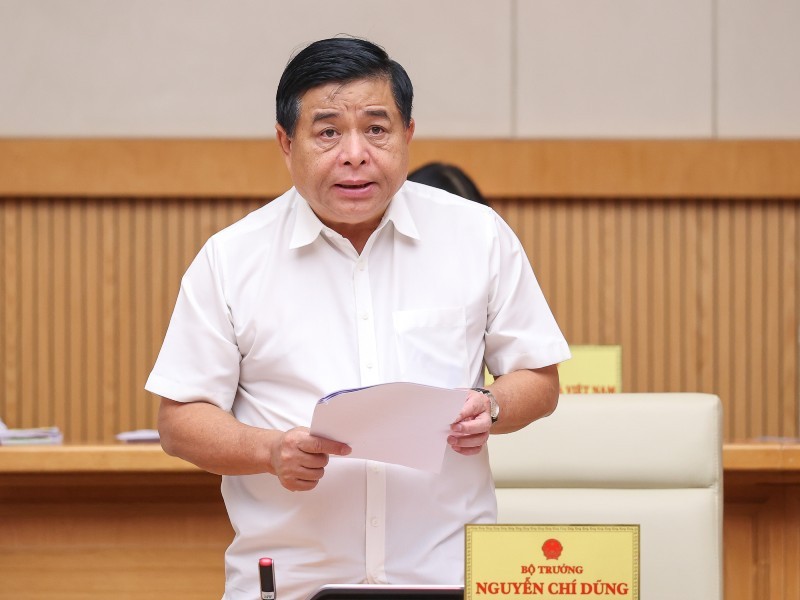
Minister of Planning and Investment Nguyen Chi Dung, in an interview with the local media, indicated that Vietnam has the essential conditions, including infrastructure, policies, and a skilled workforce proactively, to foster and absorb an upcoming wave of investment in the domestic semiconductor industry.
| Minister of Planning and Investment Nguyen Chi Dung. Photo: VGP |
What preparations has Vietnam made to welcome the impending wave of investment in the semiconductor industry, as many global businesses and major corporations are showing keen interest in developing this sector in the country?
The Government has assigned various ministries and sectors, especially the Ministry of Planning and Investment (MPI), to carry out numerous tasks to demonstrate its readiness to welcome the new wave of investment in the semiconductor industry in Vietnam.
Specifically, the Government has tasked the Ministry of Information and Communications (MIC) with developing a Semiconductor Industry Development Strategy for Vietnam until 2030. To my knowledge, the MIC is in the final stages of refining the strategy and will soon present it to the Government for approval.
At the same time, the Government and the Prime Minister have tasked the MPI with leading the development of a Human Resources Development Plan for the semiconductor industry in Vietnam until 2030, with a specific goal of training 50,000 semiconductor engineers. In the area of chip design, the MPI has established the National Innovation Center (NIC) and collaborated with two of the largest chip design corporations in the US, Synopsys, and Garden, to establish a research and chip design center within the NIC facilities.
In addition to existing policy mechanisms to support high-tech industries, during the recent National Assembly session, a resolution was passed instructing the Government to draft a decree to establish a fund to support investment in high-tech industries, including the semiconductor industry.
Moving on to infrastructure, localities have made preparations. First, in terms of land resources, localities have actively cleared land and created clean areas to provide semiconductor businesses with suitable space. Second, the strategic transportation infrastructure connecting economic centers, seaports, and airports is being strengthened. Furthermore, localities are also preparing for issues related to information technology, electricity, water, and social infrastructure for workers in the semiconductor industry.
Thus, factors such as robust infrastructure, soft infrastructure, policy mechanisms, R&D, strategy, and especially human resources all indicate that the government's guidance, under the leadership of the Prime Minister, is accurate and timely. This ensures that we can take control and be ready to actively participate in the global semiconductor value chain.
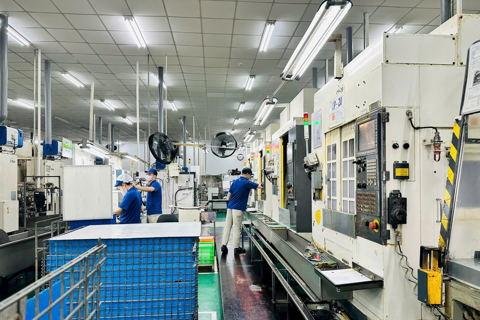
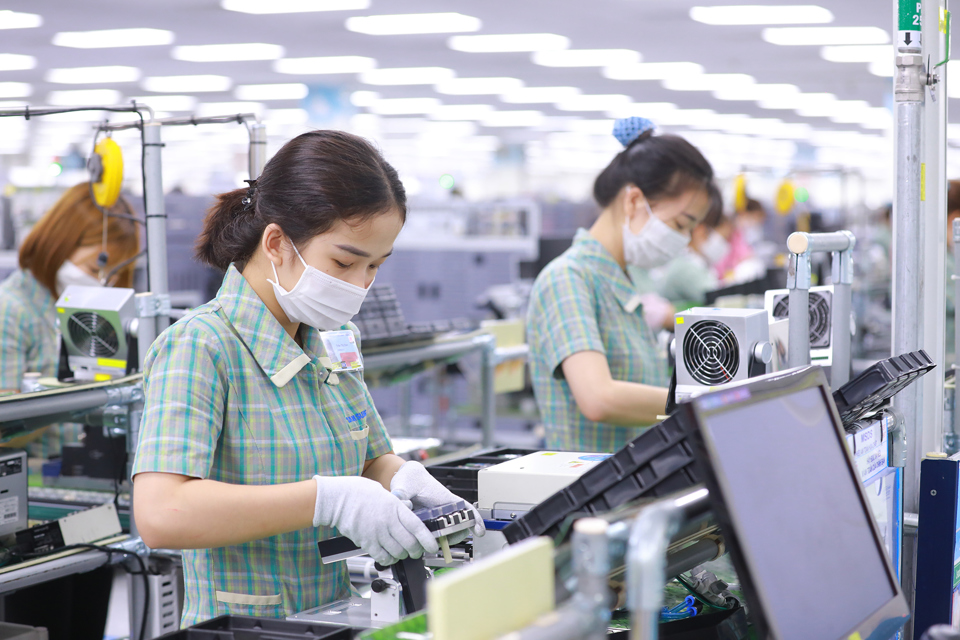
| Production at a Samsung manufacturing plant in Vietnam. Photo: Pham Hung/The Hanoi Times |
Experts believe that the biggest challenge to the development of the semiconductor industry today is the workforce. Could you give us more insight into the Human Resources Development Plan for the semiconductor industry?
The workforce is the most important issue at present, not only in the semiconductor industry but in all economic and social sectors, especially in high-tech fields. The process of developing the plan is in its final stages at the MPI. We have conducted thorough surveys, research, and refinement and solicited opinions from domestic and international experts and relevant ministries and agencies. We will submit the plan to the government as early as next month.
According to the plan, Vietnam aims to train approximately 50,000 engineers, 1,000 master's degree holders, and 100 Ph. D.s. The training can take place domestically or abroad, with opportunities for student and faculty exchange programs. In addition to new training initiatives, we can retrain individuals working in fields closely related to the semiconductor industry to shorten the timeline and ensure that goals are met. Therefore, close coordination among ministries, agencies, research institutions, and universities is essential. We have collaborated with around 30 major domestic universities to implement this program.
Inspired by the US Government's introduction, we have also signed a collaboration agreement with the University of Arizona, the largest semiconductor-focused institution in the US, to concretize the outlined objectives.
In addition, we will actively seek and mobilize diverse resources, including government funding, private investments, and non-refundable support, to implement the plan and report to the government for the comprehensive integration of resources and prompt execution of assigned tasks.
In the context of intensifying global competition to attract foreign direct investment (FDI) and the implementation of a global minimum tax in 2024, what measures does Vietnam have in place to support both domestic and foreign enterprises participating in the semiconductor manufacturing and supply chain in the country?
A highly competitive landscape is unfolding among countries in the region and globally in the race to attract FDI, especially in the semiconductor industry. All nations recognize this industry's immense benefits, potential, and size, which is projected to exceed US$1 trillion by 2030. The countries that act swiftly and implement appropriate and decisive policies will seize control and capitalize on the new wave.
Vietnam is actively pursuing this trend. The Government and the Prime Minister are providing strong directives to the MPI and relevant ministries to prepare the best conditions to welcome this investment wave. First, we need a strategic roadmap and a systematic direction. Second, rapid implementation is essential to meet the demand for human resources immediately. Third, we must supplement and improve institutional mechanisms, policies, and frameworks.
Enterprises have made many valuable suggestions, including tax incentives for the semiconductor industry, intellectual property protection policies for new technologies, mechanisms for R&D centers, and digital infrastructure development.
We will work with various ministries and agencies to synthesize, research, and report to the Prime Minister in the coming period to formulate highly competitive policies.
I am hopeful and confident that we are on the right track and will take timely and decisive actions to master and embrace the current significant wave in the semiconductor industry.
Thank you for your time!