Vietnam is 10th worldwide in remittance
Vietnam receives total US$19 billion worth of remittances in 2022, up 5.5% on-year.
Vietnam received a total of $19 billion in remittances in 2022, ranking it 10th in the world, according to a report by the Global Knowledge Partnership on Migration and Development (KNOMAD).
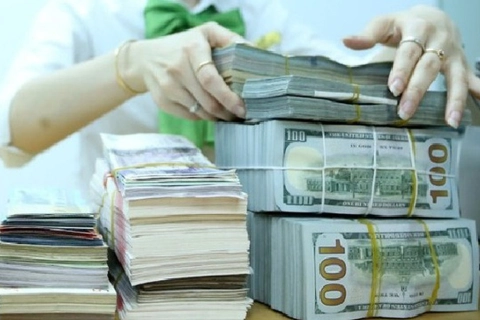
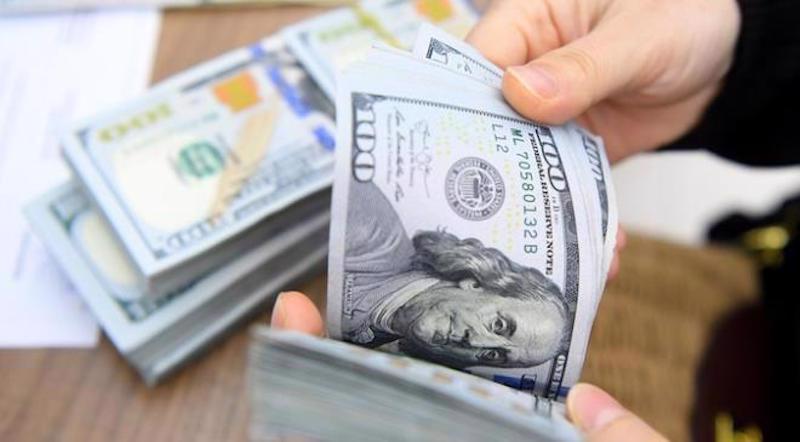
| US dollar notes counted at a local bank. Vietnam received US$19 billion worth of remittances in 2022. Photo: The Hanoi Times |
This position represents an increase of one place with respect to the global ranking of 2021.
Vietnam’s remittances were up slightly by 5.5% on-year from $18 billion recorded in 2021. “Remittances are estimated at about 4.6% of Vietnam's GDP,” the report says.
In the Asia-Pacific region, Vietnam remained the third-biggest remittance recipient after China and the Philippines, who collected $51 billion and $38 billion, respectively.
On the global ranking, China and the Philippines stand at the 3rd and 4th positions.
“With nearly 40-60% of their emigrants employed in the US and the UK, the Philippines and Vietnam benefited from the wage hikes and labor shortages in these countries, even as the pandemic-related stimulus subsidies were phased out and record-high inflation eroded their remitting ability,” the report says.
In the Asia-Pacific region, total remittances in 2022 were estimated at $134 billion, up 0.75% on-year. In comparison, global remittances in 2022 were estimated at $794 billion, up 1.7% on-year.
“Remittance flows to developing regions were shaped by several factors in 2022. Besides the determination of migrants to help their families back home, a gradual reopening of various sectors in host countries’ economies expanded many migrants’ income and employment situation,” said the report brief.
On the other hand, rising consumer prices, volatile currency exchange rates, and scarcity of foreign exchange and multiple exchange rates weighed on the remittance flow, the report says.
The International Monetary Fund (IMF) defines remittance as a part of earnings migrant workers take from their income and send home in the form of either cash or goods to support their families. For several particular nations, remittance represents the largest source of foreign income.
According to the State Bank of Vietnam’s HCM City-based office, the remittances increased by 10-20% on-year in the pre-Tet season after having been dragged down by the global economic crisis. The annual growth rate in previous years was at 10-15% on average.
"The flow of remittances to Vietnam remains positive as the nation has developed good business conditions and incentives for Vietnamese abroad," said economist Vu Dinh Anh.
"Changes in the business environment and macroeconomic stability are the key factors encouraging overseas Vietnamese to transfer their assets and money back home," he said.
Nguyen Tri Hieu, an economic and financial expert, said remittances are important sources to help Vietnam with socio-economic development and monetary management.
“Remittance recipients may want to sell foreign currencies for Vietnam dong,” Hieu said, referring to Vietnam’s anti-dollarization policy.
"They can deposit their money in banks to get high interest rates, use it to finance their businesses or buy goods and services," he said, adding that this may reduce pressure on the VND-US dollar exchange rate.