Vietnam takes action for healthier food systems towards SDGs 2030
International support enables Vietnam to get closer to the Sustainable Development Goals (SDGs) through a food systems approach.
Vietnam is on its way to get to healthier and more sustainable food systems that help the country address better interventions in food security and global interconnectedness.
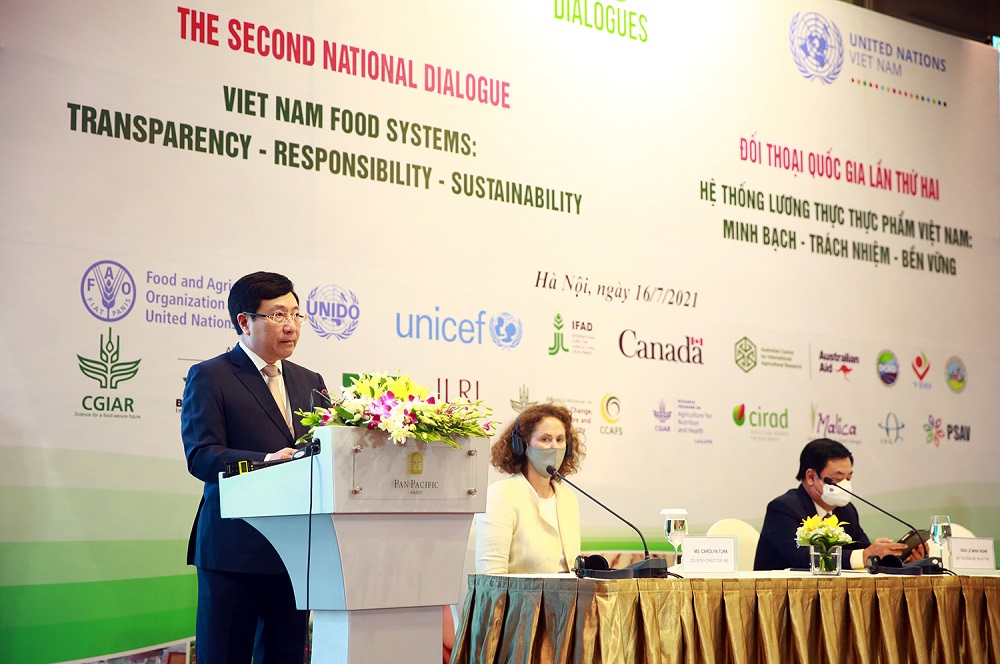
| Vietnam's Deputy Prime Minister Pham Binh Minh at the event on July 16. Photo: Hai Minh/VGP |
This is part of the country’s efforts in contributing to the UN Food Systems Summit, which works to accelerate the implementation of all 17 categories of the Sustainable Development Goals (SDGs).
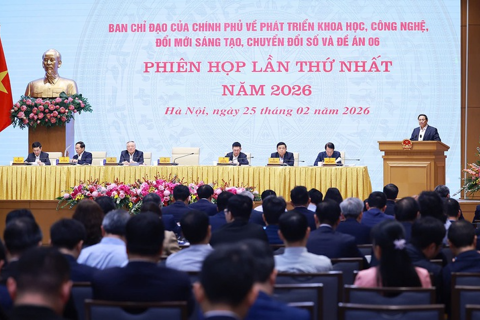
Speaking at a national dialogue on Vietnam food systems held in Hanoi on July 16, Deputy Prime Minister Pham Binh Minh said these efforts will help Vietnam carry out better interventions in poverty reduction, food security, and nutrition in rural areas, bringing real benefits for vulnerable groups, ethnic minorities, women, girls, and children.
"It is also an opportunity to connect and develop the value chain of Vietnam's key agricultural products in the direction of transparency, responsibility, and sustainability," Minh said.
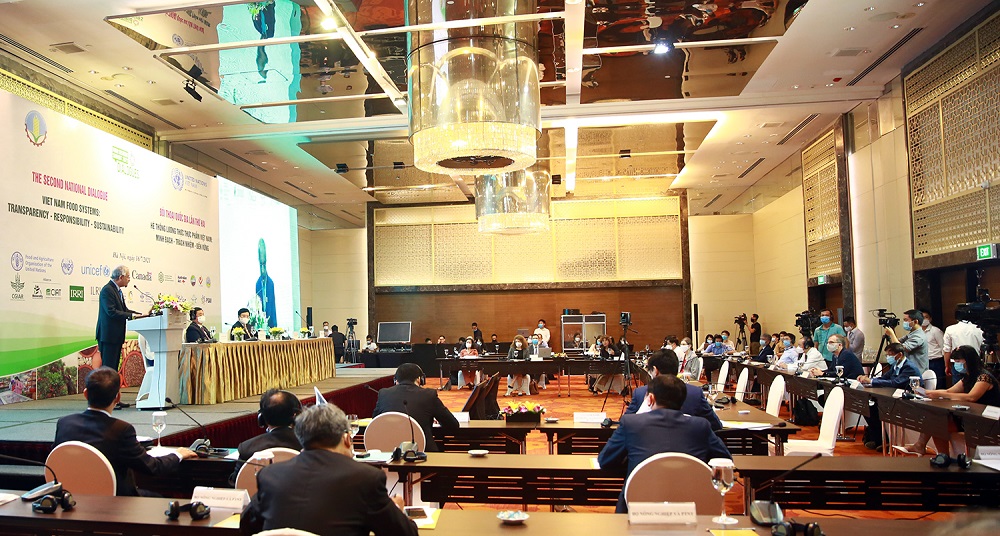
To help Vietnam transform its food system, more than 200 participants from different UN bodies, development partners, embassies, the private sector, NGOs, and Vietnamese agencies gathered at the dialogue.
Addressing the National Dialogue, the second of its kind, themed “Vietnam Food System: Transparency – Responsibility – Sustainability”, the representatives discussed opportunities, challenges, and gaps affecting Vietnam’s national food systems, and propose action areas for the country to develop responsible, sustainable, and transparent food systems by 2030.
The event, which was held both online and offline on July 16 by the Vietnamese Ministry of Agriculture and Rural Development (MARD), in collaboration with the World Bank, the United Nations in Vietnam, and other partners, called for collaborative action to transform Vietnam’s food system to a more sustainable status.
Chaired by Deputy PM Pham Binh Minh in a hybrid type, the event marked the in-person attendance of MARD Minister Le Minh Hoan, the UN Resident Coordinator in Vietnam Kamal Malhotra, and the World Bank Country Director for Vietnam Carolyn Turk.
The conference focused on five goals that include ensuring access to safe and nutritionally balanced food for all, changing consumption trends towards healthy and sustainability, promoting environmentally friendly production, promoting equality in value sharing and livelihoods, and building resilience to injury and shock.
The national food dialogue came in preparation for the United Nations Food Systems Summit, which is convened by the UN Secretary General to take place in New York later this year.
The UN Food Systems Summit was announced by the UN Secretary General, Antonio Guterres, on World Food Day in 2019 as a part of the Decade of Action for delivery on Agenda 2030. The aim of the summit is to deliver progress on all 17 of the Sustainable Development Goals (SDGs) through a food systems approach, leveraging the interconnectedness of food systems to global challenges such as hunger, climate change, poverty, and inequality.
| UN Resident Coordinator in Vietnam Kamal Malhotra speaks at the event. Photo: Hai Minh/VGP |
How helpful is the national dialogue?
Speaking at the dialogue, Deputy PM Minh emphasized that the Vietnamese Government is deeply aware of the need for close coordination between countries and actors in the food sector in order to bring about sweeping changes to the whole system.
According to the UN Resident Coordinator in Vietnam Kamal Malhotra, food nutrition security remains a dilemma mainly due to unhealthy diets and food safety. Environmental degradation due to overexploitation of resources and use of chemicals is becoming more and more alarming. Also, the inequality in distribution, the inability to attract young workers, the lack of market connectivity as well as the weak ability to manage production, processing, and circulation of goods reduce the competitiveness of enterprises, agriculture, and the whole food industry.
“The United Nations in Vietnam and our agencies such as IFAD, UNICEF, UNIDO, and other relevant bodies will accompany the government of Vietnam, along with development partners to transform the food system, contributing to the implementation of sustainable development goals,” said Mr. Kamal Malhotra.
The Covid-19 pandemic has revealed extreme inequities and inefficiencies in the food system, which depend on thousands of food producers and processors, many of whom are living with very low incomes. The pandemic came at a time when food systems were already under strain from natural disasters such as floods and prolonged periods of drought, climate change, and other shocks.
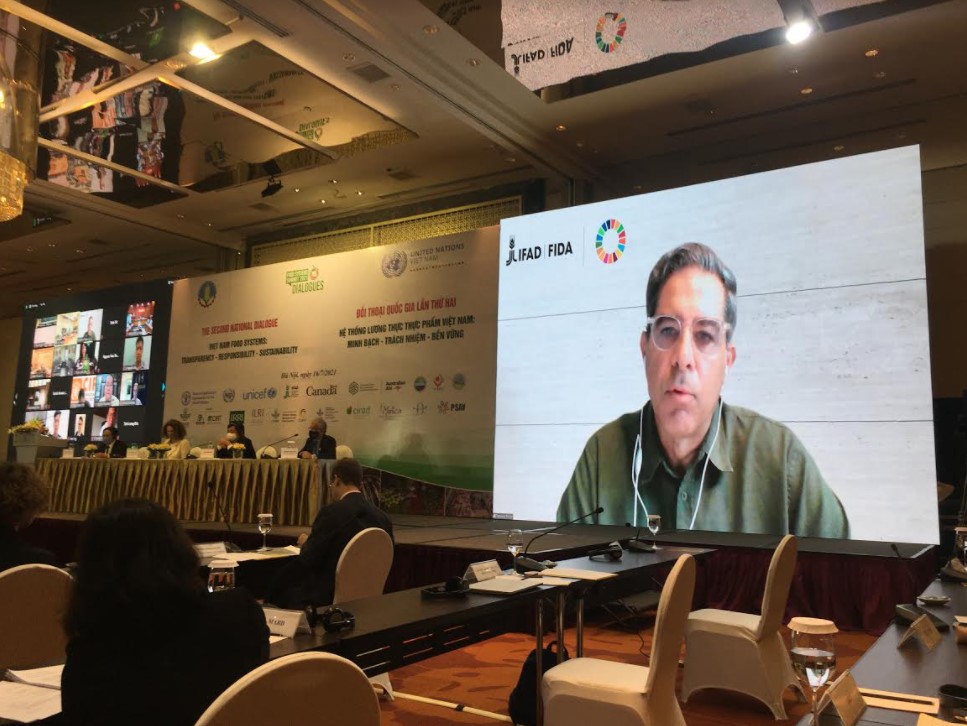
Dr Francisco Pichon, Country Director, International Fund for Agricultural Development (IFAD) for Vietnam and Mekong Region commented that “Pursuing a holistic and participatory approach to climate resilience from planning to implementation at provincial, commune and district levels - with the local government’s institutions always in the driver seat” has been instrumental in IFAD approach while stressing that rural women, youth and private sector can be empowered to support climate-resilient rural livelihoods that generate decent employment within selected value chains.
“IFAD’s strategy in Vietnam over the past 20 years – via 16 different projects and with an overall investment of US$500 million – has been characterized by thematic consistency, with a focus on supporting government’s and key development objective to ‘invest in rural people’ and facilitate their transition from subsistence farming to climate-resilient and market-oriented rural productive activities,” he said.
| Dr Francisco Pichon, Country Director, International Fund for Agricultural Development (IFAD) for Vietnam and Mekong Region at the event. Photo: Lam Pham |
Role of agriculture in Vietnam’s economy
Vietnam's agriculture plays a particularly important role in ensuring food security, social stability, and livelihoods for over 60% of the population living in rural areas and contributes 14.85% of the country's GDP in 2020.
Despite the impact of the Covid-19 pandemic and climate change and natural disasters, Vietnam's agriculture still maintained a positive growth rate at 2.68% in 2020, statistics by the MARD showed.
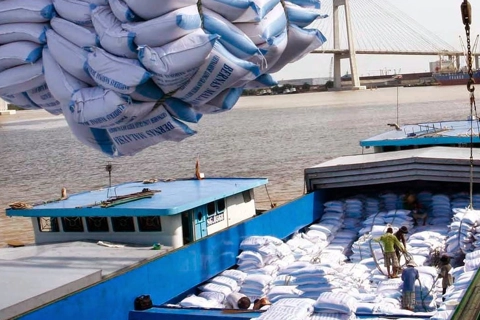
In addition to firmly ensuring food security, food for nearly 100 million people, Vietnamese agriculture also plays an important role in the global food system. In 2020, the export turnover of Vietnam's agricultural, forestry and fishery products reached $41.53 billion. In the first half of 2021, Vietnam reaped approximately $24.23 billion from exporting agricultural, forestry, and fishery products.
However, Vietnam's food system is still diverse and facing many challenges. Global climate change forecasts and reality in recent years show that Vietnam is one of the countries most heavily affected by climate change, according to MARD Minister Le Minh Hoan.
For that reason, functional sectors need to support farmers' organizations at the grassroots level as the core for linking agricultural value chains to ensure the balance of interests of farmers and other relevant stakeholders. In addition, it needs to develop various forms of public-private partnership (PPP) to attract private investment, promote responsible, transparent, and sustainable agricultural value chain linkages, he noted.