Vietnam to build carbon market
Vietnam initiated the carbon market in 2011 and attempts to complete the operating mechanism in the green growth journey.
Vietnam’s Deputy Prime Minister Le Van Thanh on January 26 asked relevant agencies to build the carbon market which is considered part of preparations for its net-zero goal in 2050.
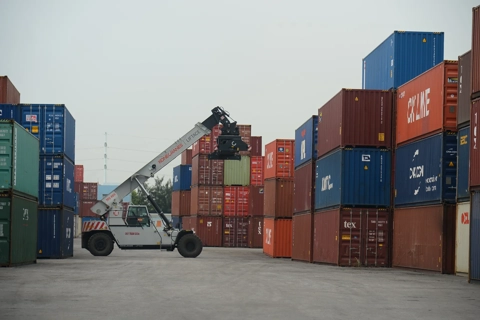
| Vietnam expects the carbon market will facilitate carbon trading in the net-zero roadmap. Photo: VGP |

The Ministry of Finance and the Ministry of Natural Resources and Environment are responsible for the project, which will soon be submitted to the prime minister.
The move is aimed to facilitate activities related to the market in which carbon credits, in other words, carbon certificates, are obtained and sold within defined standards for the prevention or reduction of greenhouse gas (GHG).
Over the past time, many domestic organizations and enterprises have participated in projects under the Clean Development Mechanism (CDM), the Joint Crediting Mechanism (JCM), and the credit exchange mechanism under the cooperation program and voluntary carbon credit exchange. Through the implementation of these mechanisms, businesses have had more financial resources from exchanging, selling carbon credits, and receiving low-emission technologies from developed countries.
The Clean Development Mechanism (CDM) is a United Nations-run carbon offset scheme allowing countries to fund greenhouse gas emissions-reducing projects in other countries and claim the saved emissions as part of their own efforts to meet international emissions targets.
The Joint Crediting Mechanism (JCM) is a system to cooperate with developing countries for reducing greenhouse gas emissions.
The development of the domestic carbon market is considered a key priority task outlined in 2013 and in the implementation of the Paris Agreement issued by the Prime Minister in 2016.
Under the Paris Agreement, Vietnam is required to fulfill its mandatory obligations to reduce greenhouse gas emissions from 2021 on a nationally determined contribution (NDC), a non-binding national plan highlighting climate change mitigation.
Therefore, carbon pricing tools need to be applied in Vietnam, including the development of the domestic carbon market.
The Law on Environmental Protection, passed by the National Assembly in October 2020, regulates the organization and development of the carbon market as well the implementation roadmap of the market.
There are two main types of carbon pricing: emissions trading systems (ETS) and carbon taxes. An ETS – sometimes referred to as a cap-and-trade system – caps the total level of greenhouse gas emissions and allows those industries with low emissions to sell their extra allowances to larger emitters.
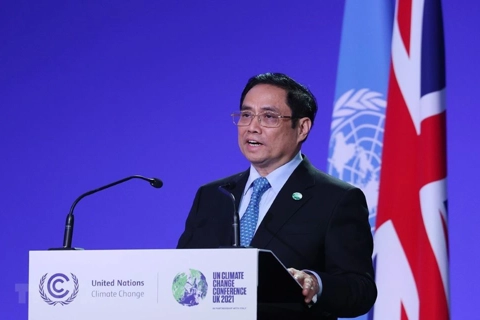
![[Net-zero strategy] People-centered approach: Vietnam’s weapon to realize COP26 commitment](https://cdn-media.hanoitimes.vn/2021/12/07/PM_CHINH.jpg?w=480&h=320&q=100)