Vietnamese-Germany Energy Day held for first time
Germany, the largest trading partner of Vietnam in Europe, has assisted the Southeast Asian country’s energy sector since 2013 by providing soft loans, technical and financial support.
The Vietnamese-German Energy Day, the first of its kind, was held to enhance the cooperation in energy between Vietnam and Germany to help Vietnam in its net zero strategies by 2050.
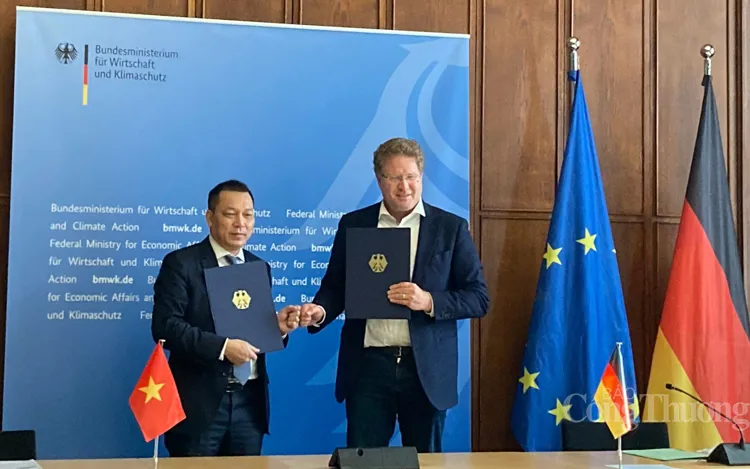
| Vietnamese Deputy Minister of Industry and Trade Dang Hoang An (L) and Dr. Patrick Graichen, State Secretary of the German Ministry for Economic Affairs and Climate Action in Berlin on Mar 31. Photo: Baocongthuong |
The event, which will be held annually, is aimed to boost the development of renewable energy and energy efficiency – the key pillars to maximize Vietnam’s potential for the low-carbon journey.
Within the framework of the first Vietnam-Germany Energy Day, held on March 31, the two sides discussed measures to conduct energy transition.
The two sides will engage in a joint search to ensure the success of energy cooperation in the future with an aim to pursue ambitious shared goals of energy and climate policy on the international energy transition and the development of smart strategic actions and effective measures.
The Vietnamese-German Energy Day was declared on March 31 in the visit paid to Germany by Dang Hoang An, Vietnamese Deputy Minister of Industry and Trade (MOIT). During the visit, the Vietnamese delegation met with the German Chambers of Commerce Abroad (AHK) Vietnam, Siemens, PNE AG, ThyssenKrupp, SkyWind, Enertrag, and Green Solutions to seek cooperation in the future.
The related parties discussed how the private sector could actively engage in the energy development of Vietnam.
Dang Hoang An said this is the time for Vietnam to consider restructuring energy sources towards efficient use of energy and using more renewable energy, contributing to the socio-economic development toward a more effective climate change response.
Dr. Patrick Graichen, State Secretary of the German Ministry for Economic Affairs and Climate Action (BMWK), said Vietnam has made extensive commitments to climate protection. It’s a big and important step forward in demonstrating Vietnam’s responsibility for global climate change and protecting the living environment for Vietnamese people and those internationally.
He said the UK commitment to net zero emissions by 2050 and the intention to phase out coal power by the end of the 2040s is a big challenge for Vietnam. This requires rapid and consistent exploitation of renewable energy in parallel with the reduction of coal power and decarbonization of industry and other high-emission economic sectors as well.
In addition, Vietnam should increase the use of green hydrogen and Power-to-X (PtX) derivatives to reduce carbon emissions in industries where electrification would be very difficult, Patrick Graichen added.
The Vietnamese official said Germany’s specific goals towards energy transition encourage Vietnam – a country with great potential for renewables like wind and solar.
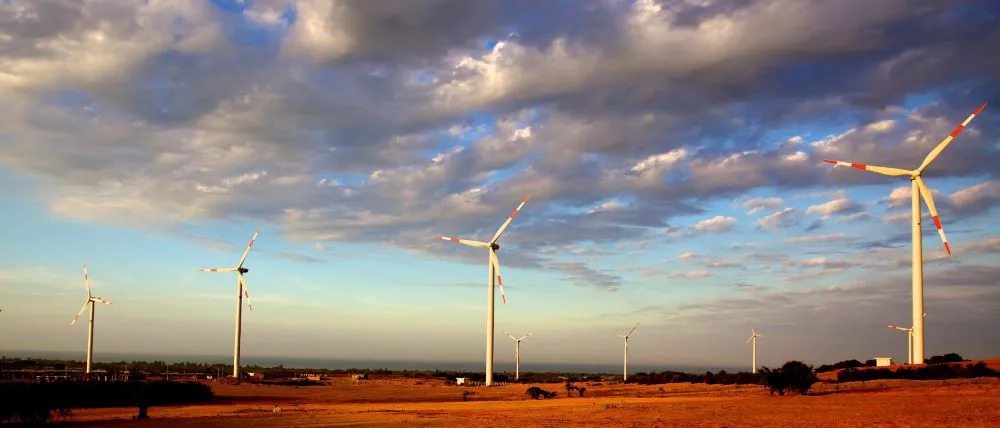
| A Germany-supported wind power project in Vietnam. Photo: GIZ |
In Vietnam’s Power Development Plan VIII (PDP8) by 2030 and vision for 2045, it targets 15-20% renewable energy by 2030 and 25-30% by 2045.
Since 2013, energy has become one of the priorities of Vietnamese-German cooperation, establishing the GIZ Energy Support Program. It’s a partnership between MOIT and the Deutsche Gesellschaft für Internationale Zusammenarbeit (GIZ) GmbH, aiming to contribute to Vietnam’s emissions reduction strategy and green growth strategy by improving the existing regulatory framework for Renewable Energy and Energy Efficiency to foster private sector investment and by increasing the professional and organizational capacities of key institutions and stakeholders.