Vietnam's 19 largest State-owned enterprises post profit of US$2.17 billion
The total equity of 19 SOEs was estimated at VND904 trillion (US$37 billion), with total assets of VND1,616 trillion ($66.2 billion).
Vietnam’s 19 major state-run corporations, excluding Vietnam Electricity (EVN), made a pre-tax profit of VND53.2 trillion (US$2.17 billion) last year.
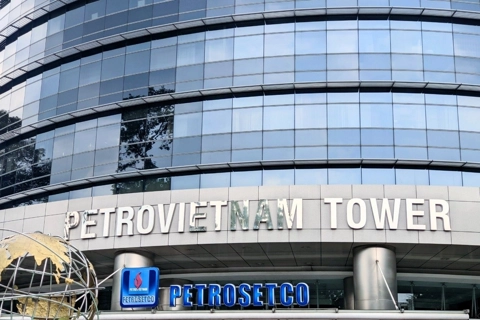
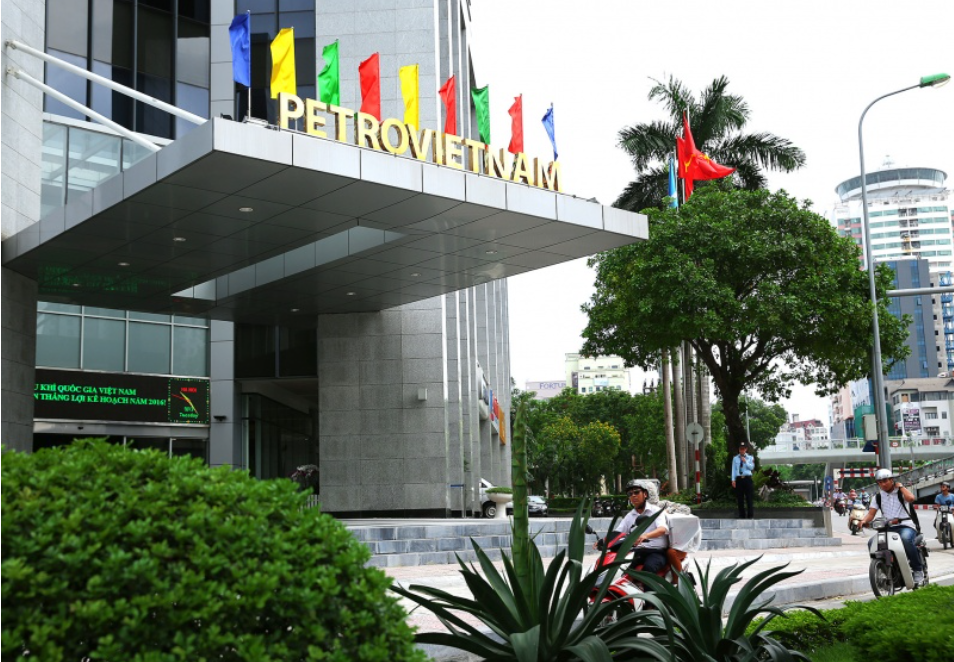
| Headquarter of PetroVietnam. Photo: The Hanoi Times |
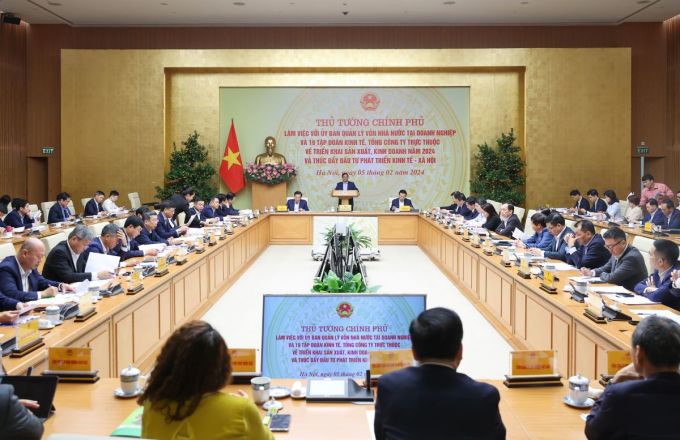
The figures were revealed on February 5 during a meeting between Prime Minister Pham Minh Chinh and representatives of 19 leading state-owned corporations under the Committee for State Capital Management (CSCM), including the state investment arm State Capital Investment Corporation (SCIC), Electricity of Vietnam (EVN), and Vietnam Oil and Gas Group (PetroVietnam).
In his opening statement, Prime Minister Pham Minh Chinh emphasized the purpose of the meeting, which was to assess achievements and shortcomings, analyze causes, and draw lessons to enhance performance in the coming period.
Acknowledging positive outcomes across various key sectors, Chinh highlighted the pivotal role played by state-owned enterprises in socio-economic development.
With bigger and more challenging tasks ahead in 2024, the Prime Minister called for better performance from each enterprise whose assets total over VND4,000 trillion ($164 billion).
“Although the 19 SOEs constitute a small proportion of the total 820, they wield significant capital and make crucial contributions to economic development and ensuring societal progress and fairness,” said Chinh.
The Government leader also expressed his expectation that state-owned enterprises would be more active in driving economic development this year, especially in investment.
According to the report from the CSCM, by the end of 2023, the total equity of 19 state-owned conglomerates and enterprises was estimated at VND904 trillion ($37 billion), with total assets reaching VND1,616 trillion ($66.2 billion).
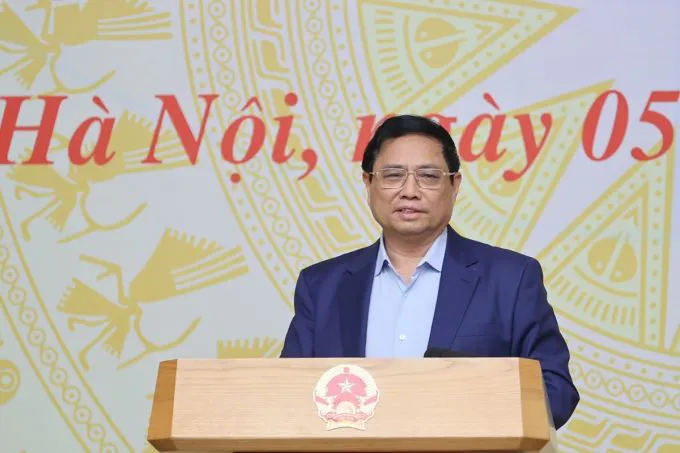
| Prime Minister Pham Minh Chinh at the meeting. Photos: Nhat Bac/VGP |
SOEs achieved a total revenue of VND1,136 trillion ($46.6 billion), equivalent to 105.15% of the plan and 96.57% of the same period in 2022. Pre-tax profit reached VND53.2 trillion ($2.17 billion), surpassing the plan by 166.09% and exceeding the same period in 2022 by 110.92%.
Tax contributions to the State budget amounted to VND79 trillion ($3.2 billion), surpassing the plan by 199.96% and exceeding the same period in 2022 by 120.22%. Disbursed investment capital reached VND161 trillion ($6.6 billion) out of the planned total of VND208.3 trillion ($8.54 billion), equivalent to nearly 80% of the annual plan.
Ho Sy Hung, Vice Chairman of the CSCM, stated that many major infrastructure, energy, and transportation projects were completed by SOEs last year, such as the Ben Luc - Long Thanh expressway, the Thi Vai LNG port with a capacity of 1 million tons, and Phase 1 of the Long Thanh airport project. Some enterprises, after years of losses, returned to profitability, such as the Vietnam Railways Corporation and Vietnam Airlines, which reduced losses compared to their plans.
Meanwhile, the Prime Minister also pointed out existing limitations that need to be addressed. He mentioned that the contributions of conglomerates to GDP growth are not proportionate to the resources they hold, and the efficiency of their business investments is not sufficiently high.
"The State-owned conglomerates and enterprises need to restructure for development, to operate profitably in 2024, and to contribute more to growth and the budget," stated Chinh.
He requested the CSCM to review and propose changes to regulations within its jurisdiction to address legal issues facing enterprises in areas such as pricing, environment, and land.
At the conference, Chinh also called for any decision to adjust the electricity prices to be "in line with the market, avoiding abrupt changes and hasty decisions."
In late January, the Ministry of Industry and Trade (MoIT) proposed an increase in electricity prices this year to alleviate difficulties of EVN, which reported a loss of VND17 trillion ($697.2 million) last year and faced fluctuations in input costs for power production (coal, oil, gas).
The retail electricity pricing mechanism is based on Decision 24/2017, which provides for a six-month between two price adjustments if input costs increase by 3% or more in production costs. Last year, electricity prices increased by a total of 7.5%, following adjustments in May and November.
Under the MoIT’s proposal, if approved by the relevant authorities, the next price hike could take place in May this year. According to the ministry, this would reflect the fluctuations in input costs and help EVN generate funds to pay investors in power plants.
Alongside price adjustments, the Prime Minister also reiterated the requirement for the MoIT and the EVN to ensure power supply in the coming time. He instructed the PVN and the Vietnam National Coal-Mineral Industries Holding Corporation Limited to ensure sufficient oil, gas, and coal for power generation according to the plan.
In addition to securing energy sources, the expedited construction and operation of the 500 kV Quang Trach - Pho Noi transmission line segment 3 by June this year is expected to ensure sufficient electricity in 2024. It is estimated that this transmission line, when operational, will increase the supply to the northern region by approximately 2,000 MW.