Econ
Vietnam’s current growth model is giving way to Industry 4.0
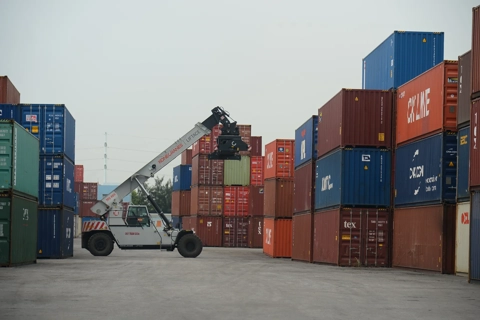
The Industry 4.0 would open up more opportunities for Vietnam to develop industry and trade.
The comparative advantage of Vietnam’s current economic growth model, which relies on natural resources and labor-intensive production, is gradually diminishing in face of the Fourth Industrial Revolution, also known as Industry 4.0, according to Tran Hong Quang, director of the National Center for Socio-Economic Information and Forecast (NCIF).
“Every sector and industry have to grasp opportunities of the Industry 4.0, while minimizing the negative impacts that go along with it,” Quang said in a conference on November 22.
Luong Van Khoi, NCIF’s vice director, said Vietnam should focus on revising the economic structure as part of the economic reform process in the 2016 – 2020 period, aiming towards greater efficiency of social resources management, higher productivity and national competitiveness.
During this process, it is vital for Vietnam to identify priority sectors with high potential spillover effects and productivity, which should be included in the new FDI strategy, Khoi said.
Khoi cited an OECD research paper forecasting 66 million workers in developing countries could be replaced by machines in coming years, while a number of jobs would face the possibility of being replaced by robots, including factory worker, cashier, taxi driver, customer care, and pilot, among others.
In the case of Vietnam, some sectors and industries are facing similar risks, such as agriculture, fishery and forestry, manufacturing and processing, wholesale and retail, education, and entertainment.
By 2025, there would be 42.8 million employees in Vietnam under direct impact of the Industry 4.0, in which around 31 million are required to be retrained or change their jobs, Khoi continued.
Le Huy Khoi, head of the Industrial Policies Strategies Institute’s Study and Market Forecast Division under the Ministry of Industry and Trade, said the Industry 4.0 would open up more opportunities for Vietnam to develop the industry and trade sector.
More importantly, the Industry 4.0 is expected to create motivation for enterprises to change their production method and mindset to fit in the market mechanism, Le Huy Khoi added.
This would result in cost reduction and higher productivity, he continued.
However, Khoi expressed concern that the awareness of the business community about the Industry 4.0 is still low.
A survey of 2,000 enterprises under Hanoi Small and Medium Enterprises Association showed that 79% of the respondents have not prepared for the Industry 4.0, other 55% are still looking for information about it, 19% are working out plans and only 12% are executing their 4.0 plans.
Moreover, technical infrastructure and information technology application in the industrial sector have not yet met the readiness response to this revolution, coupled with internal weaknesses of enterprises in the industry and trade sector.
To address those issues, Le Huy Khoi recommended that the government should strengthen education and disseminate the information about the nature, movement, opportunities, challenges and impacts of the Industry 4.0 in the political system, enterprises, business associations, research institute, and universities.
Additionally, Le Huy Khoi said government agencies should be responsible for perfecting the institutional system to facilitate digital economy development, Industry 4.0 participation and application, and investment liberalization.

Overview of the workshop. Source: Ngoc Thuy.
|
Luong Van Khoi, NCIF’s vice director, said Vietnam should focus on revising the economic structure as part of the economic reform process in the 2016 – 2020 period, aiming towards greater efficiency of social resources management, higher productivity and national competitiveness.
During this process, it is vital for Vietnam to identify priority sectors with high potential spillover effects and productivity, which should be included in the new FDI strategy, Khoi said.
Khoi cited an OECD research paper forecasting 66 million workers in developing countries could be replaced by machines in coming years, while a number of jobs would face the possibility of being replaced by robots, including factory worker, cashier, taxi driver, customer care, and pilot, among others.
In the case of Vietnam, some sectors and industries are facing similar risks, such as agriculture, fishery and forestry, manufacturing and processing, wholesale and retail, education, and entertainment.
By 2025, there would be 42.8 million employees in Vietnam under direct impact of the Industry 4.0, in which around 31 million are required to be retrained or change their jobs, Khoi continued.
Le Huy Khoi, head of the Industrial Policies Strategies Institute’s Study and Market Forecast Division under the Ministry of Industry and Trade, said the Industry 4.0 would open up more opportunities for Vietnam to develop the industry and trade sector.
More importantly, the Industry 4.0 is expected to create motivation for enterprises to change their production method and mindset to fit in the market mechanism, Le Huy Khoi added.
This would result in cost reduction and higher productivity, he continued.
However, Khoi expressed concern that the awareness of the business community about the Industry 4.0 is still low.
A survey of 2,000 enterprises under Hanoi Small and Medium Enterprises Association showed that 79% of the respondents have not prepared for the Industry 4.0, other 55% are still looking for information about it, 19% are working out plans and only 12% are executing their 4.0 plans.
Moreover, technical infrastructure and information technology application in the industrial sector have not yet met the readiness response to this revolution, coupled with internal weaknesses of enterprises in the industry and trade sector.
To address those issues, Le Huy Khoi recommended that the government should strengthen education and disseminate the information about the nature, movement, opportunities, challenges and impacts of the Industry 4.0 in the political system, enterprises, business associations, research institute, and universities.
Additionally, Le Huy Khoi said government agencies should be responsible for perfecting the institutional system to facilitate digital economy development, Industry 4.0 participation and application, and investment liberalization.