Econ
WB projects Vietnam's GDP growth at 6.8% in 2018
Vietnam`s GDP is forecast to expand by 6.8% in 2018 before moderating to 6.6% in 2019 as capacity constraints become more binding, a recent report of the World Bank has said.
The report saw an upward adjustment of 0.3% for the country's GDP growth rate in 2018 as compared with the previous estimation of 6.5% in the World Bank's report released on April.
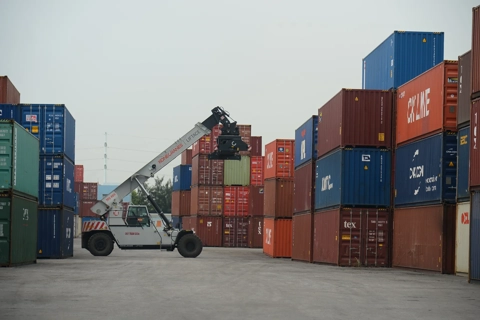
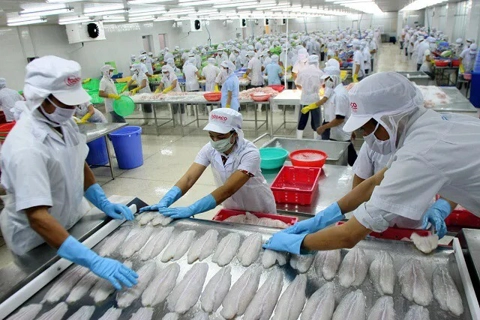
The projection is based on a strong support from agriculture sector and an export-oriented policy, according to the report.
Concurrently, the report noted a recent increase in inflation rate is still within the target set by Vietnam's Government.
However, in the mid-term, the economic growth is expected to slow down, in which Vietnam's GDP growth rate is estimated to be around 6.6% and 6.5% in 2019 and 2020, respectively.
The FDI inflows to Vietnam is expected to be remained at a high level, which is mostly based on a positive outlook and the Government's effort in attracting foreign investments.
In overall, growth in developing East Asia and Pacific is projected to ease from an upwardly revised 6.3% in 2018 to 6.1% in 2019, according to the report.
The modest slowdown in regional growth is largely due to the gradual structural slowdown in China. Excluding China, activity in the region is expected to slow from 5.4% in 2018 to 5.3% next year. The outlook is predicated on moderately higher commodity prices, strong but gradually moderating global demand, and incremental tightening of global financing conditions.
According to the report, while upside surprises to global activity could lead to stronger-than-expected regional growth, risks to the outlook remain tilted to the downside. Increased protectionist tendencies in some large economies continue to create uncertainty about future trading relationships.
The imposition of trade restrictions by advanced economies would hit the more open economies of the region the hardest. While the economic impact of tariffs on imports to China, which are being considered by the U.S. administration, would likely be manageable, an escalation could lead to disruptions that would have significant regional effects.
A faster-than-expected tightening of global financing conditions and associated stress could reduce capital inflows, heighten financial market volatility, and put pressure on regional exchange rates and asset prices. If a combination of downside risks were to materialize, it could trigger a sharper-than-expected slowdown in regional growth.
Domestic vulnerabilities-elevated domestic debt and large external financing needs in some countries-would amplify the impact of external shocks, especially where policy buffers are limited, and dampen growth.

Illustration photo.
|
Concurrently, the report noted a recent increase in inflation rate is still within the target set by Vietnam's Government.
However, in the mid-term, the economic growth is expected to slow down, in which Vietnam's GDP growth rate is estimated to be around 6.6% and 6.5% in 2019 and 2020, respectively.
The FDI inflows to Vietnam is expected to be remained at a high level, which is mostly based on a positive outlook and the Government's effort in attracting foreign investments.
In overall, growth in developing East Asia and Pacific is projected to ease from an upwardly revised 6.3% in 2018 to 6.1% in 2019, according to the report.
The modest slowdown in regional growth is largely due to the gradual structural slowdown in China. Excluding China, activity in the region is expected to slow from 5.4% in 2018 to 5.3% next year. The outlook is predicated on moderately higher commodity prices, strong but gradually moderating global demand, and incremental tightening of global financing conditions.
According to the report, while upside surprises to global activity could lead to stronger-than-expected regional growth, risks to the outlook remain tilted to the downside. Increased protectionist tendencies in some large economies continue to create uncertainty about future trading relationships.
The imposition of trade restrictions by advanced economies would hit the more open economies of the region the hardest. While the economic impact of tariffs on imports to China, which are being considered by the U.S. administration, would likely be manageable, an escalation could lead to disruptions that would have significant regional effects.
A faster-than-expected tightening of global financing conditions and associated stress could reduce capital inflows, heighten financial market volatility, and put pressure on regional exchange rates and asset prices. If a combination of downside risks were to materialize, it could trigger a sharper-than-expected slowdown in regional growth.
Domestic vulnerabilities-elevated domestic debt and large external financing needs in some countries-would amplify the impact of external shocks, especially where policy buffers are limited, and dampen growth.