Hit by Covid-19, Hanoi GRDP grows 3.39% in H1
The growth rate, however, remains among the highest nationwide and is significantly higher than the national growth average of 1.81% during the period.
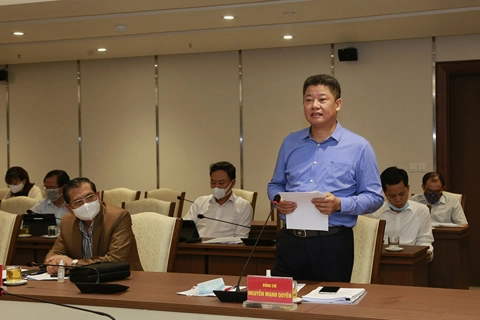
Despite severe economic impacts of the Covid-19 pandemic, Hanoi’s gross regional domestic product (GRDP) is estimated to have expanded 3.39% in the first half of 2020, the slowest 6-month growth in many years, according to Nguyen Manh Quyen, director of the municipal Department of Planning and Investment.
| Chart: Nguyen Tung. |
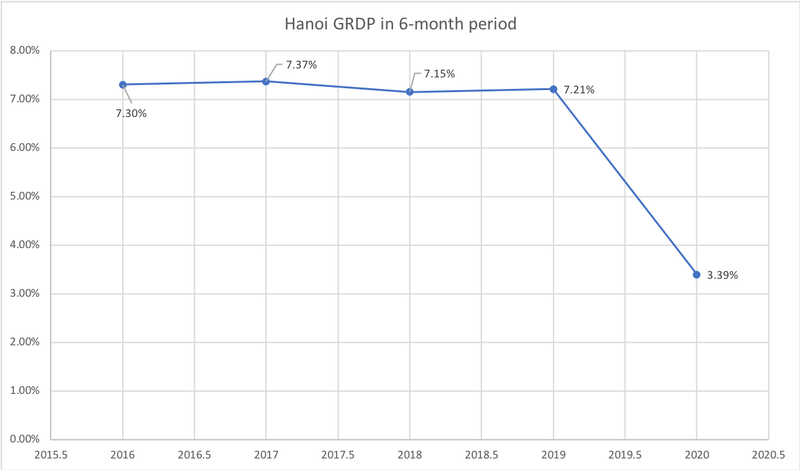
The growth rate, however, remains among the highest nationwide and is significantly higher than the national growth average of 1.81% during the period, Quyen informed at a meeting on June 29.
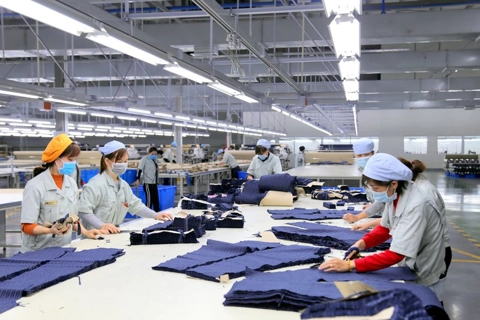
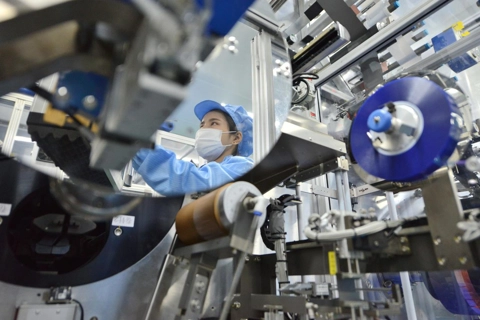
During the six-month period, Hanoi’s Index of Industrial Production (IIP) grew 3.5% year-on-year, significantly lower than a rise of 7.4% recorded in the same period last year.
Specifically, the mining industry’s output decreased 11.8% year-on-year between January and June, while the manufacturing and processing industry expanded at 3.3%.
Production and distribution of electricity rose 6.1% year-on-year; and water supply, sewage treatment and waste water collection was up 5.5%.
Total retail sales of consumer goods and services in Hanoi in the six-month period are estimated to expand 6.6% year-on-year, while the Covid-19 pandemic has caused a disruption to the global value chain, leading to a decline of 6.7% year-on-year in Hanoi’s exports at US$6.75 billion. Its imports have fallen 9.2% to US$13.7 billion.
The consumer price index (CPI), the main gauge of inflation, expanded 3.68% year-on-year in the period.
As tourism is one of the hardest-hit groups by the pandemic, total number of tourists to Hanoi plunged 65.4% year-on-year to 4.93 million in the January – June period, including a decline of 68.8% in foreign tourists and a contraction of 61.5% in revenue from tourism activities.
On the bright side, Hanoi’s authorities have acted drastically for improving the business environment, which helped the city be included in the top 10 localities having the highest Provincial Competitiveness Index (CPI) scores in 2019 and second nationwide in the Public Administrative Reform Index (PAR Index).
Hanoi has recorded 12,649 newly established enterprises in the first half of 2020 with registered capital of a combined VND175 trillion (US$7.55 billion), down 7% in the number but up 5% in value year-on-year.
The city's state budget revenue dwindled 3.4% year-on-year to VND124.84 trillion (US$5.38 billion), or 44.8% of the year's plan, while the budget expenditure climbed 21.5% year-on-year to VND34.21 trillion (US$1.47 billion), or 33.2% of the yearly plan.
Hanoi has so far disbursed VND14.82 trillion (US$639.45 million) worth of public investment, or 33% of the target.
Two growth scenarios for 2020
Based on preliminary data from the first half of 2020, Hanoi’s authorities have devised two growth scenarios for the remaining six months of the year.
In the first scenario and also the most optimistic one, Hanoi could achieve a growth rate of 5.9%, 1.3 times higher than the nation’s optimistic growth scenario from 4.4 – 5.2%, if growth rates in the third and fourth quarters reach 7.8% and 8.4%.
In a second scenario, Hanoi’s GRDP would expand 5.4%, 1.3 times higher than the nation’s neutral growth scenario of 3.6 – 4.4%, if the city’s economy expands 6.9% and 7.4% in the third and fourth quarters, respectively.
Secretary of Hanoi’s Party Committee Vuong Dinh Hue said the city aims for an economic growth rate at 1.3 times higher than the national average and strives to fulfill the state budget revenue targets set by the National Assembly for this year.