Hanoi’s secrets discovered inside the ancient school
The soul of Hanoi is quietly nestled in its city emblem from the French colonial era.
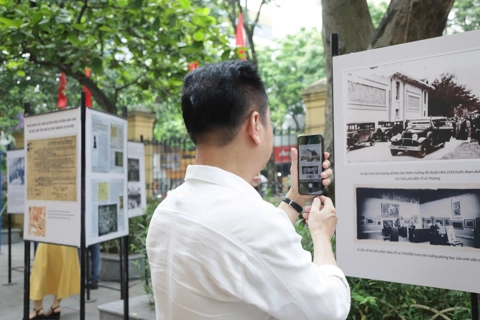
THE HANOI TIMES — Travelers exploring Hanoi’s historic core can now step inside Trung Vuong School to discover Cua Nam Harmony - Cultural Gateway: Connecting Heritage and Innovation , an exhibition revealing little‑known chapters of the capital’s past.
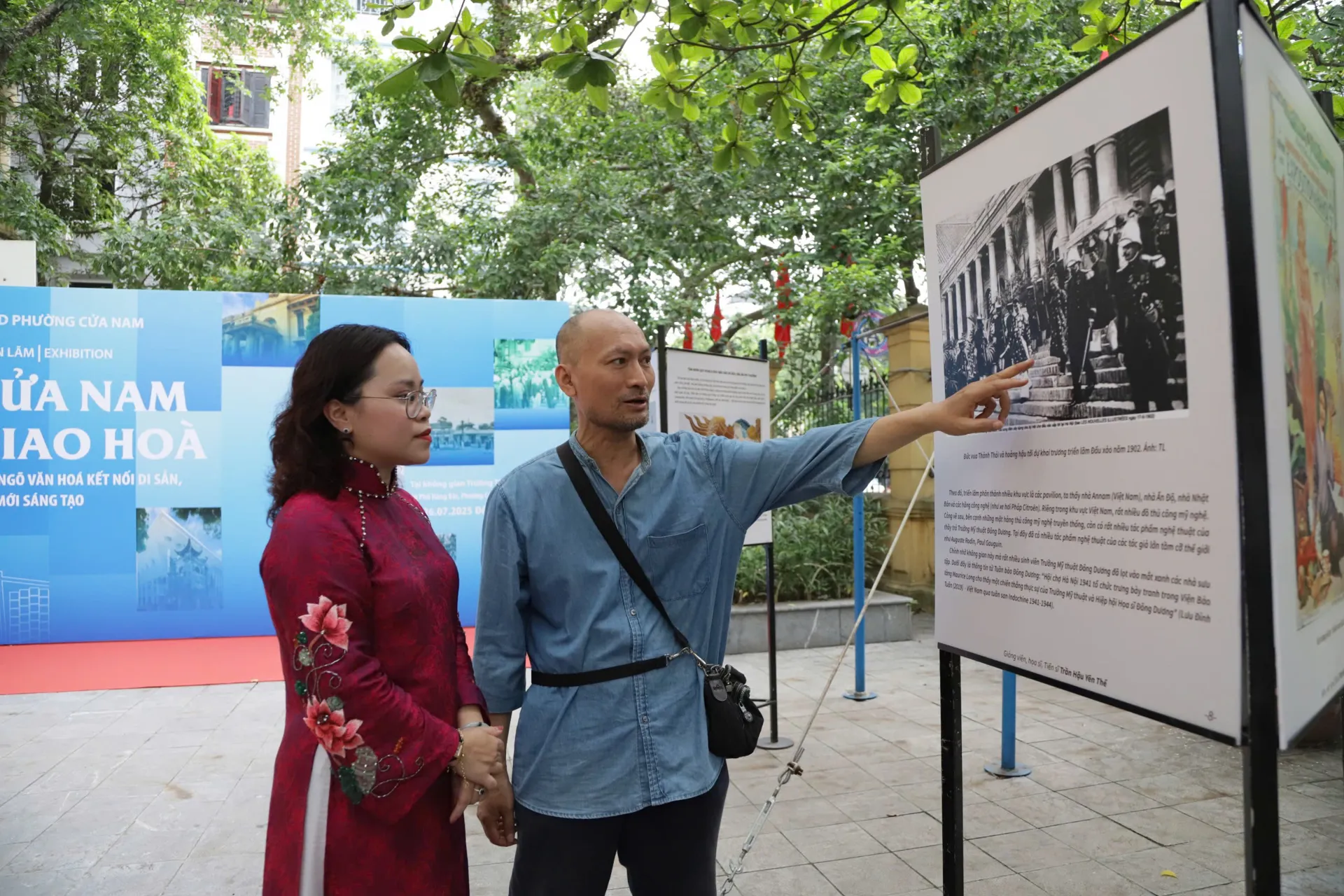
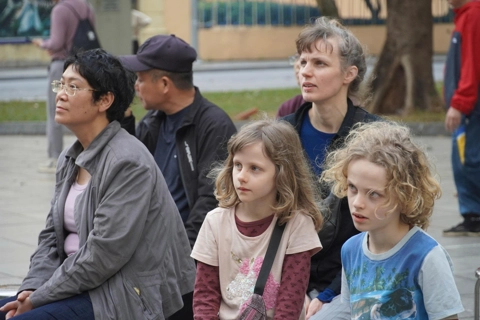
Visitors to the Exhibition of Cua Nam Harmony - Cultural Gateway: Connecting Heritage and Innovation. Photo: Nguyen Hoang/ Kinh te & Do thi Newspaper
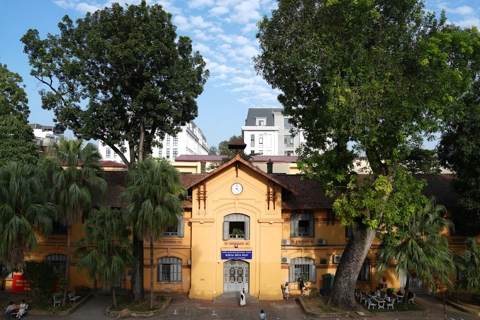
Situated on Hang Bai Street, Cua Nam Ward , Trung Vuong Junior High School is one of the oldest Western-style educational institutions in Hanoi and Vietnam. Originally built in 1917 as a girls’ school on Dong Khanh Avenue (present‑day Hang Bai Street), it was then known as Dong Khanh Girls’ School.
Later known as the Girls’ Junior High School (Collège de Jeunes Filles in French), it has carried the name Trung Vuong since 1948.
Visitors are often drawn to historian Tran Hau Yen The’s photographic collection, which captures symbolic motifs of old Hanoi found within the school grounds.
Notably, two original Indochinese-style reliefs mounted on the gate of the former Council Building provide insight into Vietnam’s complex colonial and postcolonial identity.
A unique symbol of old Hanoi
Both locals and tourists recognize iconic symbols of Hanoi such as the Hanoi Flag Tower, Khue Van Pavilion, the Opera House, Dong Xuan Market, Long Bien Bridge, the Ho Chi Minh Mausoleum, and the modern Nhat Tan Bridge. Equally familiar is the current city emblem: the Khue Van Pavilion, stylized as a hand raising the letter “H” (for Hanoi), a meaningful and visually striking representation.
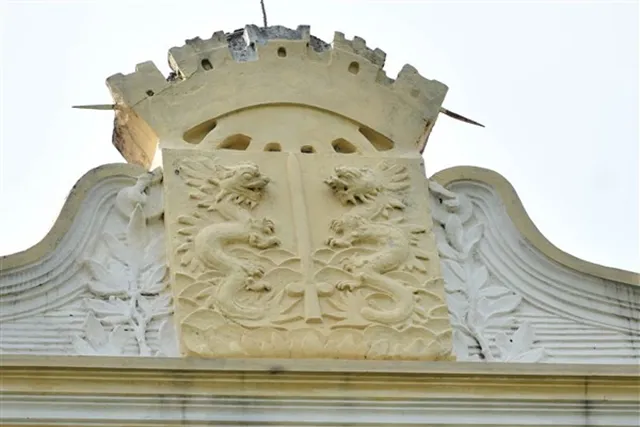
The old logo of Hanoi in 1880s. Photo: Tran Hau Yen The
Yet few know that Hanoi once had a different emblem during the 1880s under French colonial rule, a symbol that still survives at the historic Trung Vuong School.
In archival photographs of Trung Vuong, or Dong Khanh Girls’ School, the old city emblem can be spotted embossed atop the second floor of the main building. It features radiating sun rays, though time has eroded the delicate upper rays, the emblem remains remarkably intact.
This emblem strong influence from medieval European coats of arms, typically shield-shaped and associated with noble families and dynasties. At the top is an image of a Western-style fortress with five watchtowers and five arched gates below.
In some archival images, the fortress appears in fine detail, with every brick rendered. It forms a circle enclosing the sun, with rays alternating between straight and wavy lines. The structure itself resembles a crown, an image rooted in ancient Greek and Roman symbolism often representing cities.
Flanking the emblem are distinctly Western motifs: an oak branch on one side and an olive branch on the other, both well-known in French culture.
From a European perspective, oak leaves symbolize strength and wisdom, while olive branches convey peace, prosperity, and abundance. The emblem even includes small olives and acorns tucked between the leaves.
A blend of western and Vietnamese heritage
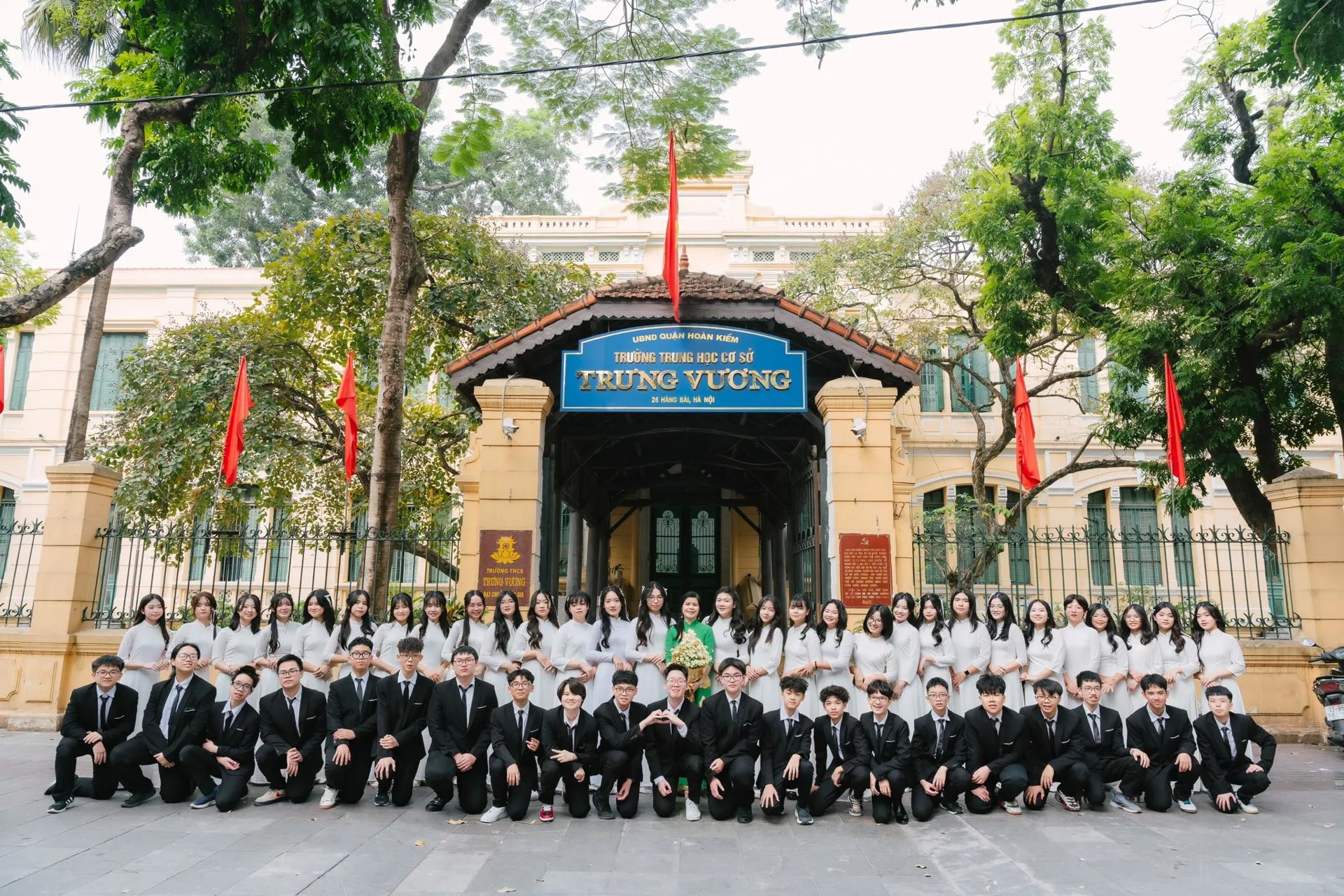
The historic Trung Vuong School or Dong Khanh Girls’ School in Hanoi. Photo courtesy of the school
While the overall structure and side motifs bear the hallmarks of medieval French artistry, the central imagery is steeped in Vietnamese heritage and cultural symbolism.
On the shield are two dragons, coiled and facing each other, sacred creatures in Vietnamese tradition, tied to the founding legend of King Ly Thai To. Upon witnessing a golden dragon rise from the Red River, he renamed the capital from Dai La to Thang Long (Rising Dragon).
These dragons are rendered in a style deeply familiar to Vietnamese eyes. Their forms reflect traditional depictions from the Nguyen Dynasty, with scaled bodies, flowing manes, mustaches above their noses, four legs each bearing five claws, dorsal fins, and branching tails.
Between them stands an upright Western-style sword, large-bladed with a decorated hilt and guard that reminiscent of motifs found on pedestals in ancient Roman and Greek art. Yet, for Vietnamese viewers, it resonates with the legend of King Le Thai To returning the sacred sword to the divine turtle, an act that gave Hoan Kiem Lake (Lake of the Returned Sword) its name.
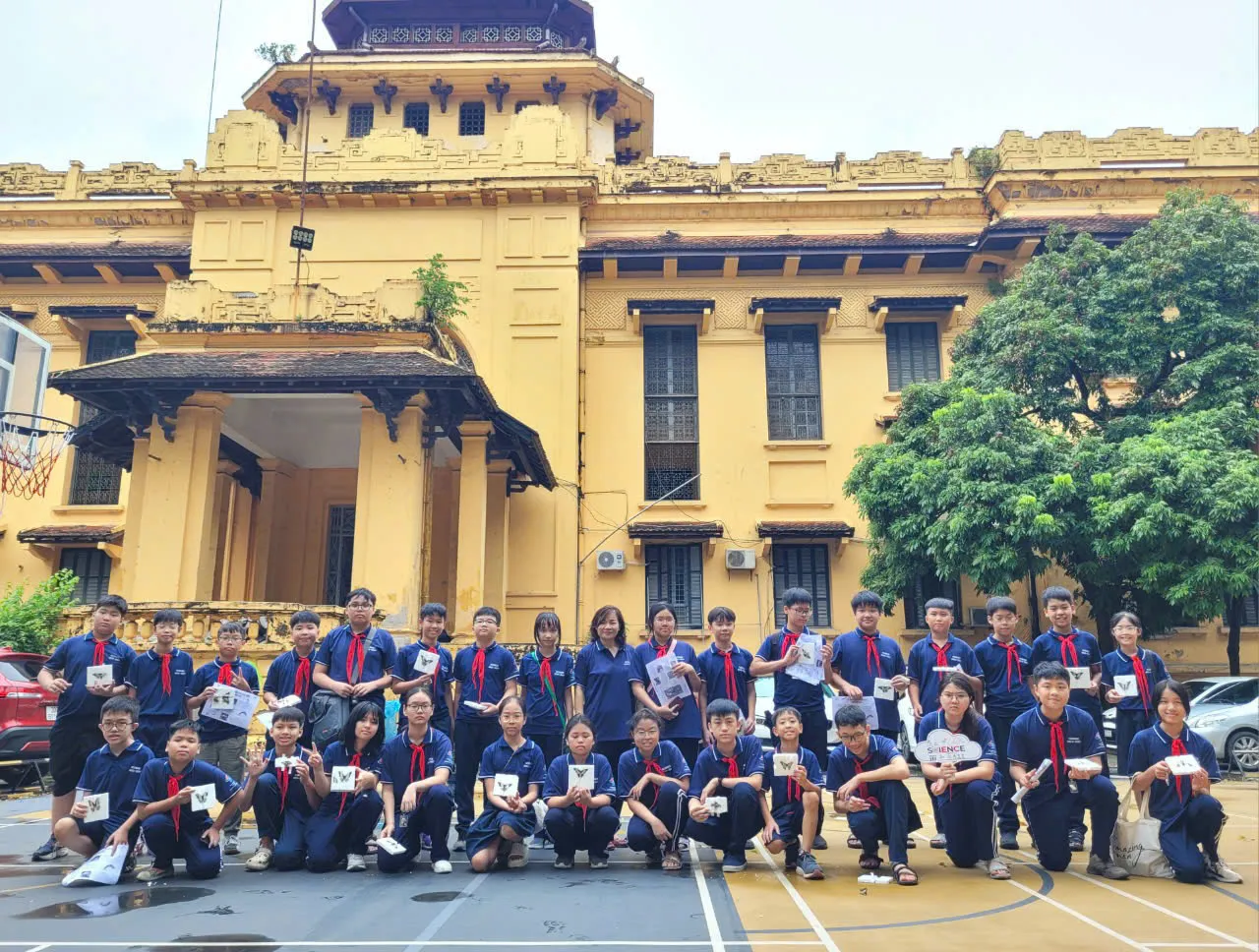
The old school features unique Indochinese architecture. Photo courtesy of Trung Vuong School
Beneath the dragons and sword, the emblem reveals another layer of meaning: tidal waves, a tribute to Hanoi’s geography. The name “Hanoi” literally means “inside the river.” Much like Paris is inseparable from the Seine, Hanoi is forever linked with the Red River and its many lakes, among them West Lake, Bay Mau Lake, Hoan Kiem Lake, and the former Huu Vong Lake.
In the French-era emblem atop Trung Vuong School, these wave patterns rise toward the midsection of the shield, level with the dragons’ bellies. Below their tails, the waves take the form of lotus petals, evoking the lotus throne found in Buddhist art.
In 1997, Hanoi launched a citywide design contest for a new emblem. The winning design unveiled in 1999 was created by artist Pham Ngoc Tuan, a Vietnamese national residing in France. Featuring the Khue Van Pavilion, the new emblem was widely praised for encapsulating Hanoi’s cultural essence.
It is regarded as a beautiful and meaningful logo, reflecting the artistic and cultural spirit of Hanoi, its educational and humanistic traditions, and a reverence for the legacy of talent and virtue passed down by generations.
Whether through emblems or enduring landmarks, Hanoi remains in the hearts of many as a thousand-year-old city shaped by history, enriched by culture, and known for its grace and sophistication, a place where the cultural soul of Vietnam is eternally preserved.