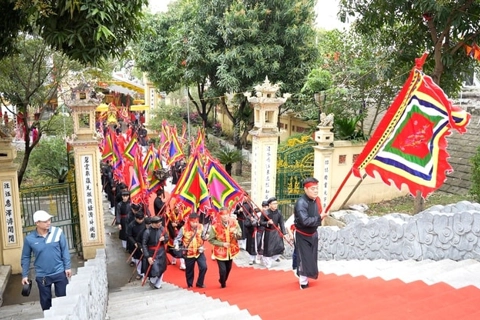
Cua Nam Ward where Hanoi’s old gates open to a modern city
Given its location at a key gateway to the capital and its status as a historic core of Hanoi, this site is a deserving destination for both domestic and international tourism, as well as a vibrant hub for cultural exchange.
THE HANOI TIMES — Cua Nam Ward, founded from the merger of some central wards of Hanoi, stands prominently in bridging the past with the present, transitioning from a French colonial neighborhood to a part of the ancient Old Quarter.
A name rooted in history
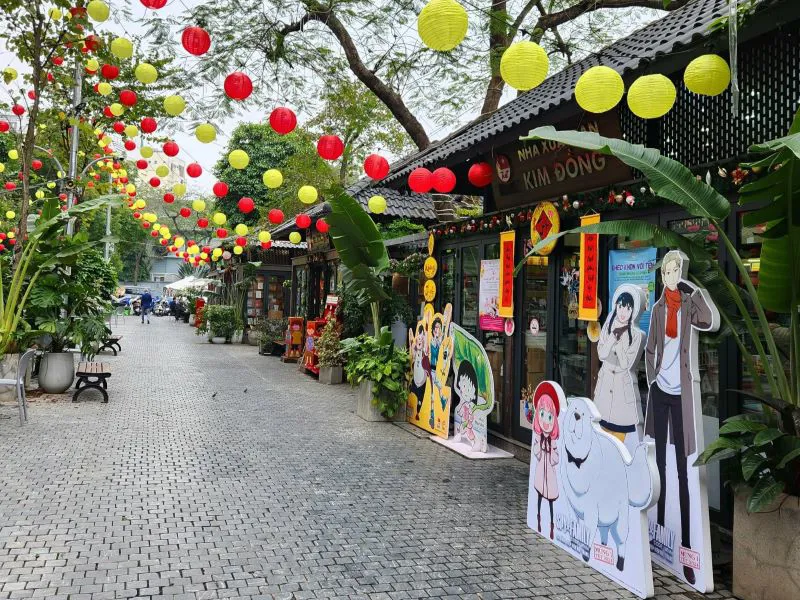
Hanoi Book Street in Hai Ba Trung Street, Cua Nam Ward. Photo: Pho Sach Ha Noi
The name Cua Nam translates into English as "South Gate" and has deep historical connotations. It refers to an ancient entrance to the Thang Long Citadel during the Nguyen dynasty (1802–1945) in the Yen Trung Thuong Village, Tien Nghiem Canton, Tho Xuong District.
Naming the new administrative ward in this heritage-rich manner ensures continuity with Hanoi's storied past, conforms to the principle of preserving well-known toponyms during administrative mergers, and minimizes disruption for residents and businesses.
The ward occupies 1.68 square kilometers and is home to more than 52,000 residents. It encompasses the entirety of the former Tran Hung Dao, Hang Bai, and Phan Chu Trinh wards (previously part of Hoan Kiem District), as well as parts of the Hang Bong, Hang Trong, Trang Tien, Pham Dinh Ho, and Nguyen Du wards. This diverse territorial composition has endowed Cua Nam with a distinctive blend of tradition and modernity.
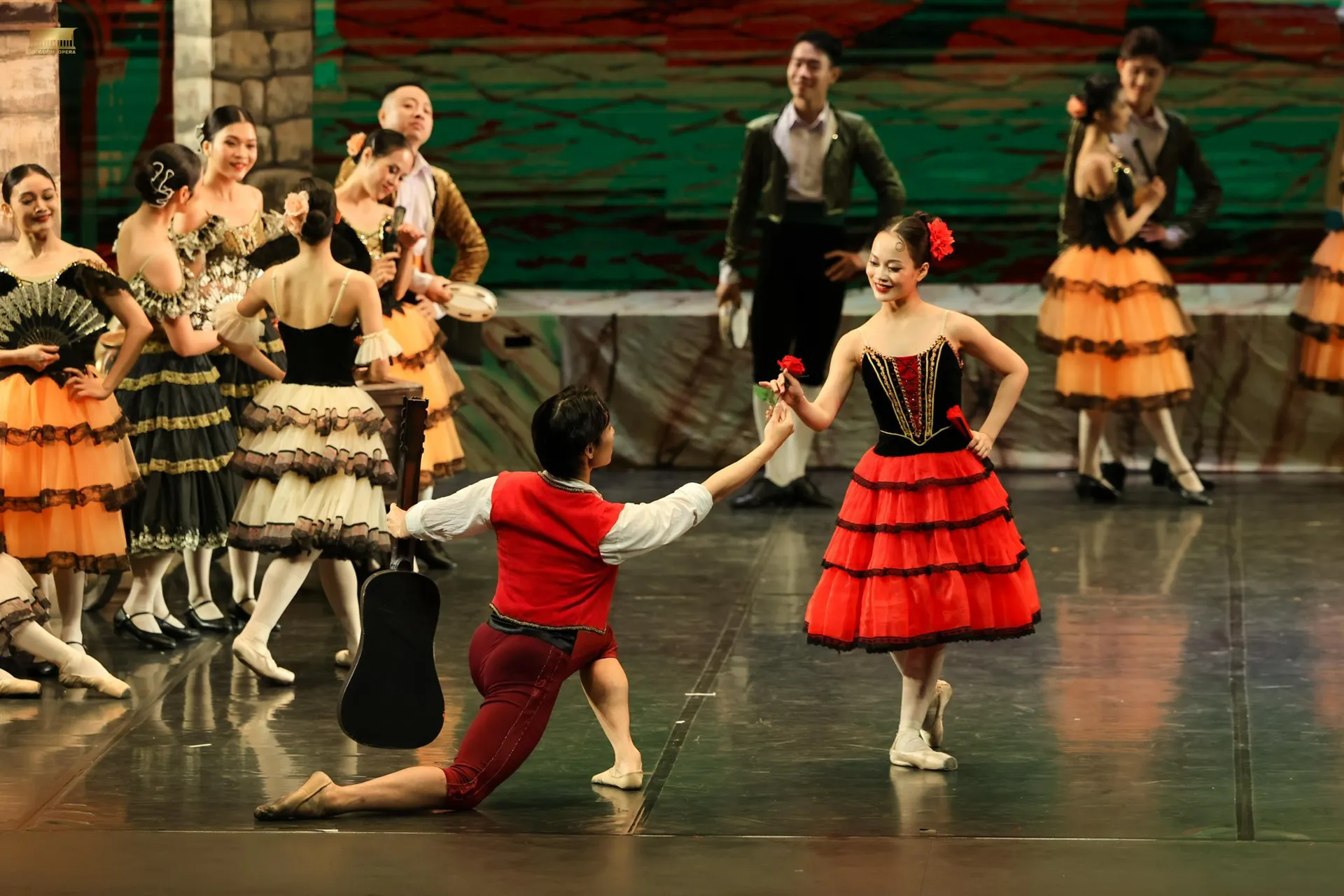
The Vietnam National Opera and Ballet brings the classic ballet Don Quixote to life on the stage of the Ho Guom Opera House, captivating audiences with world-class artistry. Photo: Ho Guom Opera
Just a short walk from Hoan Kiem Lake, the cultural and historical heart of Hanoi, Cua Nam is defined by major thoroughfares such as Trang Thi, Hang Bai, Phan Chu Trinh, and Ly Thuong Kiet. These roads host a vibrant tapestry of architecture, commerce, and culture.
The ward serves as a central connector in Hanoi’s urban structure, linking heritage zones with contemporary developments. It is home to numerous nationally recognized heritage sites, cultural institutions, government offices, diplomatic missions, financial hubs, and leading retail destinations, making it not only an administrative center but also a focal point for cultural tourism and economic activity.
A center for commerce and culture
The local economy is heavily geared toward high-end commerce and services, befitting its central location. Streets like Hang Bai and Hang Bong are known for premium retail, while Ly Thuong Kiet and Tong Duy Tan are celebrated for their culinary offerings, appealing to both locals and tourists.

The Hanoi National University building on Le Thanh Tong Street in Cua Nam Ward features typical Indochinese architectural design by French architect Ernest Hébrard. Photo: Huy Pham/The Hanoi Times
Cua Nam boasts premier cultural venues, including the Palace of Culture and Labor of Vietnam-Soviet Friendship, August Cinema, the Hanoi Opera House, and the Ho Guom Opera, all of which host premier functions for the arts, culture, and public events.
The streets of Ham Long and Trang Thi are lined with the headquarters of ministries, educational institutions, state-owned enterprises, and banks, which generate substantial income for the city and raise its prestige as a cultural, administrative, and economic capital.
Cultural heritage and living traditions
Cua Nam Ward is a guardian of Hanoi’s rich cultural and revolutionary legacy. Its landscape is dotted with relics recognized at both the national and municipal levels, including the Hanoi Opera House, August Revolution Square, Hoa Lo Prison, and revolutionary safe houses, such as House No. 5D Ham Long Street and House No. 90 Tho Nhuom Street.
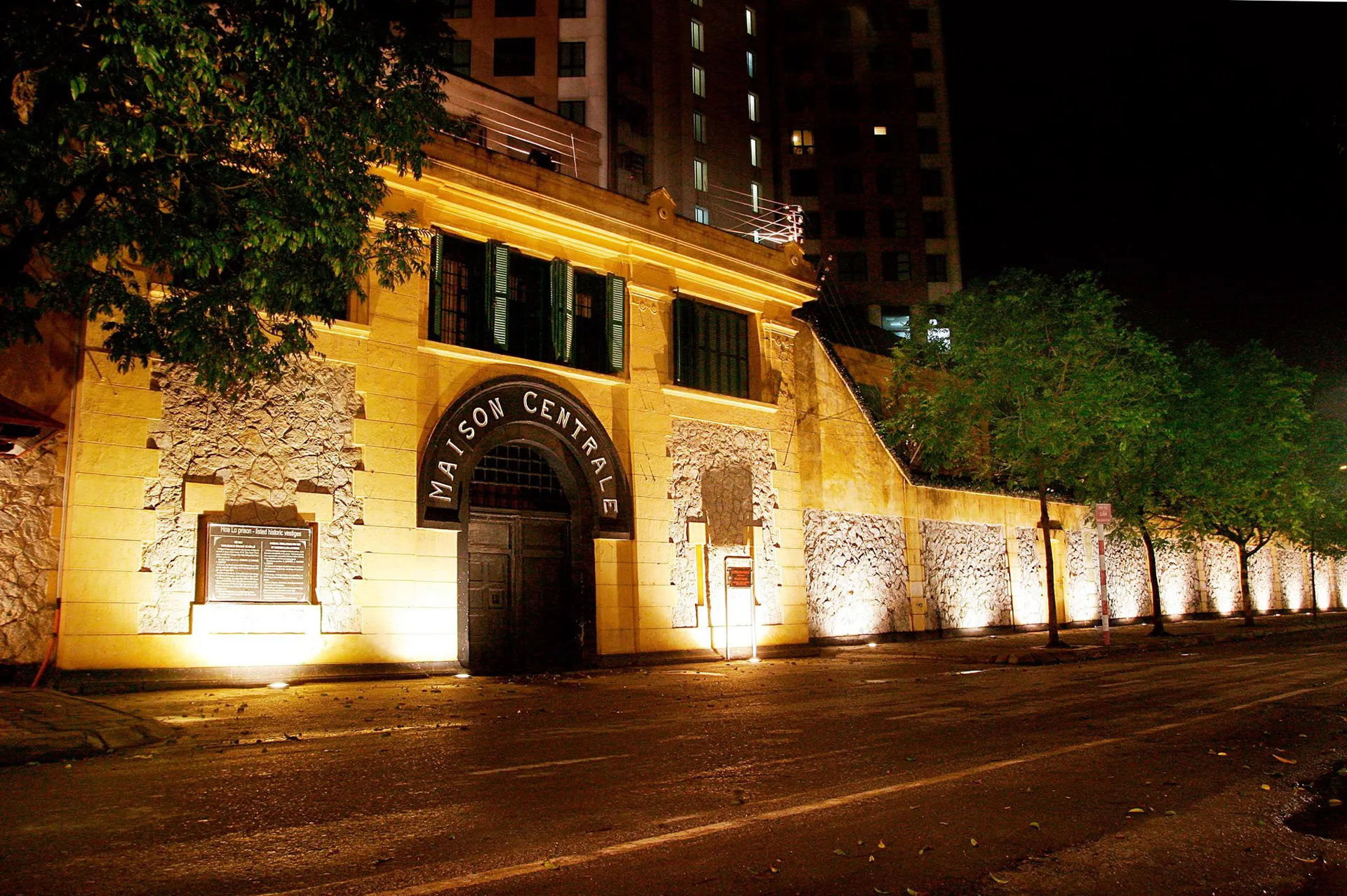
Hanoi Prison Relic Site in Cua Nam Ward. Photo: Chuyen Cua Ha Noi Group
Religious and spiritual life also flourishes here. The ward is home to sacred places of worship such as Quan Su Pagoda, Ham Long Pagoda, Vu Thach Temple, Nam Huong Communal House, and Ba Da Pagoda, among others. Of particular note is the heritage cluster surrounding Thien Quang Lake, home to several pagodas recognized by the Ministry of Culture, Sports, and Tourism since 1989.
Contemporary cultural icons also thrive in the ward. Trang Tien ice cream, for example, is a symbol of Hanoi’s refined urban lifestyle and nostalgia, beloved by generations.
Traditional festivals reinforce the community’s cultural identity. Festivals such as the King Le Thai To Coronation Festival, the Phu Ung Temple Festival, and the Ly Trieu Quoc Su Pagoda Festival demonstrate the ward’s commitment to preserving Hanoi’s spiritual and historical essence.
Revolutionary legacy

The interior of Ho Guom Opera, Cua Nam Ward, Hanoi. Photo: Xuan Sang
Cua Nam is deeply tied to Vietnam’s 20th-century struggle for independence. Hoa Lo Prison, which once detained revolutionary fighters, has been transformed into a museum of national memory. Other historically significant sites, such as House No. 2 Trang Thi Street and Trung Vuong Secondary School, served as crucial bases for resistance movements during the French colonial period.
As a modern urban neighborhood, Cua Nam is also a leader in public health and education. The ward hosts some of the nation’s top hospitals, including the Vietnam-Cuba Friendship Hospital, K Hospital, the Central Maternity Hospital, and the Hanoi Eye Hospital. These hospitals are staffed with highly trained professionals and are equipped with advanced technology.
The education sector is equally robust, with prestigious institutions such as Trang An Primary School, Viet Duc High School, Tran Phu-Hoan Kiem High School, and Marie Curie High School. Higher education establishments include Hanoi University of Pharmacy and Vietnam University of Fine Arts, among others.
A new chapter in urban governance

Adjacent to the Ho Guom Opera House on Hang Bai Street, the gate of the Bao An Binh Barracks is a unique historical relic left behind by the August 1945 General Revolutionary Uprising in Hanoi. Photo: Ngoc Tu/The Hanoi Times
On July 1, 2025, the new Cua Nam Ward was established as part of a municipal territorial reshuffling, making it one of 126 new commune-level units, reshaping Hanoi into a more efficient, strategically developed metropolis.
The transformation enhances governance, urban planning, and service delivery, paving the way for Hanoi to evolve into a smarter, more livable, and culturally enriched capital that honors its past while shaping its future.
Regarding its significance, Pham Tuan Long, Secretary of the Party Committee and Chairman of the People’s Council of Cua Nam Ward, said that the merger marks a pivotal transformation in local governance and presents a historic opportunity for Cua Nam Ward to achieve comprehensive development in economic, cultural, social, and national defense spheres.
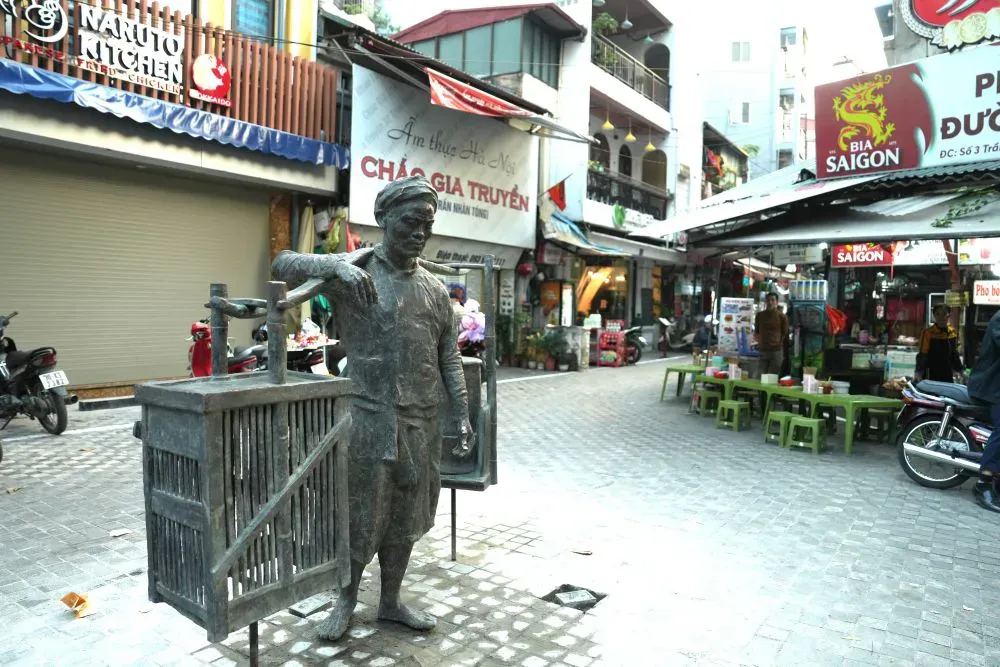
The Tong Duy Tan Gastronomy Street in Cua Nam Ward. Photo: Huy Pham/ The Hanoi Times
"We are committed to transforming Cua Nam Ward into a model smart urban area that blends tradition with progress in a modern, innovative way," he affirmed.
Accordingly, the district outlines five strategic areas for the ward’s development, namely effective urban management integrated with heritage preservation; accelerating administrative reform and digital transformation; fostering a modern economy centered on services, tourism, and trade; enhancing the quality of education, culture, and healthcare; and ensuring the stability of national defense and security.
-1741244616.jpg?w=480&h=320&q=100)