Cua Nam Ward: Hanoi’s cultural gateway and creative beacon
The photo exhibition solidifies the ward's growing role as a vibrant center for culture, art, tourism, and creative innovation in Hanoi.
THE HANOI TIMES — The photo exhibition, titled "Cua Nam Harmony- Cultural Gateway: Connecting Heritage and Innovation," is on display until August 5 at the historic Trung Vuong School in the heart of Hanoi.
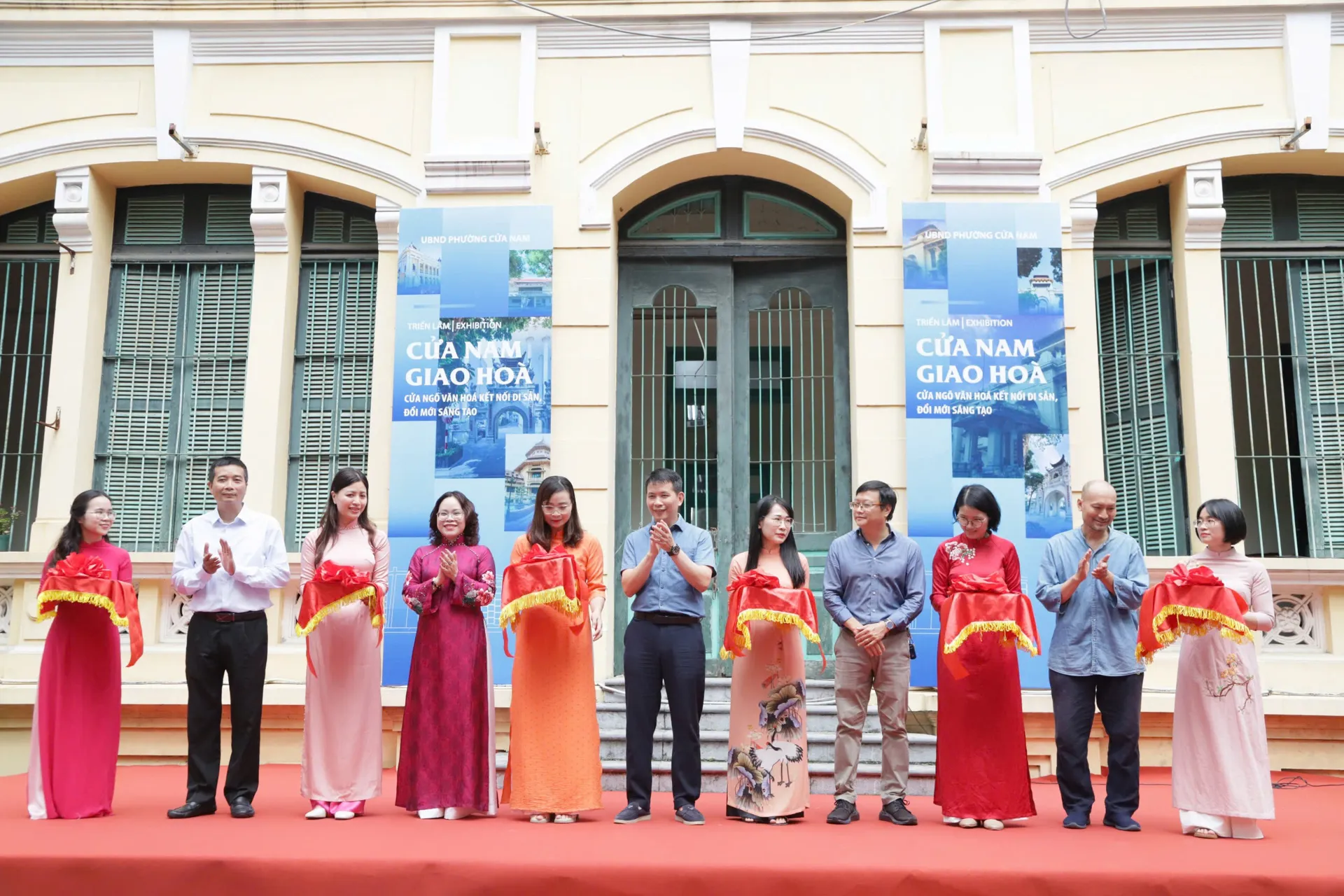
The opening of Cultural Gateway: Connecting Heritage and Innovation Exhibition. Photo: Nguyen Hoang/ Kinh te & Do thi Newspaper
Contemplating Heritage
According to the organizers, this cultural event pays tribute to downtown Hanoi’s thriving culture and social development, marking a significant turning point for Cua Nam Ward following the recent administrative reform.
The exhibition showcases historical architectural works of great artistic and cultural significance, as they contributed to the legacy of Indochina’s urban and academic landscape and showcase the potential for revitalizing heritage through contemporary art initiatives.
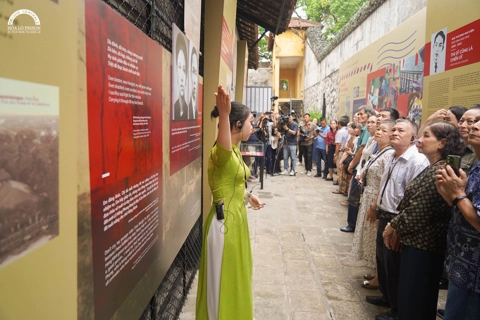
A major highlight is the photo series, "Indochina Senses Grand Exhibition," which interacts with the distinctive Indochinese architecture of the former Indochina University, now part of Vietnam National University in Hanoi.
A documentary film about the Indochina Senses Project, directed by curator Nguyen The Son to bring historical memory into dialogue with modern interpretation.

A visitor to the exhibition. Photo: Nguyen Hoang/Kinh te & Do thi Newspaper
Also on display are research visuals by historian Tran Hau Yen The, focusing on the symbolic motif of the Imperial Citadel of Hanoi as seen at Trung Vuong School (formerly Dong Khanh Girls’ School). Of particular interest are two original Indochinese figures mounted on the gate of the former Council Building, which offer insight into Vietnam’s layered colonial and postcolonial identity.
Hanoi’s enduring beauty finds quiet expression in the photo collection titled Song Xua Pho Cu or Old Iron Door Frames of Old Streets by Tran Hau Yen The. Featuring 365 images accompanied by the artist’s own reflections, the collection offers an intimate look at the ornamental ironwork found on fences, balconies, doors, windows, and wind vents throughout the city. These subtle details, often overlooked, trace the architectural evolution of Hanoi across different historical periods.
The decorative graceful, classical, and understated patterns reveal a refined aesthetic that speaks volumes about the city’s cultural identity. Many of these motifs adorn landmark structures such as the Presidential Palace, the Vietnam History Museum, the Hanoi Opera House, the Ministry of Foreign Affairs, and the Vietnam National University, each a symbol of Hanoi’s rich architectural heritage.
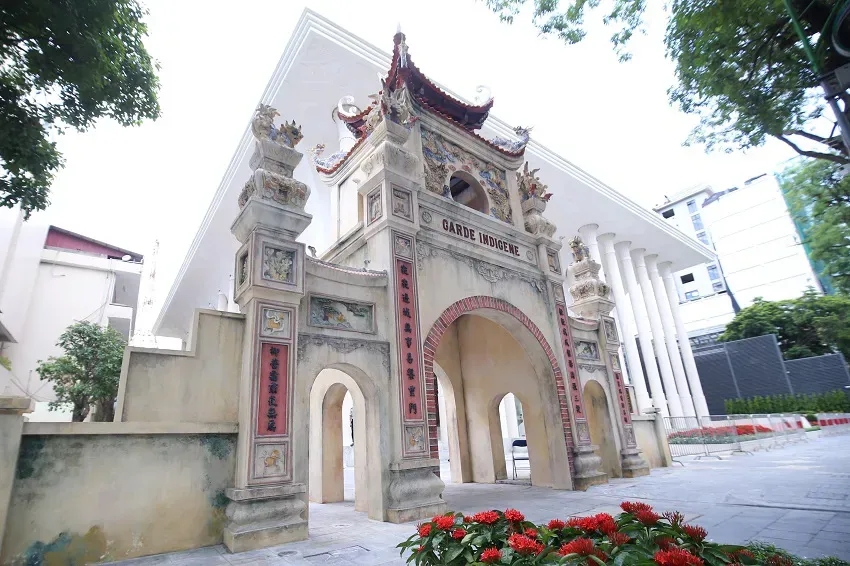
The relic of Bao An Binh Barrack was restored in July 2023. Photo: Ngoc Tu/ The Hanoi Times
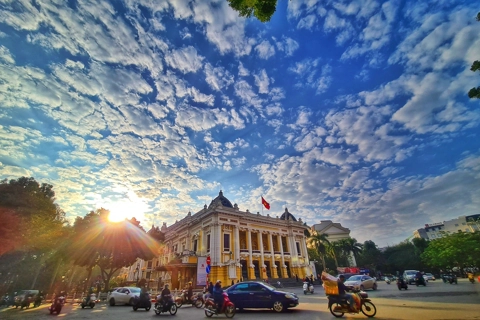
A striking highlight of the exhibition "Cua Nam Harmony- Cultural Gateway: Connecting Heritage and Innovation" is the gate of the former Bao An Binh Barrack on Hang Bai Street. Nestled beside the iconic Ho Guom Theater, this historic gate stands as one of the few remaining relics of the August 1945 Revolutionary General Uprising.
Designed in the late 19th century by French architect Henri Vildieu- renowned for shaping key colonial-era landmarks such as the Presidential Palace, Supreme Court, and Hoa Lo Prison, the barrack gate embodies a unique blend of French architectural legacy and Vietnamese historical resonance.
Moreover, the exhibition showcases documents and materials related to the restoration of notable architectural structures in Cua Nam Ward, underscoring its dedication to cultural preservation and its potential as a destination for heritage-based tourism and education.
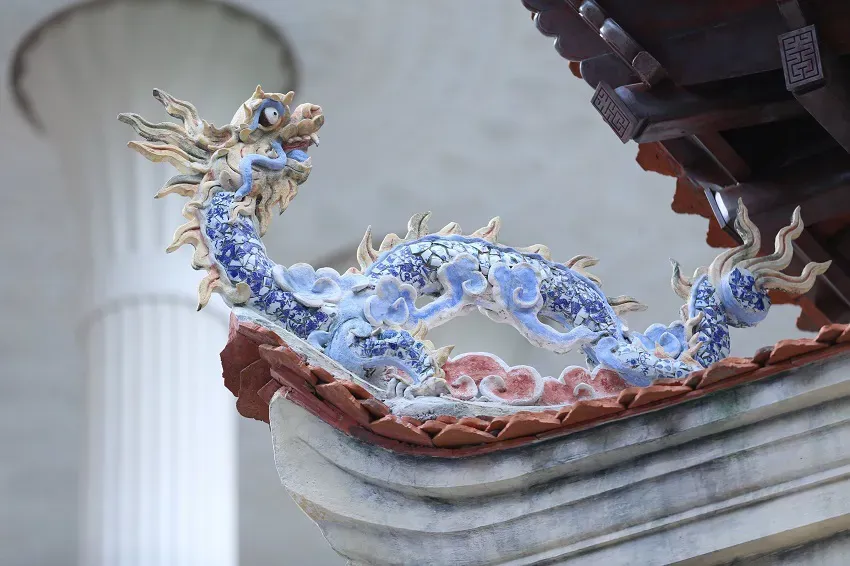
Oriental legend's sacred blue dragon ornament on the Bao An Binh Barrack is almost intact. Photo: Ngoc Tu/ The Hanoi Times
Two artist-led talk shows will be held within the framework of the exhibition, offering public discussions on themes such as the symbolic meaning of the Thang Long Imperial Citadel, the historical and cultural influence of the former Nha Dau Xao (Vietnam-Soviet Cultural Palace), and the Indochina Senses Project.
Branding Cua Nam as Hanoi's cultural hub
Pham Tuan Long, Secretary of the Party Committee of Cua Nam Ward, emphasized that the preservation and promotion of cultural heritage in each locality must be rooted in the invaluable legacy passed down by previous generations.
“Preserving cultural heritage is a vital mission affirmed in many central resolutions. Hanoi is well-positioned to lead this effort. If we take the right approach, heritage will not only be safeguarded but also revitalized, brought to life in ways that generate new cultural values and become a driving force for the sustainable development of the capital's cultural industries.”
According to Trinh Ngoc Tram, Vice Chairwomen of People's Committee of Cua Nam Ward, the locality is uniquely positioned to become a model for integrating cultural heritage with creativity and technology.
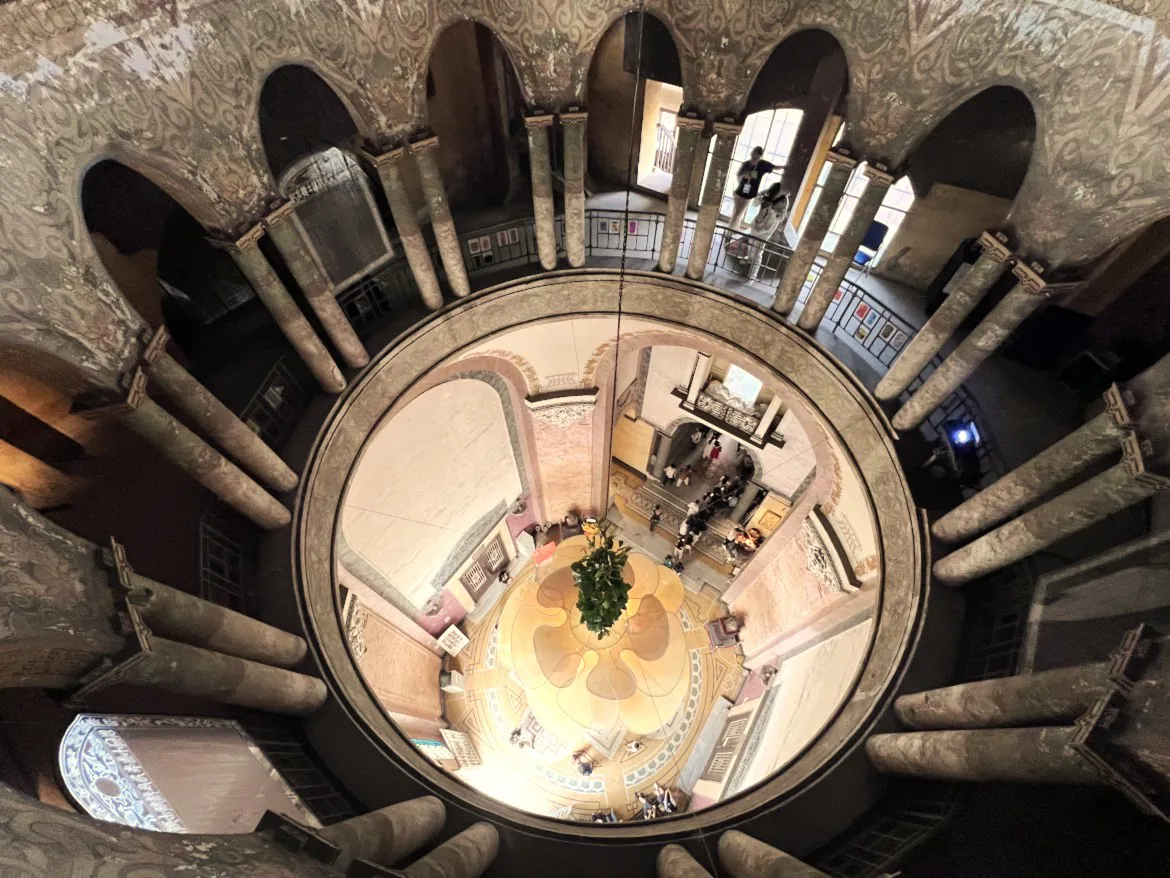
A corner of Indochina Senses Grand Exhibition. Photo: Huy Pham/ The Hanoi Times
“Cua Nam is poised to translate its cultural capital into tangible, meaningful products that reflect both identity and ingenuity,” Tram said.
Cua Nam is strategically positioned at the southeastern gateway of the ancient Thang Long Citadel (today Hanoi) and was once known as Tho Xuong Canton, a name that still resonates in Vietnamese folk songs and proverbs.
With its long history as a trading and cultural crossroads, the ward has evolved while maintaining its deep historical roots.
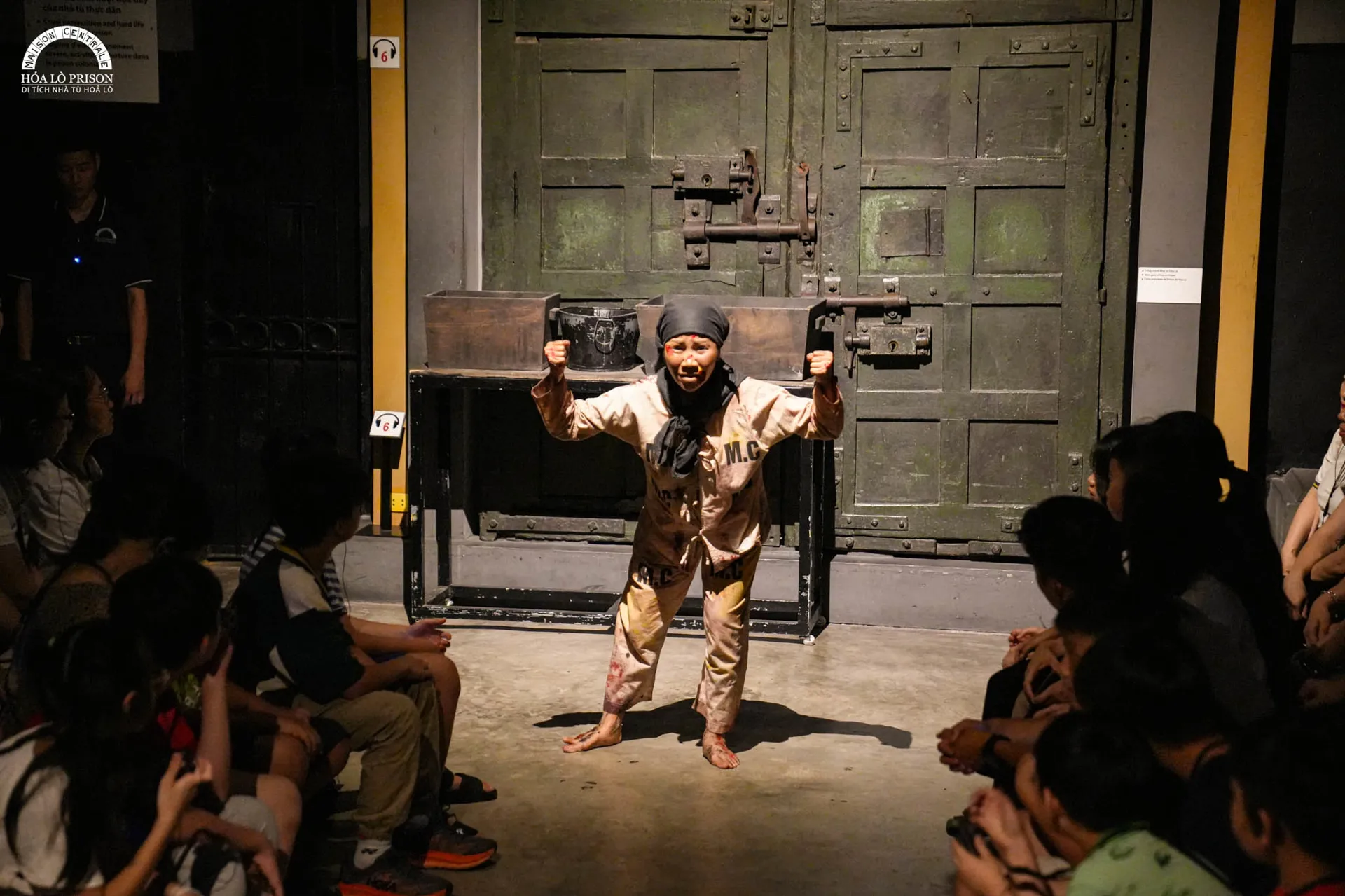
Hoa Lo Prison Relic Site in Cua Nam Ward, Hanoi. Photo courtesy of the relic site
Following the administrative restructuring in July 2025, Cua Nam Ward expanded its boundaries to cover about 1.68 square kilometers and accommodate more than 52,000 residents.
The ward encompasses several of Hanoi’s most iconic cultural and architectural landmarks, notably the Hanoi Opera House, Hoa Lo Prison Relic, and Ho Guom Opera House.
Among these sites, Trung Vuong and Ngo Si Lien schools are designated national special relics, closely tied to Vietnam’s revolutionary history and its resistance against colonial powers.
As Hanoi pursues a future driven by innovation and creativity, Cua Nam is emerging as both a preserver of cultural heritage and a catalyst for cultural tourism and artistic renewal.