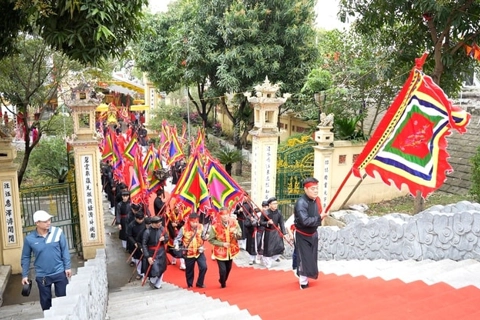
Explore century-old national treasures at Thang Long Imperial Citadel
The recent designation of the three ancient artifact collections from the Thang Long Imperial Citadel as national treasures acknowledged the site's exceptional historical, cultural, and archaeological significance.
THE HANOI TIMES — Three artifacts from the Thang Long Imperial Citadel Heritage Site in Hanoi have been recognized as national treasures, raising the total to 327 artifacts and collections as of early 2025.
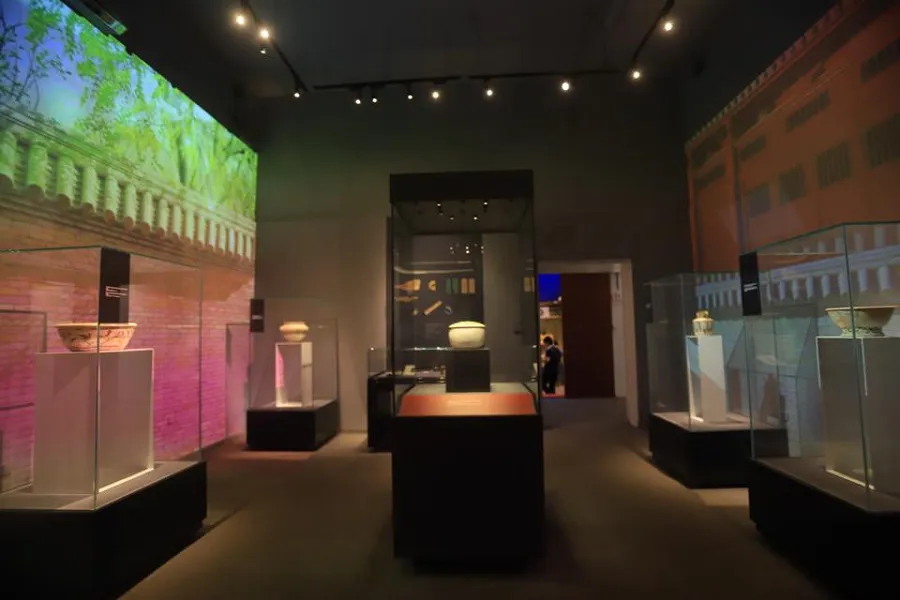
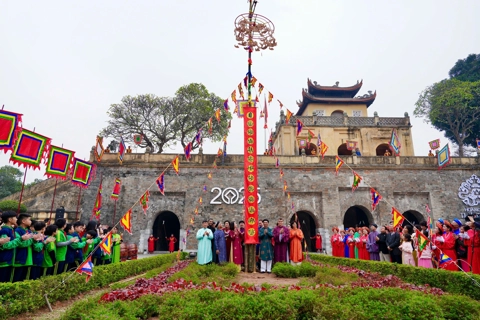
A trove of Vietnamese treasures is showcased at the historic Thang Long Imperial Citadel. Photo: Huy Pham/ The Hanoi Times
These artifacts include phoenix-shaped architectural decorations from the Ly Dynasty (11th -12th centuries) and imperial vases and Truong Lac ceramics from the Early Le Dynasty (15th-16th centuries).
According to the Thang Long–Hanoi Heritage Conservation Center, this collection is distinguished by its originality, uniqueness, and historical significance. They serve as artistic masterpieces and essential resources for understanding the stages of Vietnam’s cultural evolution.
Upgrading the status of these treasures enriches the legacy of the Thang Long Imperial Citadel, a living monument to over a thousand years of Vietnamese heritage.
Ly Dynasty phoenix heads

A phoenix head from the Ly Dynasty. Photo courtesy of the Ministry of Culture, Sports and Tourism of Vietnam
The Ly Dynasty phoenix head collection, dating back to the 11th or 12th century, includes five terracotta artifacts unearthed at the 18 Hoang Dieu archaeological site in the central sector of the Thang Long Imperial Citadel.
These pieces offer compelling evidence of the Ly Dynasty's sculptural sophistication, showcasing great ingenuity through their diverse shapes and sizes.
The collections genuinely demonstrate the sophistication of sculpture during the Ly Dynasty. Their various shapes and sizes reveal great creativity.
This collection not only reflects the brilliant development of Dai Viet sculpture but also the profound confluence of Buddhism. In local court culture, the phoenix and dragon are royal symbols; the phoenix is associated with the queen. The phoenix-dragon duo symbolizes perfect harmony and balance.
This special connotation explains why phoenix motifs were prevalent in architecture during the Ly and Tran dynasties.
Each phoenix head was crafted with energetic movement. The wavy mane with multiple forward bends, long beak, plump cheeks, and crest shaped like a Bodhi leaf slightly tilted forward are all depicted vividly.
The highlights lie in the details, such as the large, round, prominent eyes; the eyebrows streaming backward; and the big, wavy ears. These features are all delicately made, showcasing the high level of craftsmanship of Ly Dynasty artisans and leaving a deep mark on the history of Vietnamese fine arts.
Initial Le Dynasty imperial vase
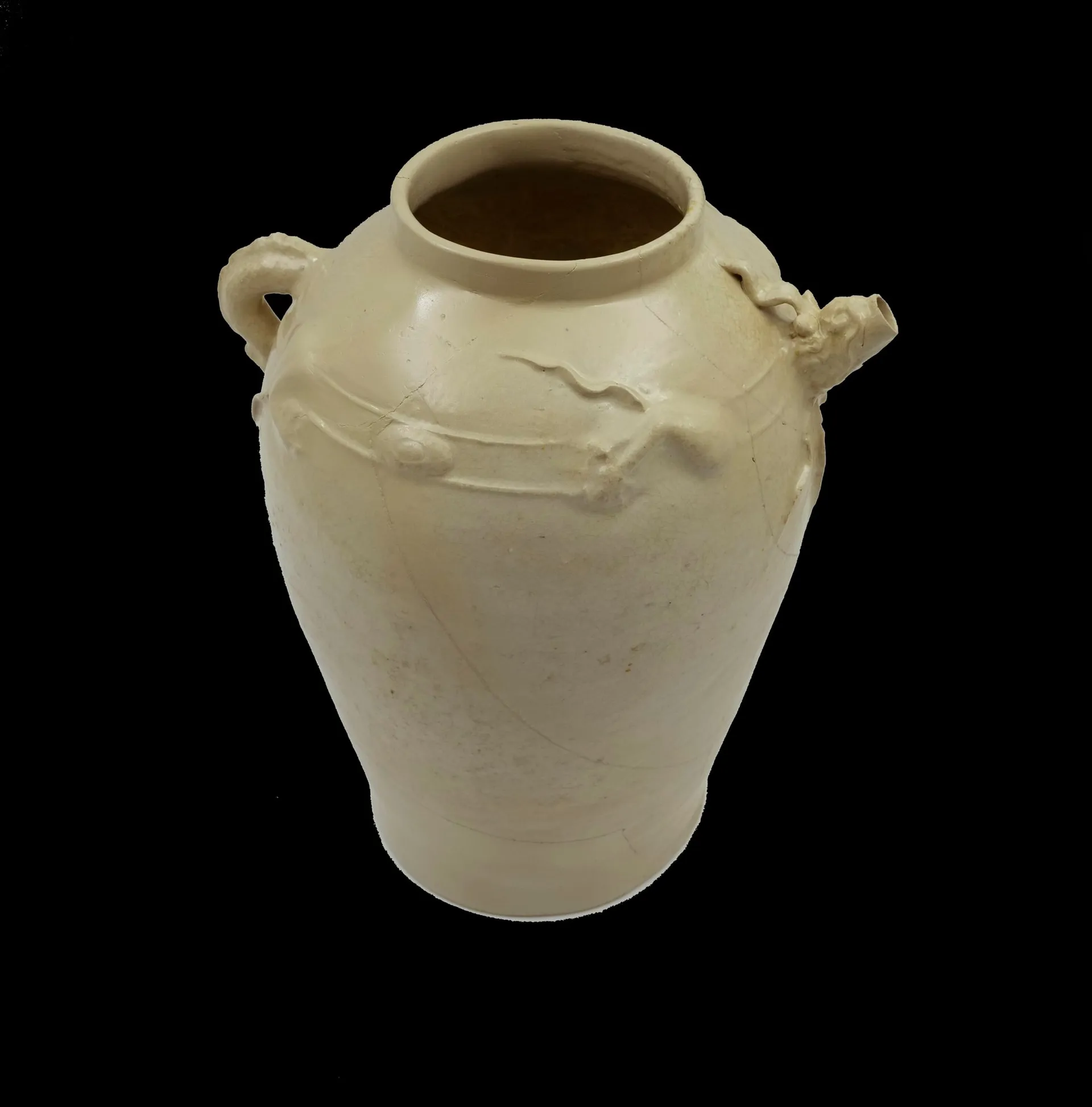
Also unearthed at the 18 Hoang Dieu Archaeological Site , the imperial vase vividly testifies to the development of pottery during the early Le dynasty.
Dating from the 15th century, the vase is more than just a ceramic product; it is a unique piece of art with an elaborate design. It has a base, body, shoulders, mouth, spout, and handle, all of which are meticulously crafted to exude majesty and elegance.
The vase's most striking aesthetic feature is a hidden dragon motif. The spout is shaped like a dragon's raised head with embossed horns and a mane. The handle is the dragon's body with lifted fins. Four dragon legs are sculpted on both sides of the shoulders, depicting vigorous movement.
The vase is a delicate blend of techniques and artistry, from the manual shaping of the clay on the potter’s wheel and assembly of the separate parts to the firing process.
In particular, firing techniques at high temperatures on separate kiln shelves optimized product quality and affirmed the important role of ceramics in social and spiritual life at that time.
Associate Professor Bui Minh Tri, Director of the Institute of Imperial Citadel Studies, stated: "The imperial porcelain unearthed at the Thang Long Imperial Citadel from the early Initial Le Dynasty offers a more accurate, comprehensive, and in-depth understanding of the era’s aesthetic sensibilities and the strict regulations that governed decorative arts."
It also illustrates normative values, refined standards, exceptional craftsmanship, and the elite status of porcelain created exclusively for the emperor. More broadly, it provides valuable insight into the Initial Le Dynasty’s ideology, religion, economy, and socio-cultural life.”
Initial Le Dynasty Truong Lac ceramics
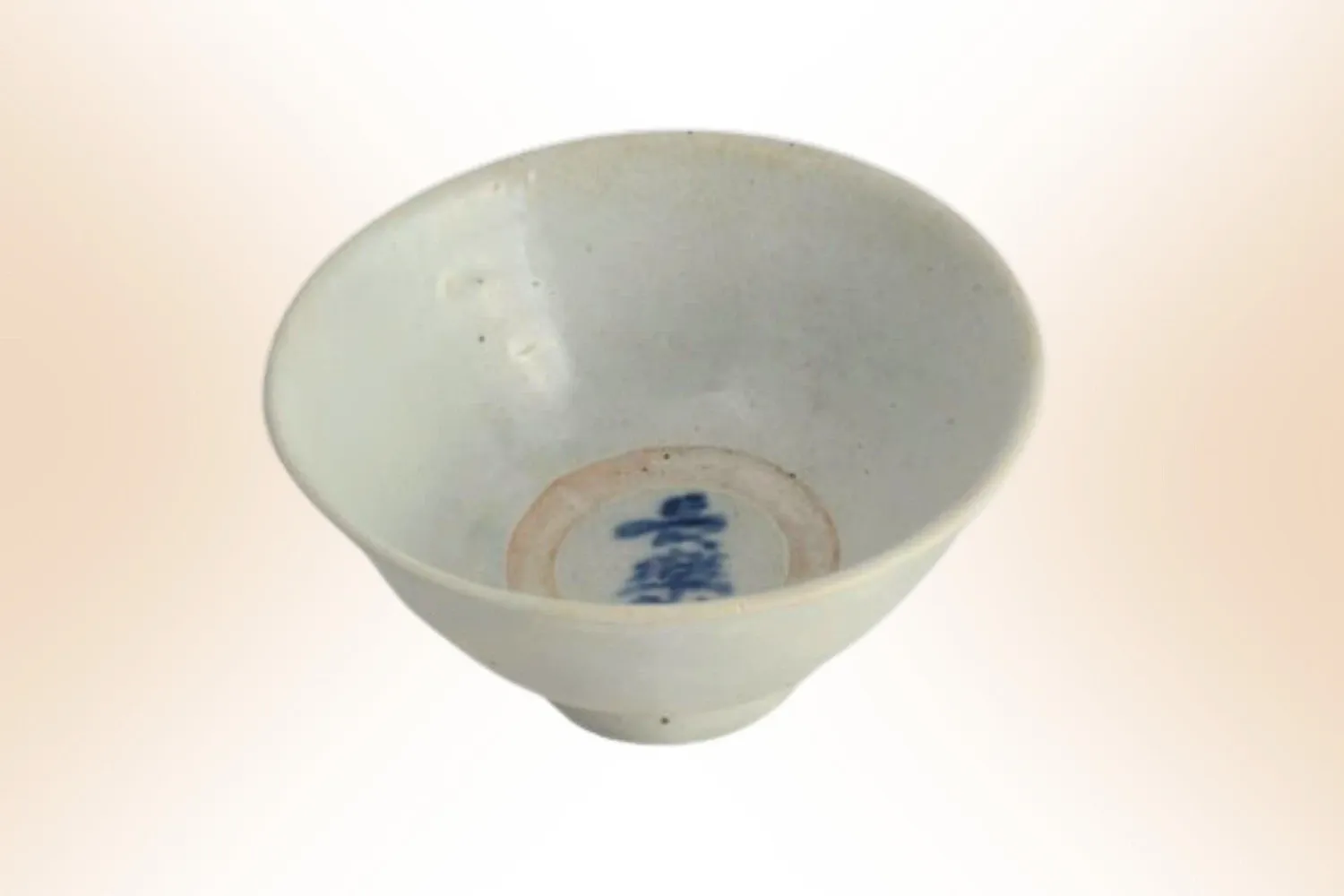
A Truong Lac ceramic bowl. Photo courtesy of the Ministry of Culture, Sports and Tourism of Vietnam
The third treasure found at the 18 Hoang Dieu archaeological site is the Truong Lac ceramic collection from the Early Le Dynasty (15th–16th century). It comprises 36 artifacts: nine cups, six bowls, 20 plates, and 11 plate pieces. Each piece is handcrafted and unique.
According to researchers from the Thang Long - Hanoi Heritage Conservation Center, these porcelain items may have been used in the royal palace. Historical records indicate that Truong Lac Palace was the residence of Queen Nguyen Thi Hang, wife of King Le Thanh Tong, who reigned from 1460 to 1497, further corroborating this view.
The positions and methods of inscription on ceramics have distinct meanings. Those in the middle of bowls and cups are engraved under the glaze before firing and attest to the item's authenticity. In contrast, inscriptions on the bottom of plates were added after firing and act as a mark of ownership.
Other decorative patterns on the artifacts also have special historical and cultural significance. In short, the Truong Lac ceramic collection helps recreate the structure and spatial organization of the royal palace during the Initial Le Dynasty and provides insight into daily life. It is a valuable source of information for restoring the appearance of the ancient Thang Long Citadel.
Recognizing these three collections as national treasures confirms their invaluable historical and cultural value and plays an important role in preserving and promoting the nation's cultural heritage.