Hanoi's young men fuel centuries-old rice cooking tradition
A centuries-old ritual, equal parts endurance and homage, keeps Thi Cam’s communal spirit alive each spring.
THE HANOI TIMES — Young men in Hanoi’s Thi Cam Village fanned open flames beneath iron pots on a misty spring morning, keeping alive a folk rice-cooking contest rooted in local tradition.
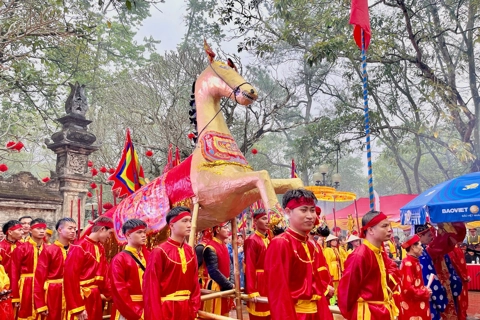
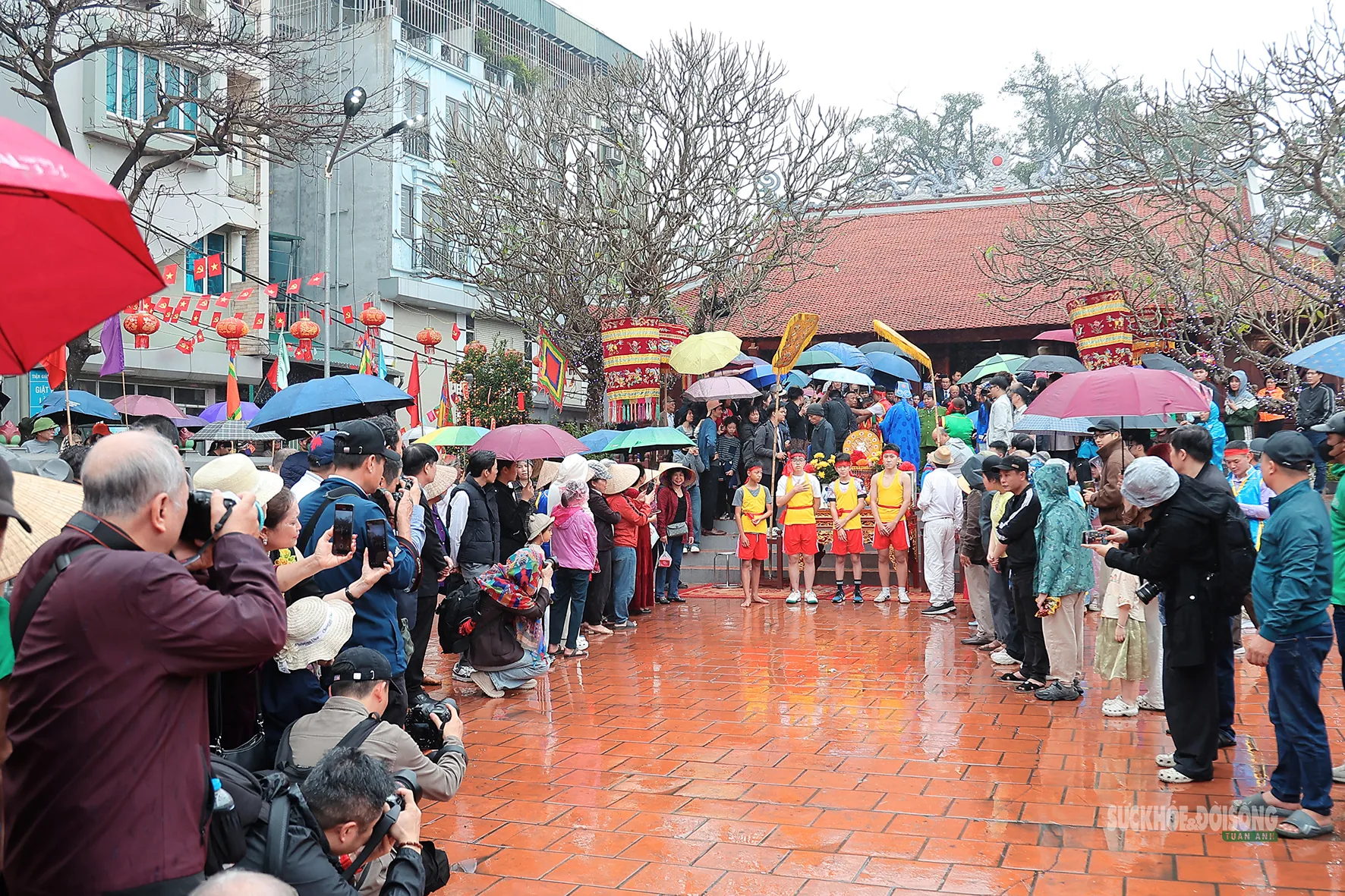
A drizzle darkened the red-brick courtyard of Thi Cam Communal House in Xuan Phuong Ward as smoke from smoldering straw rose into the damp air, heightening the atmosphere of the annual festival that draws villagers and visitors alike.
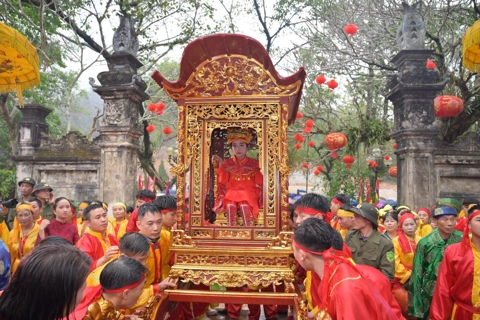
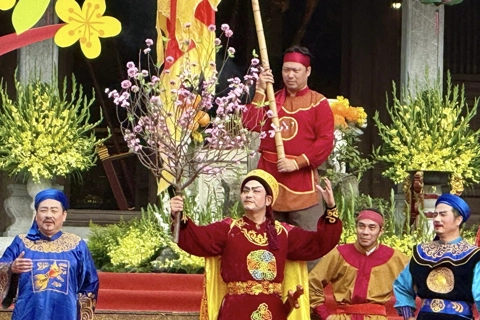
The lively Thi Cam Village Rice Cooking Festival, held each year, serves not only as a festive highlight but also as a celebration of community solidarity among villagers. Photos: Tuan Anh/ Suc khoe & Doi song
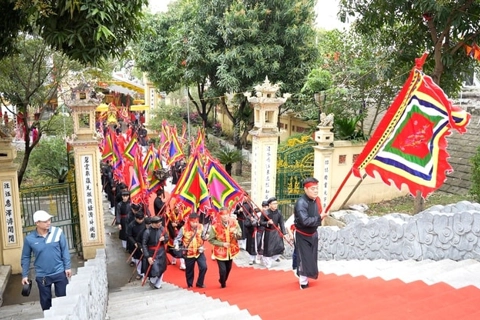
Held annually on the eighth day of the first lunar month, the Thi Cam Village Rice Cooking Festival honors General Phan Tay Nhac, the village’s tutelary god and remains one of the capital’s distinctive folk traditions, reinforcing solidarity and community spirit among residents.
Legend says General Phan Tay Nhac once staged a rice-cooking contest while marching through the village and was later deified with Princess Ho Dung as its guardian. The annual competition honors their legacy, with a larger ceremony every five years.
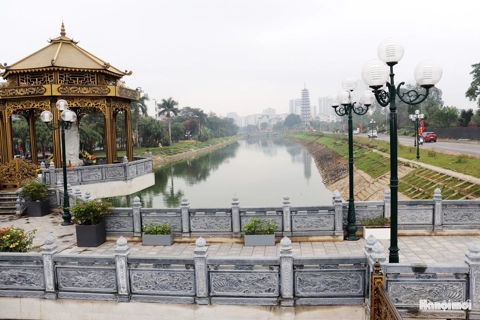
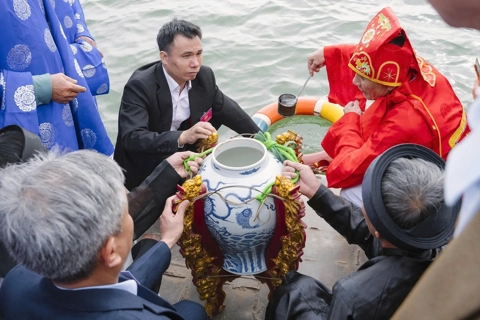
Four teams of 10 members fetch water from the Nhue River, light fires using only bamboo and straw and prepare rice from husking to cooking within 30 minutes. Elders judge the finished pots for fragrance and texture before the rice is shared among villagers as a symbol of unity and good fortune.
The festival was recognized in 2022 as a National Intangible Cultural Heritage of Vietnam.
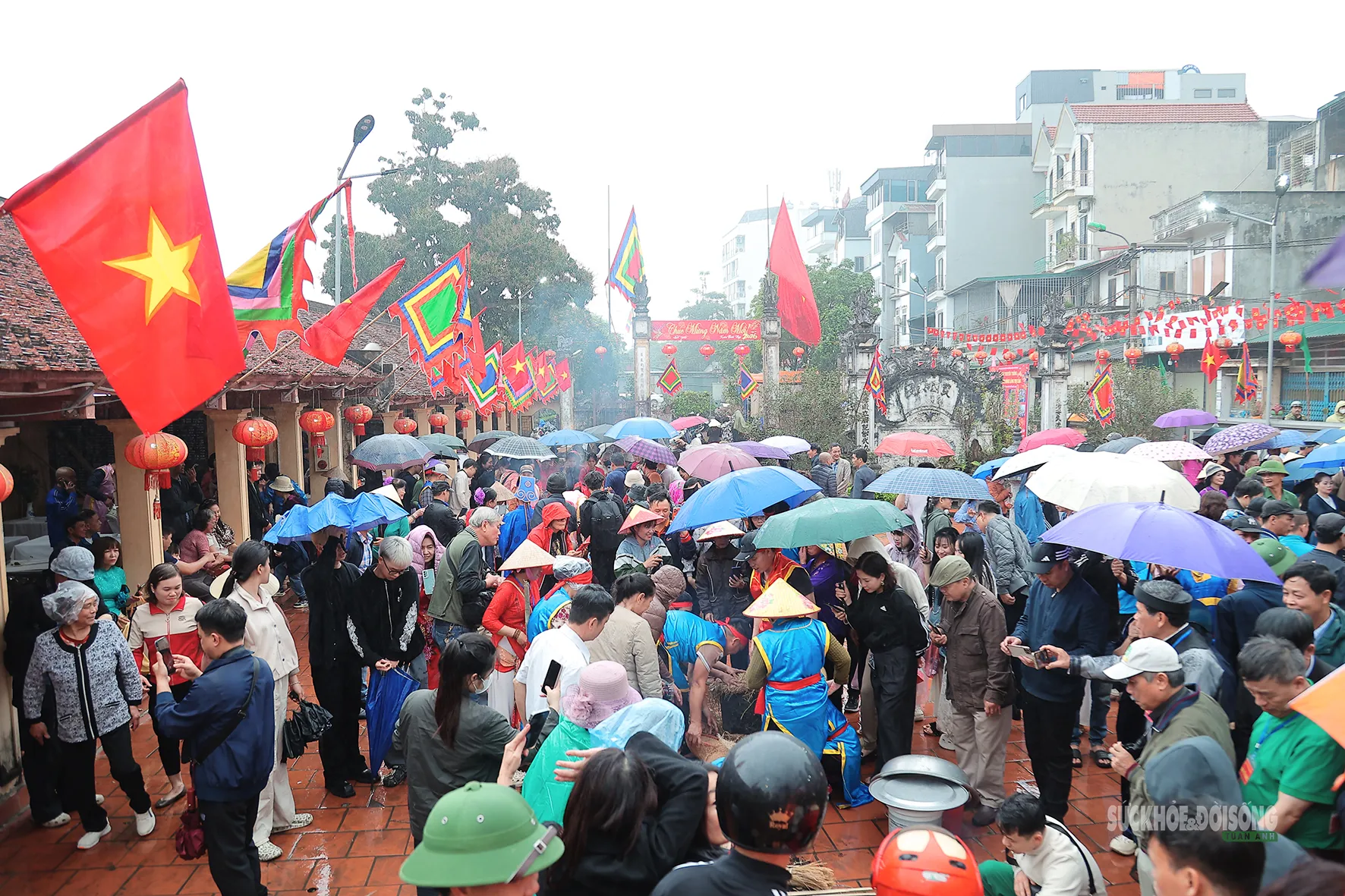
The persistent spring rain do little to dampen the determination of participants or the enthusiasm of spectators at the competition.
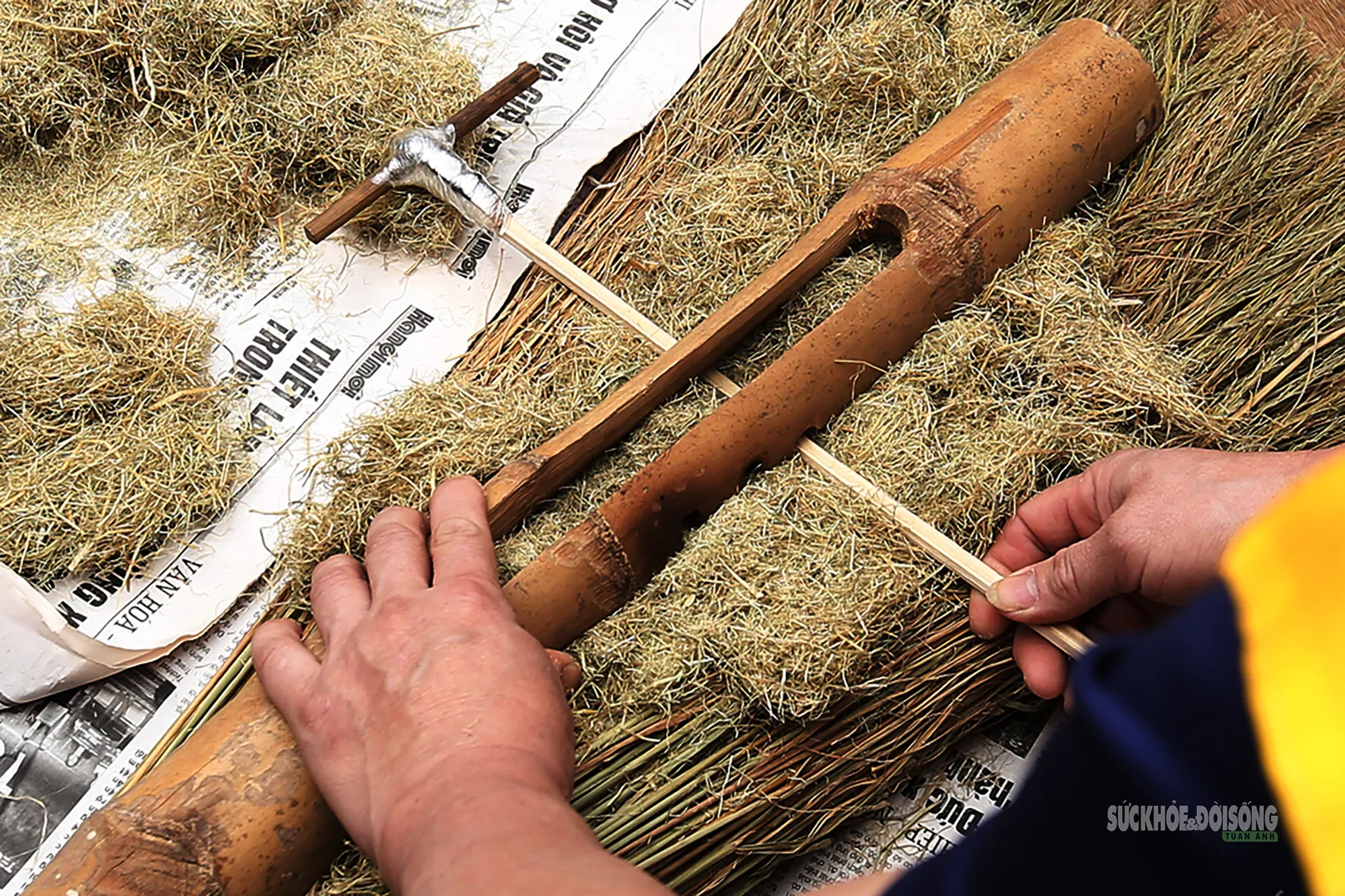
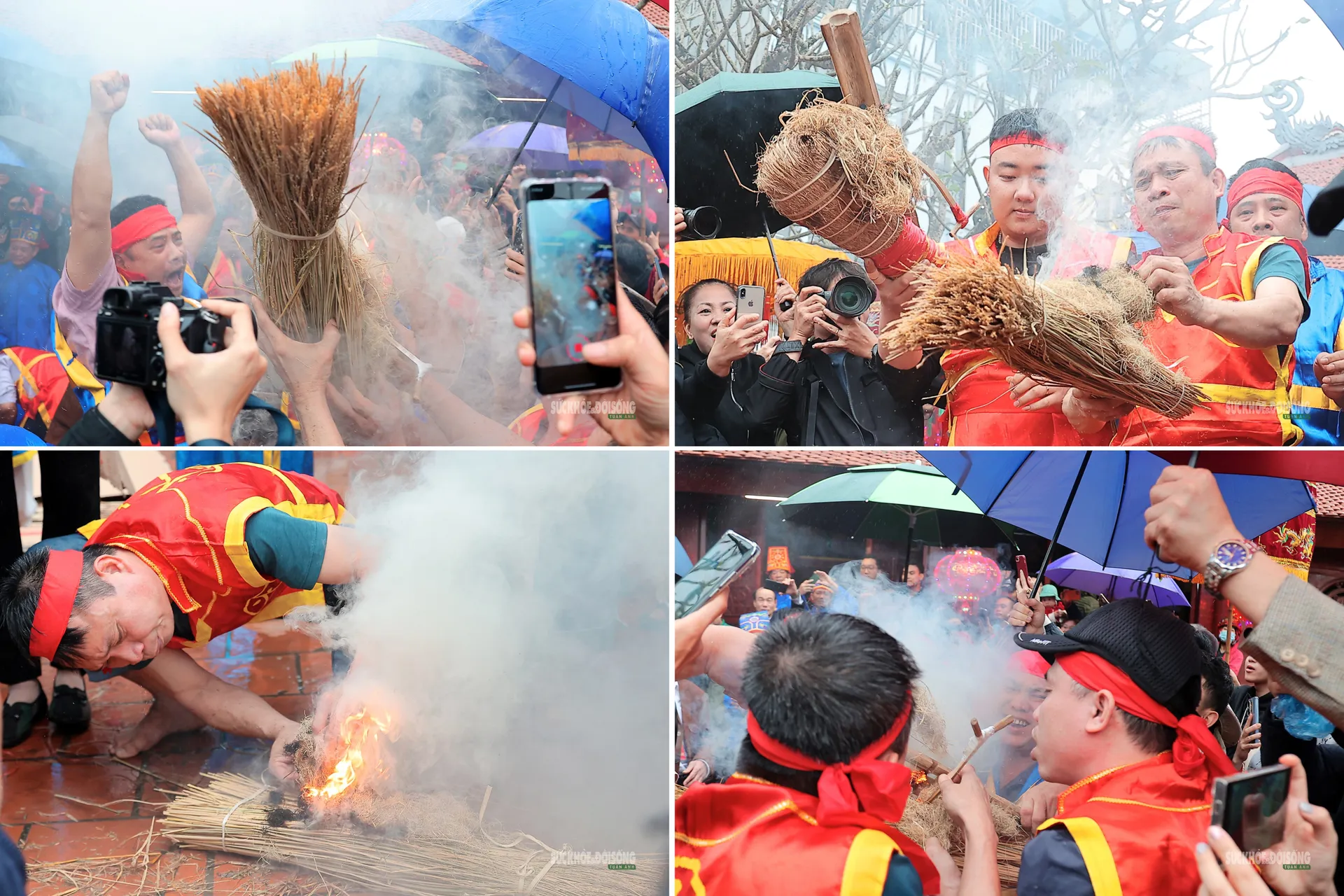
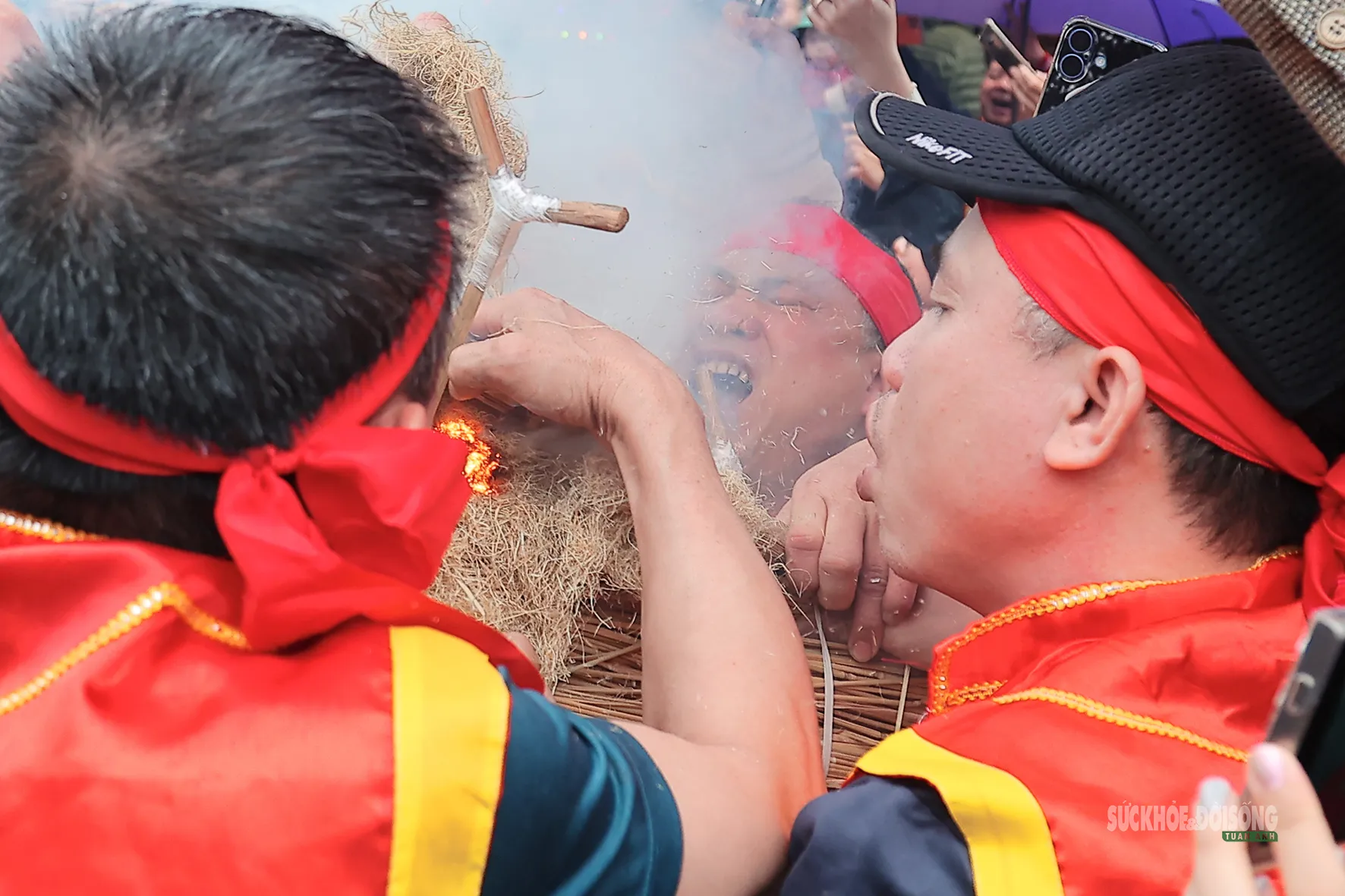
Cheers erupt as flames finally leapt skyward after repeated attempts.
The youngest team members sprint to fetch water for cooking.
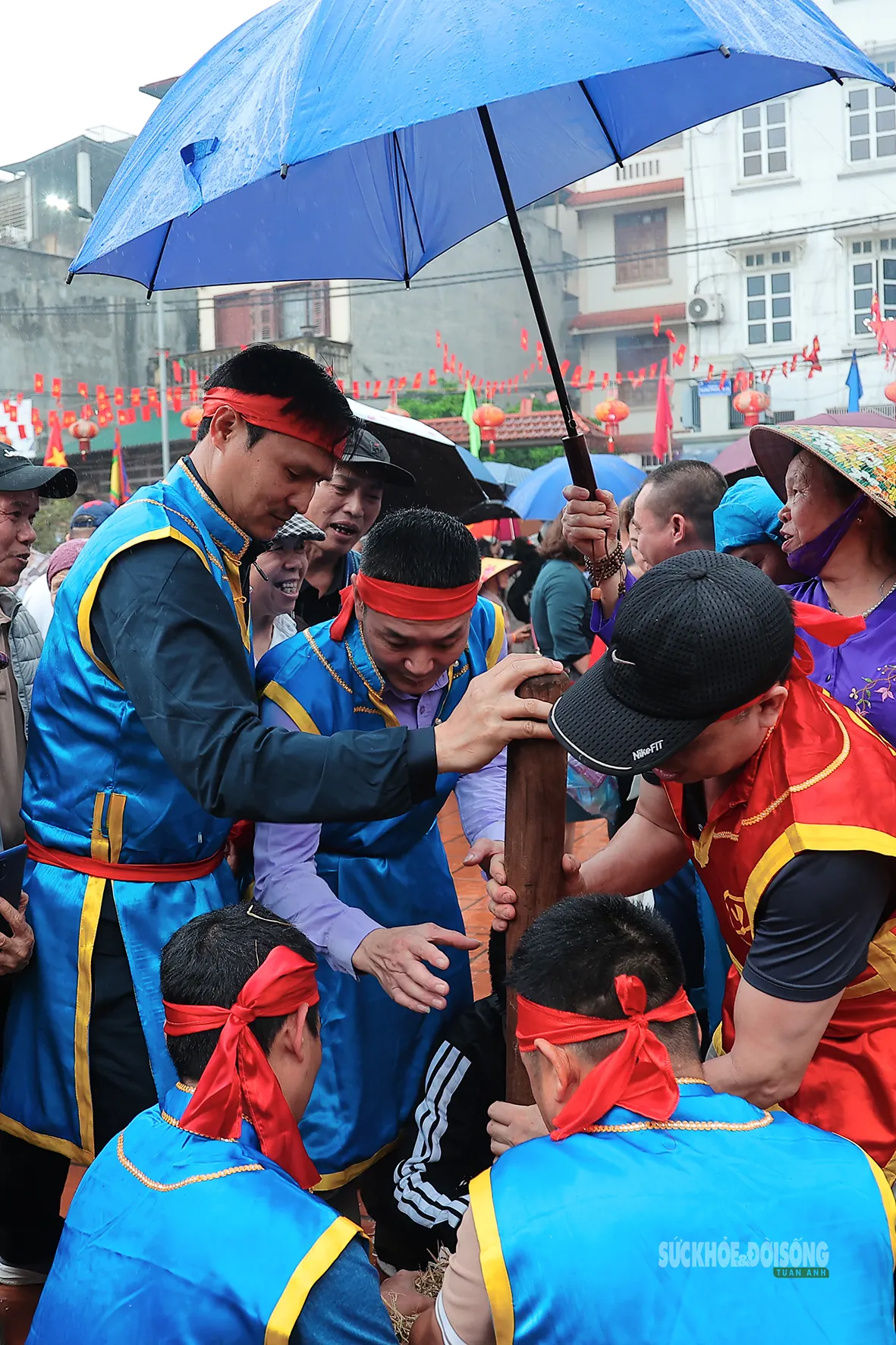
Meanwhile, the men pound rice in heavy mortars.
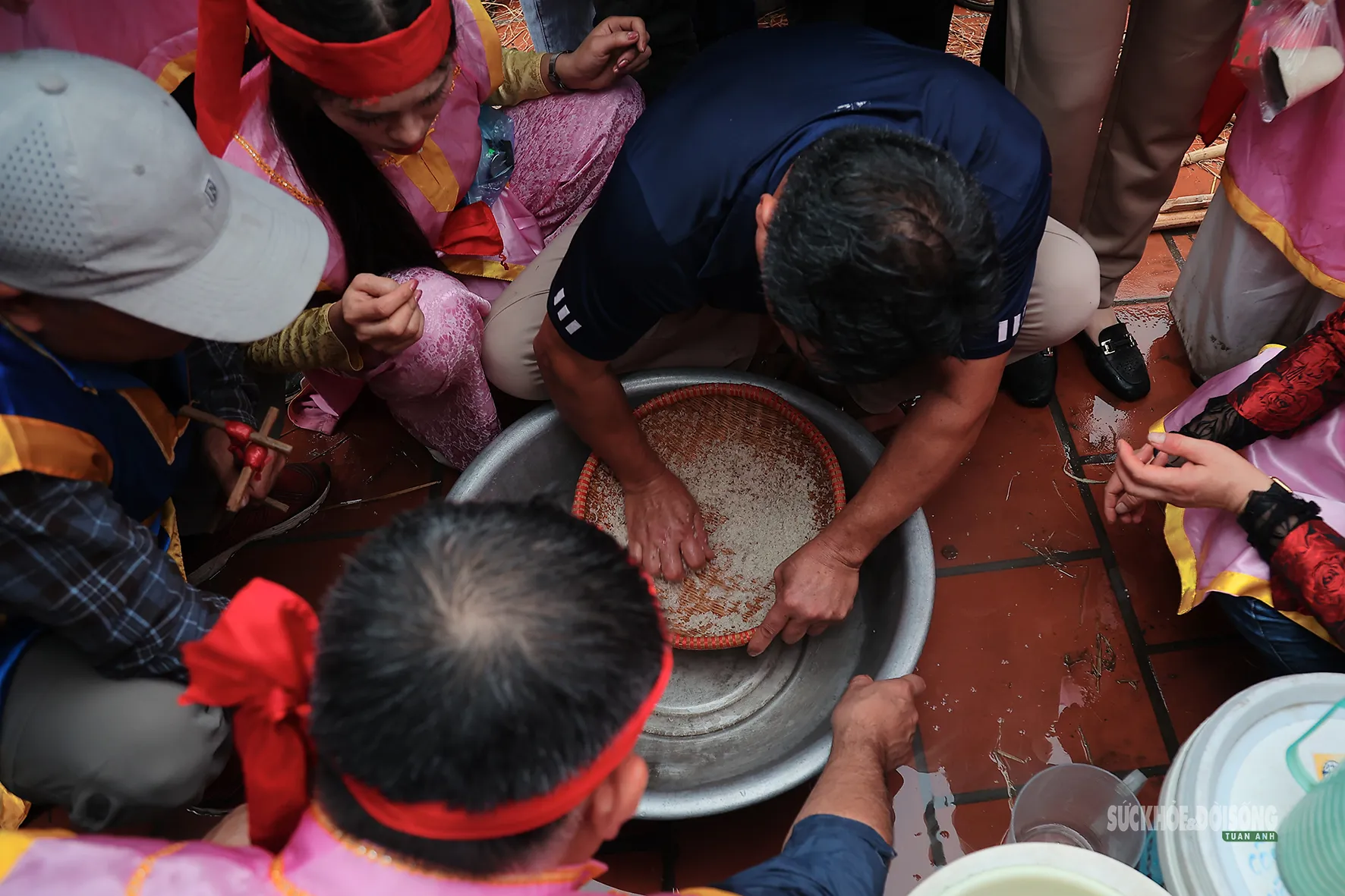
The grains, then, are carefully washed to remove husks and impurities.
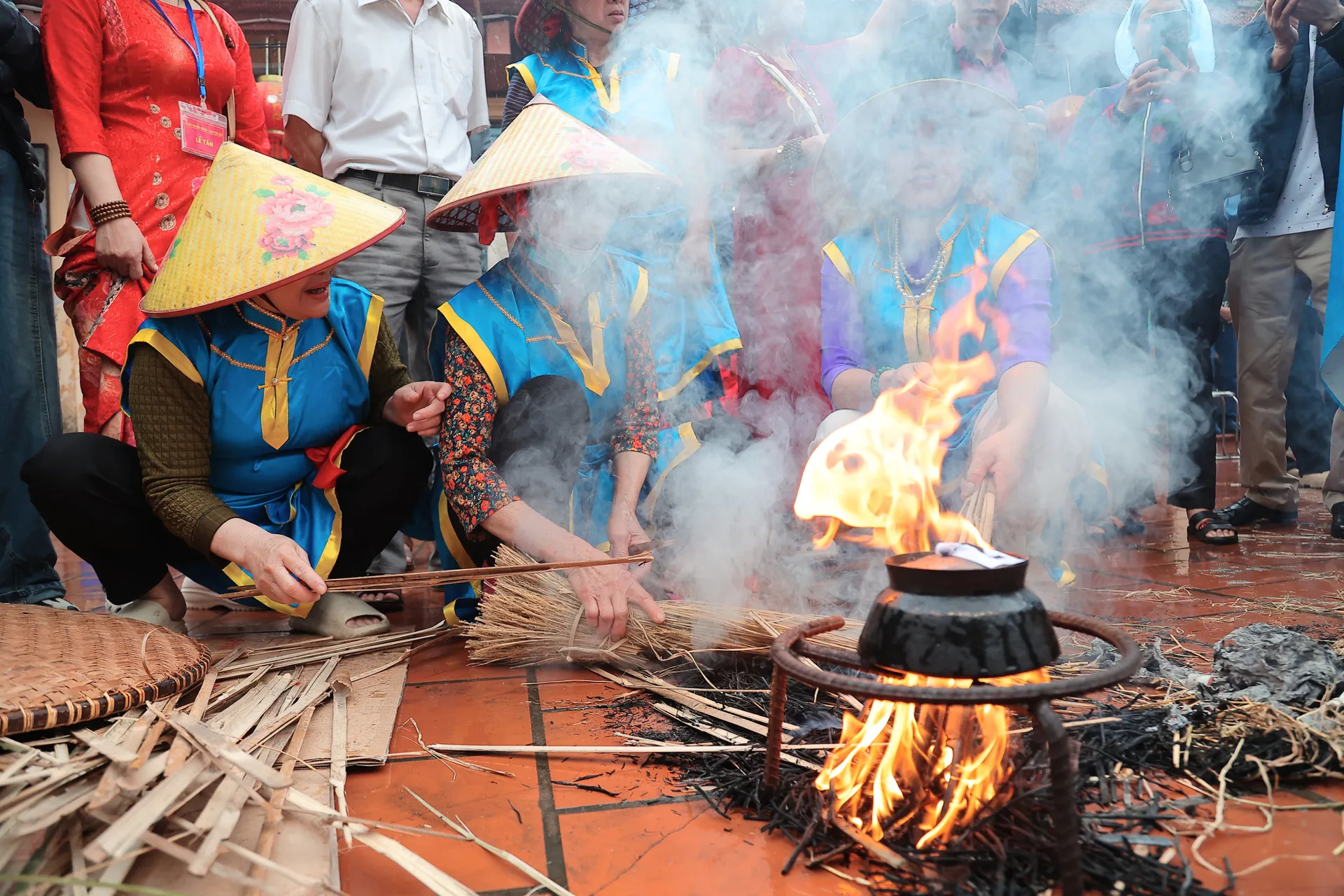
The women oversee the steady tending of the fire and the cooking process.
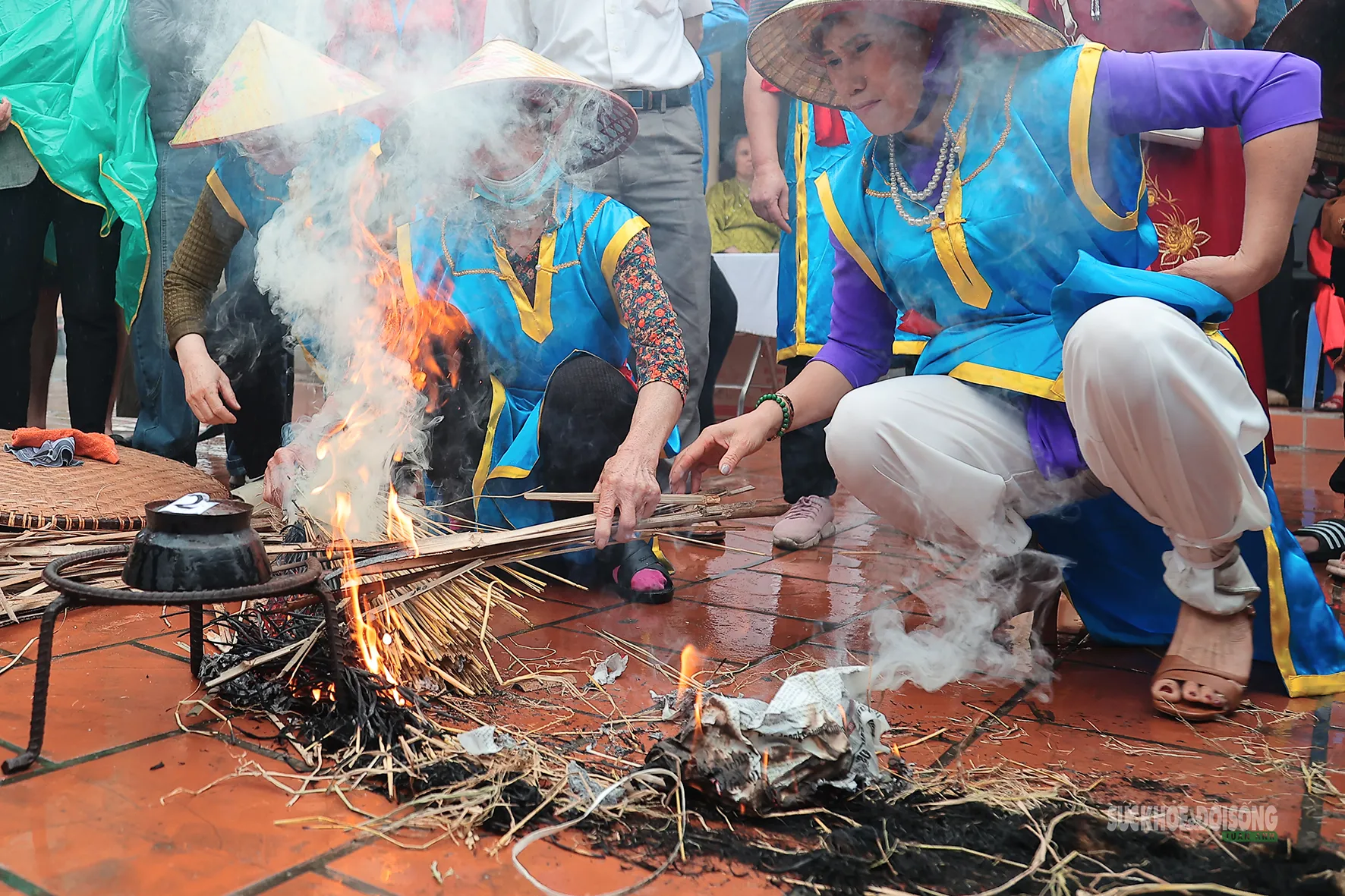
Skillful hands and seasoned judgment would ensure the finest quality of steamed rice.
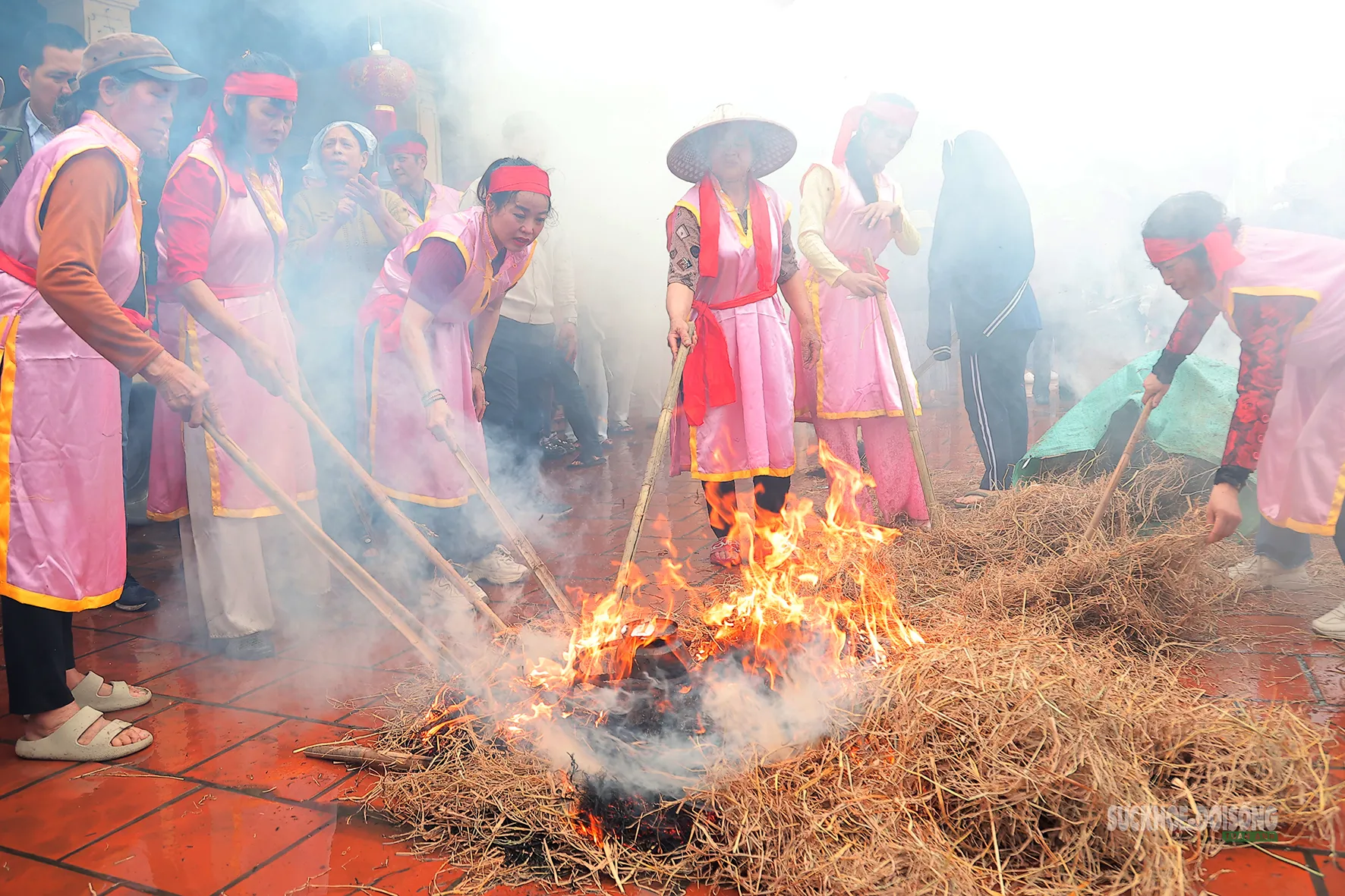
Villagers work in unison, embodying a shared spirit of cooperation.
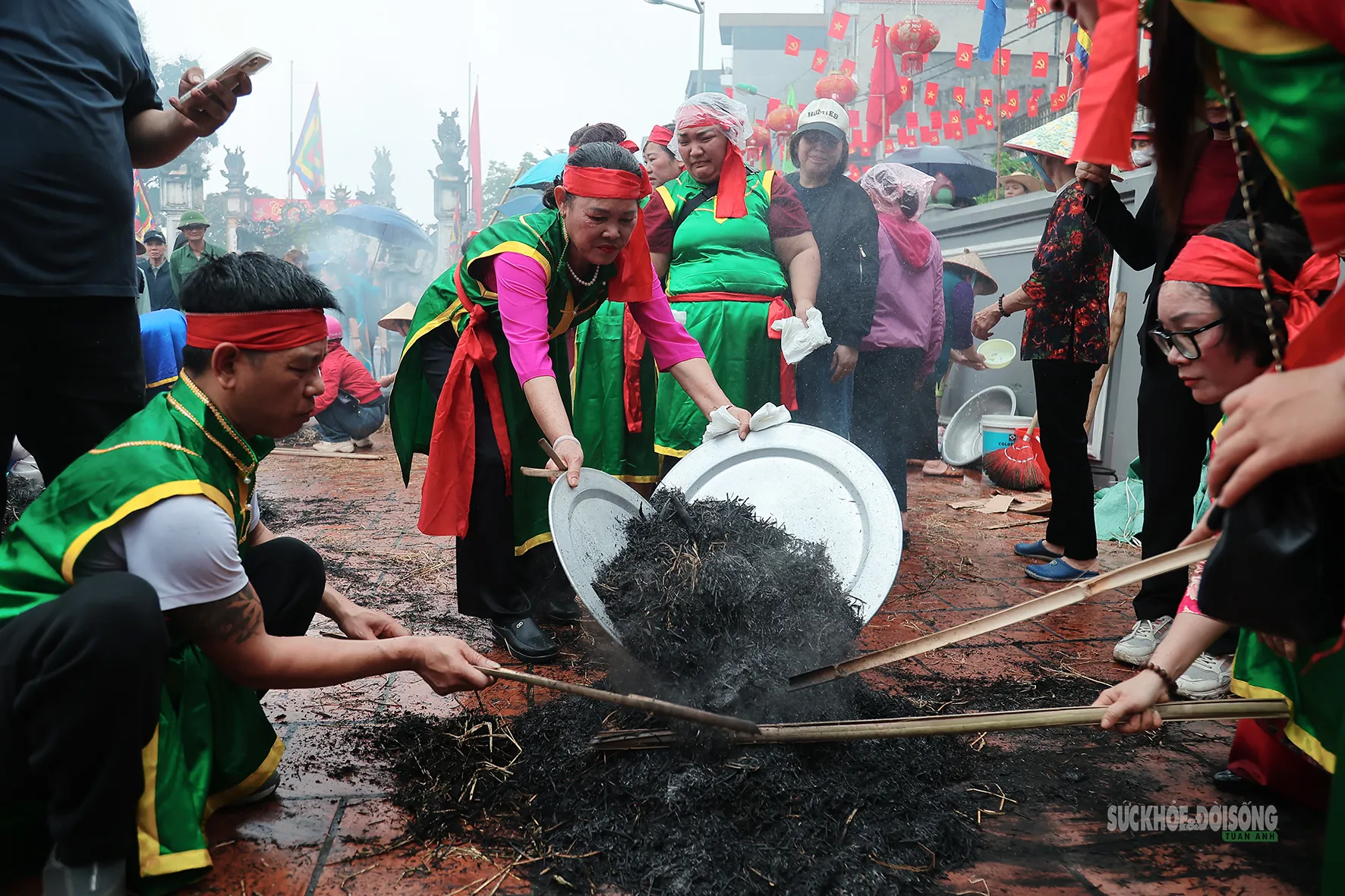
The final stage: retrieving the rice pot from beneath a bed of glowing ash.
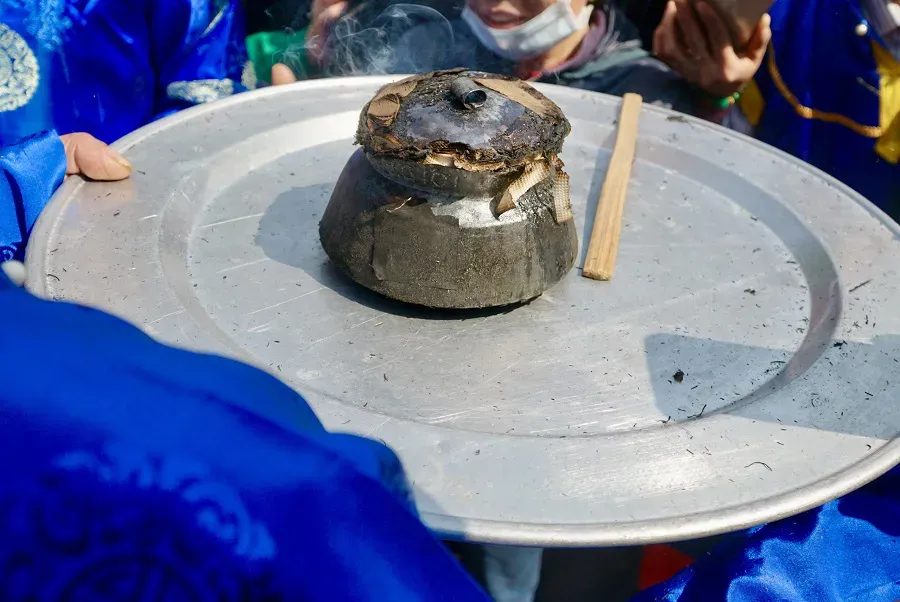
After intense collective effort, the perfectly cooked rice is presented to village elders for evaluation.